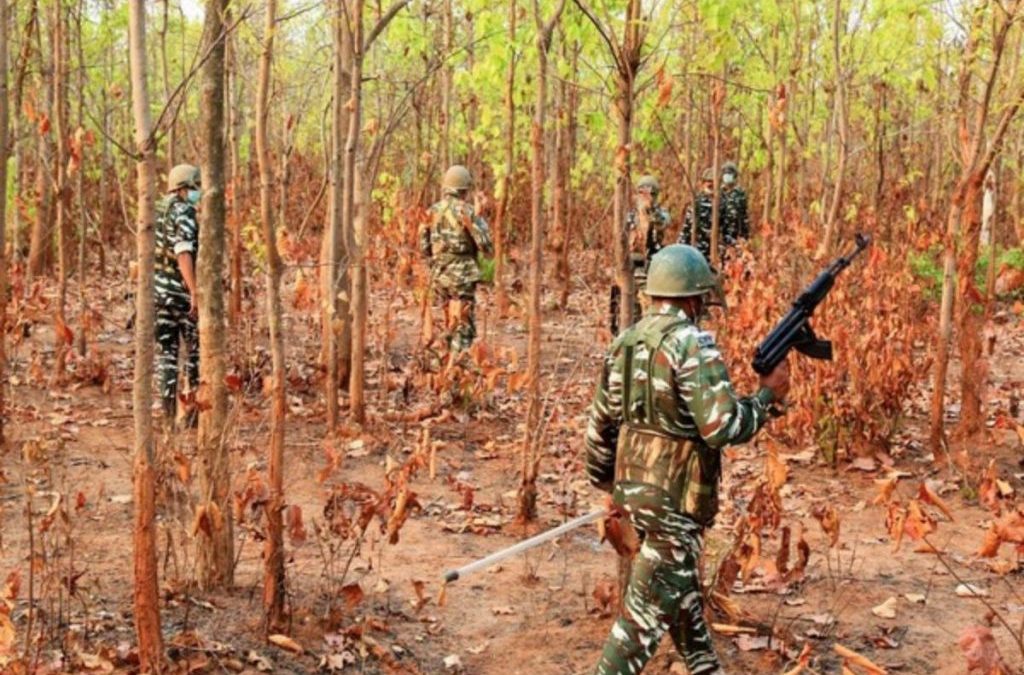
BHUBANESWAR: With Union Home Minister Amit Shah reaffirming the Centre’s goal to eliminate Left-Wing Extremism (LWE) by March 2026, Odisha has intensified its efforts to root out Maoist influence, especially in districts bordering Chhattisgarh. The state recently marked a significant milestone in this battle, with Bargarh officially declared free of Maoist activity by the Ministry of Home Affairs (MHA), bringing the number of LWE-affected districts in the state down from 10 to 9.
Bargarh Dropped from Maoist-Affected List
“This is a reflection of the sharp decline in Maoist presence,” said Sanjeeb Panda, Additional Director General (ADG) of Anti-Naxal Operations. “No Maoist violence has been reported in Bargarh in recent years. We had recommended its removal from the list, and the MHA has approved it. We are confident of eliminating naxalism from Odisha by 2026.”
The remaining affected districts are: Kalahandi, Kandhamal, Balangir, Malkangiri, Koraput, Nabarangpur, Nuapada, Rayagada, and Boudh. Among these, priority focus is being placed on Kandhamal, Kalahandi, and Rayagada, with increased surveillance and deployment in Nabarangpur and Nuapada, both of which border Maoist-stronghold regions of Chhattisgarh.
Progress Since 2012
Odisha was once heavily impacted by Maoist violence, peaking between 2008 and 2012, when 21 of its 30 districts were considered LWE-affected. Since then, a combination of intensified security operations and development initiatives has resulted in the gradual restoration of peace in 12 districts, including Ganjam, Gajapati, Nayagarh, Angul, Sambalpur, Sundargarh, and now Bargarh.
Even Malkangiri and Koraput, previously known as Maoist strongholds, have seen marked improvement. “Security operations and increased community outreach have significantly weakened Maoist influence in these areas,” Panda said.
Fresh Concerns in Sundargarh
Despite these gains, Sundargarh, declared Maoist-free in 2024, has seen a troubling resurgence. On August 3, a railway employee was killed in a Maoist-triggered landmine blast in Rourkela, and in May, 5,000 kg of gelatin sticks were stolen from a local quarry.
“We’ve strengthened intelligence and increased force presence in Rourkela and other vulnerable pockets,” said Panda. “The Special Operation Group (SOG) is leading intelligence-based missions to prevent further escalation.”
South Western Range Under Scanner
The South Western Range (SWR) — comprising Koraput, Malkangiri, Kalahandi, Nabarangpur, Nuapada, and Rayagada — remains under tight surveillance. DIG Kanwar Vishal Singh stated that operations in these districts have been bolstered by increased community engagement, expanded intelligence networks, and security presence in vulnerable tribal areas.
Revised Surrender Policy in the Works
To encourage Maoist cadres to lay down arms, the Odisha government is finalizing an updated surrender and rehabilitation policy, which will include enhanced financial packages and reintegration benefits.
“We urge Maoists to surrender and take advantage of government support,” Panda said, adding that a dedicated helpline (9437643839) is available for those willing to initiate contact.
Maoist Influence Shrinking
According to police intelligence, 90% of Maoists operating in Odisha are originally from Chhattisgarh. The 2014 arrest of top Odia Maoist leader Sabyasachi Panda was a significant turning point, leading to the collapse of local command structures.
More recently, the killing of top Maoist commander Nambala Keshava Rao (Basavaraju) along with 27 cadres in Chhattisgarh in May 2025 further weakened the Maoist network across the inter-state belt. Rao had been instrumental in expanding operations in Odisha.
“Only a handful — five or six — Odia Maoists are currently active,” a senior officer noted. “They are demoralized and cut off from community support, which has drastically eroded their operational capacity.”
Coordination with Centre Intensifies
In light of increased Maoist pressure from across the Chhattisgarh border, Odisha Chief Minister Mohan Charan Majhi has sought additional central forces and helicopter support to fortify the state’s border districts.
Six of the nine Maoist-affected districts — Koraput, Malkangiri, Kalahandi, Nabarangpur, Nuapada, and Balangir — share borders with Chhattisgarh, making coordinated inter-state operations critical.