North Korea has test-fired two strategic long-range cruise missiles to showcase its nuclear combat readiness, amid rising tensions on the Korean Peninsula driven by stepped-up military activity by the United States and South Korea.
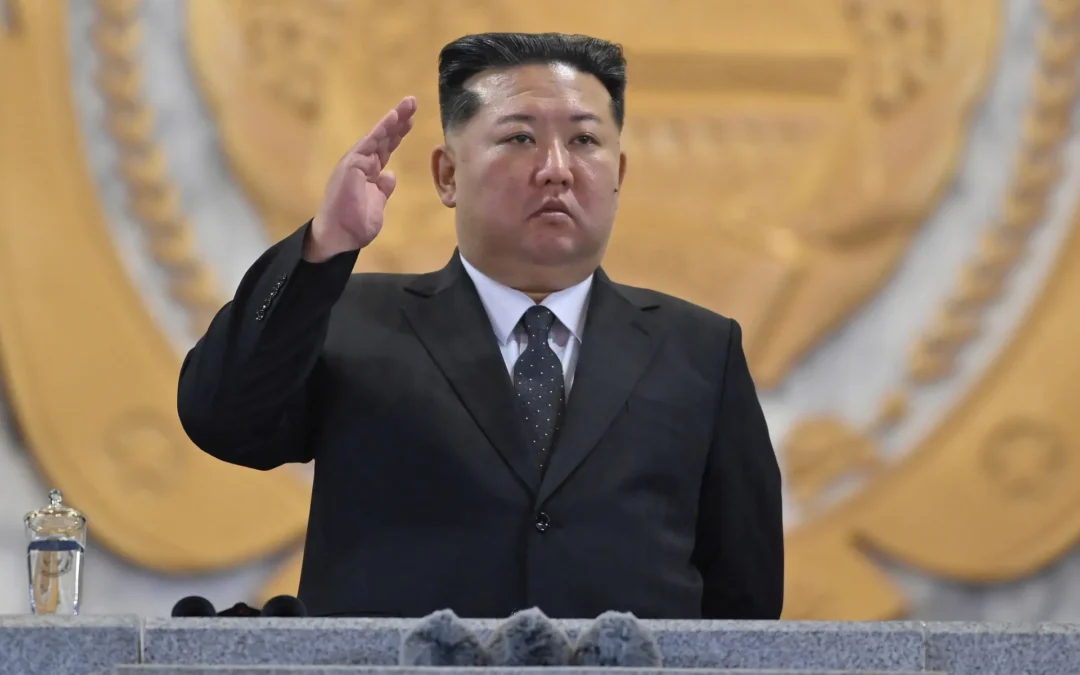
State media Korean Central News Agency (KCNA) said the launches took place on Sunday over the Yellow Sea, with leader Kim Jong Un personally supervising the drill. The exercise was aimed at assessing the combat capability and counter-offensive readiness of long-range missile units.
According to KCNA, the missiles flew for more than two hours before accurately striking their targets. State media released footage of the launches and impact at sea. Kim expressed “great satisfaction” with the drill and said the country would pursue the “unlimited and sustained development” of its nuclear combat forces.
South Korea’s Joint Chiefs of Staff confirmed it detected multiple cruise missile launches around 8am on Sunday from the Sunan area near Pyongyang. The South Korean military said it remains on full alert and is coordinating closely with the United States to respond to any provocation.
Pyongyang described the tests as defensive. KCNA quoted Kim as saying that verifying the reliability of North Korea’s nuclear deterrent was a “responsible exercise of the right to self-defence and war deterrence” in response to what it views as growing external threats, AFP reported.
The missile test follows North Korea’s recent disclosure of progress on its first nuclear-powered submarine. Last week, KCNA said Kim inspected a large submarine under construction at an indoor facility, accompanied by senior officials and his daughter, Kim Ju Ae. The vessel is believed to be capable of carrying nuclear-armed missiles.
The timing is also notable as North Korea prepares for a ruling Workers’ Party of Korea congress early next year — its first in five years — where Kim may outline new policy directions, including toward the United States and stalled nuclear negotiations.
Tensions have further escalated after South Korea announced plans to build a nuclear-powered submarine, a move Pyongyang called an “offensive act”. North Korea has also criticised the recent docking of the US Navy’s nuclear-powered attack submarine USS Greenville at the South Korean port of Busan.
Yang Moo-jin, former president of the University of North Korean Studies in Seoul, said the drill was meant to counter these developments. He noted that the arrow-type cruise missiles, with a reported range of about 2,000 km, could hit targets across the peninsula and US bases in Japan.
While UN Security Council resolutions ban North Korea from testing ballistic missiles, cruise missile tests are not prohibited. Analysts warn, however, that such weapons remain a serious threat due to their precision and low-altitude flight, which makes detection difficult.
The latest test comes years after nuclear talks between Pyongyang and Washington collapsed in 2019 during Donald Trump’s first term. Although Kim has recently hinted at a willingness to resume talks, experts say he may seek to leverage his expanding nuclear arsenal in any future negotiations.