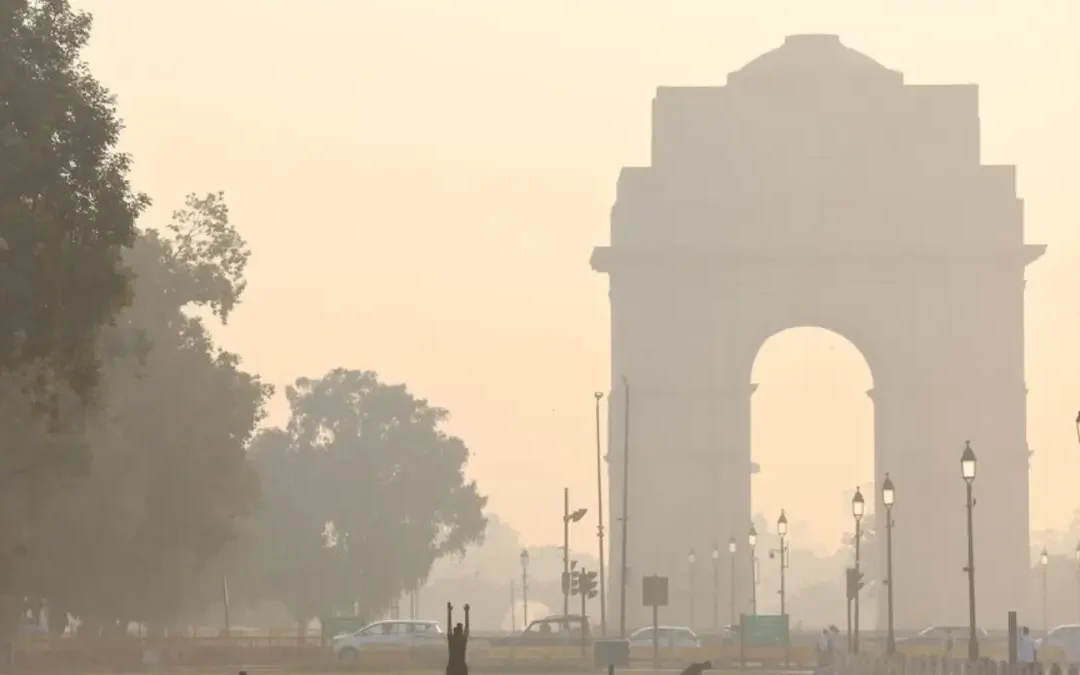
MUMBAI: Not a single major Indian city recorded “good” air quality at any time in the past decade, according to a new assessment of urban pollution trends. The study, conducted by environmental research group Climate Trends, found that none of the 11 largest cities met safe Air Quality Index (AQI) standards between 2015 and November 2025.
Delhi remained the country’s most polluted city throughout the 10-year period. Its average AQI peaked above 250 in 2016 and has hovered around 180 in 2025. Even after slight improvements post-2019, the capital never came close to healthy air-quality levels, with vehicular emissions, industrial activity, and crop burning—combined with geographical factors—remaining persistent drivers of pollution.
Cities such as Lucknow, Varanasi, and Ahmedabad reported consistently high average AQI levels—often above 200—during the first half of the decade, though some improvement was seen in later years. Meanwhile, western and southern metros like Mumbai, Chennai, Pune, and Bengaluru recorded relatively moderate pollution levels but still exceeded safe limits. Bengaluru posted the lowest AQI values in the country, ranging between 65 and 90, yet these remain well above the threshold for “good” air.
AQI measurements are based on concentrations of harmful particulate matter (PM2.5 or PM10), depending on which is higher.
Meteorological conditions significantly worsen pollution across the northern plains. “With cold north-westerly winds entering the region, minimum temperatures will drop further—making pollutant dispersion even more difficult,” said Mahesh Palawat, vice-president at Skymet Weather. He noted that this year’s weak western disturbances failed to bring widespread rain or snow.
“Without rain to wash out pollutants, smog persists for longer periods,” Palawat added.
In winter, the Indo-Gangetic plains experience temperature inversion, which traps pollutants close to the ground. Dense urban layouts and tall buildings further weaken wind flow, aggravating pollution stagnation.
Experts called for improved planning and science-driven policy action. “Technology can help tackle local pollution sources within an airshed, but this requires reliable data,” said Prof S.N. Tripathi of IIT-Kanpur. Palak Balyan, research lead at Climate Trends, added, “India needs sustained, long-term, science-based policy reforms backed by genuine political will to take tough decisions.”