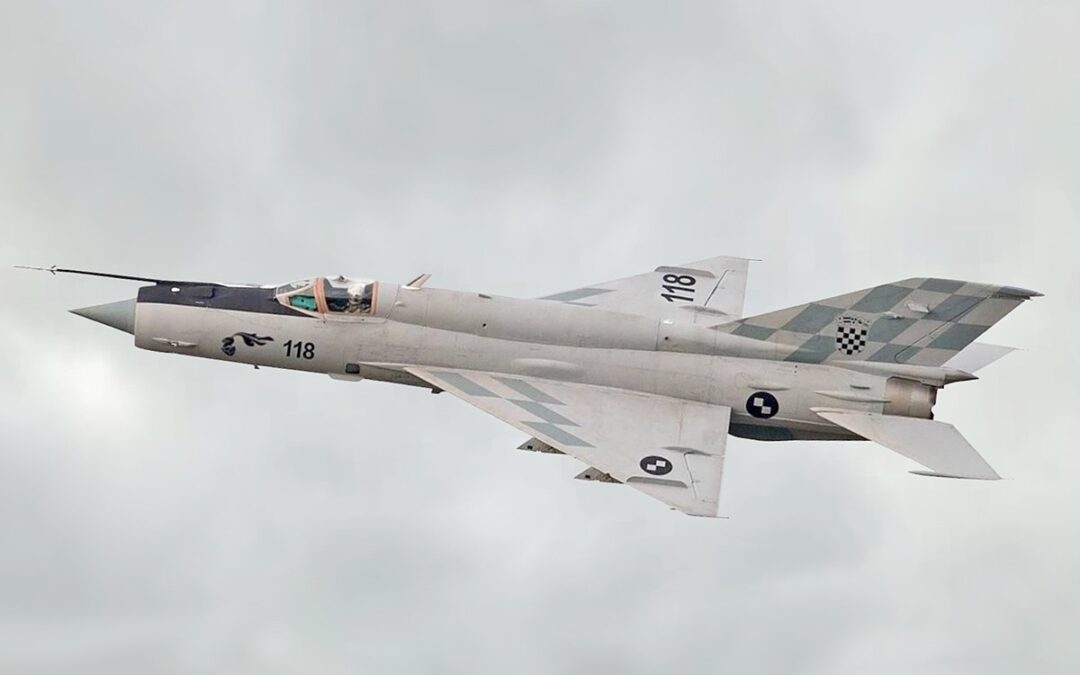
CHANDIGARH: The iconic MiG-21, a mainstay of Indian air power for over six decades, made its final flight on Friday—departing from the very airbase in Chandigarh where it first landed in 1963.
Presiding over the decommissioning ceremony, Defence Minister Rajnath Singh hailed the MiG-21 as a symbol of India’s military evolution and a testament to the long-standing India-Russia defence partnership.
Calling it a “bird for all seasons,” Singh said the MiG-21 redefined India’s combat capabilities and became a lasting emblem of strength and valour during every major conflict. Addressing a gathering of senior military commanders and air warriors, he said he was filled with “gaurav” (pride) and “kritagyata” (gratitude) as India bid farewell to an aircraft that helped shape its modern air force.
“The MiG-21 firmly established India’s air power on the global stage,” Singh said. “As an interceptor, it blocked enemy advances. In ground attack, it showed its aggression. In air defence, it safeguarded our skies. And as a trainer, it prepared generations of air warriors. That is the legacy of the MiG-21.”
He also highlighted the aircraft’s remarkable history and scale of production, noting that it remains one of the most widely manufactured fighter jets in military aviation history. “A total of 11,500 MiG-21s were built worldwide, with 850 inducted into the Indian Air Force,” he said.
With its final flight, the MiG-21 closes a golden chapter in Indian aviation history—one defined by speed, strength, and service.