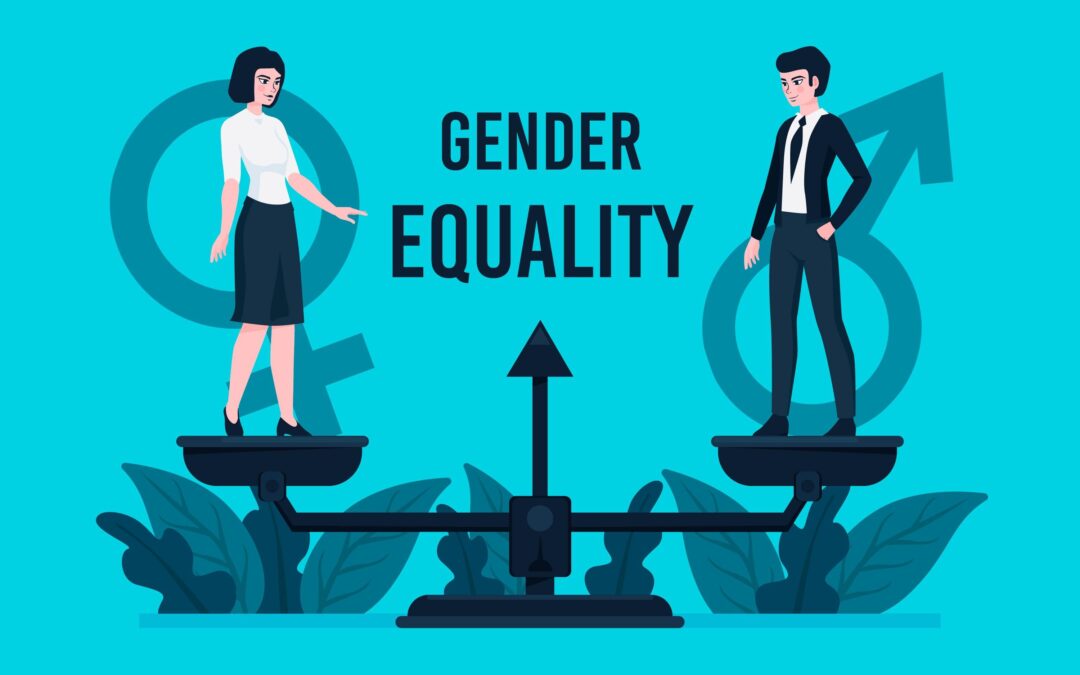
On Wednesday, Chief Justice of India (CJ) Bhushan R Gavai stated that the journey towards a gender-equal India is rooted in collaboration rather than confrontation. He emphasized that men, especially those in influential positions, must understand that sharing power with women is not a loss, but rather a liberation for society.
While delivering the Justice Sunanda Bhandare Memorial Lecture, CJI Gavai highlighted that the pursuit of gender justice necessitates the dismantling of the unseen social, cultural, and economic barriers that restrict women’s freedom and participation. He asserted that true equality requires that the advantages of law, education, and opportunities be accessible to every woman, not only in metropolitan areas but also in small towns, villages, and marginalized communities.
CJI Gavai remarked, “The responsibility of achieving gender justice does not rest solely on women. It calls for a proactive reimagining of power by men, particularly those in positions of authority within our institutions, workplaces, and political frameworks.”
In sharing the vision of justice Bhandare, a former judge of the Delhi High Court and a passionate advocate for gender justice and social equality, both in her legal career and judicial role, the CJI stated, “The journey towards a gender-equal India is not about confrontation but collaboration, where men and women unite to reconstruct the moral and institutional framework of equality as envisioned by our Constitution.”
He concluded by asserting that genuine progress will only be achieved when men acknowledge that “sharing power is not a loss, but a liberation for society,” as he recounted the development of laws aimed at achieving gender justice over the past 75 years since the Constitution’s adoption.
Reflecting on the past, although significant advancements have been achieved in this area, gender equality should not merely celebrate “symbolic achievements or token representations”; rather, it is essential to guarantee that women possess a genuine and equal stake in positions of power, decision-making, and opportunities. This can only be accomplished by dismantling the unseen barriers that restrict women’s freedom and participation, he remarked.
“The rights enshrined in our Constitution must extend to every woman, not solely those residing in metropolitan areas or privileged circumstances, but also to those in small towns, villages, and marginalized communities who continue to exist on the fringes of justice,” stated the Chief Justice of India (CJI).
This year marked the 30th memorial lecture on the theme “Justice for All: Building a Gender Equal and Inclusive India.” CJI Gavai, who referenced the long-standing connection of his father, RS Gavai, with Murli Bhandare, the former governor and husband of Justice Bhandare, mentioned several Supreme Court rulings from recent years that have significantly influenced these rights, facilitating meaningful participation of women across all aspects of life.
Nevertheless, he acknowledged that advancements in gender justice have never been solely the result of court actions, as he recognized the collective voice of citizens that has led to the reversal of regressive judgments. He referred to the Mathura rape case ruling of 1979, in which two police officers accused of raping a minor tribal girl within a police station were acquitted, describing it as a “moment of institutional embarrassment” in the constitutional and judicial history of the nation.
“The interaction between the courts and the populace remains one of the most crucial sources of India’s democratic strength, reminding us that the journey toward gender equality is not a destination to be reached, but a commitment that must be continually reaffirmed,” he stated.
Delhi High Court Chief Justice DK Upadhyay and former Supreme Court judge Madan Lokur also addressed the gathering, which was attended by numerous past and present judges of the Supreme Court and High Courts, as well as senior lawyers and academics.
Justice Bhandare was a distinguished judge of the Delhi High Court who passed away while serving in that capacity in November 1994. The lecture series was established by her husband and their two children.