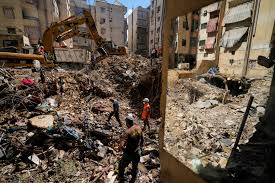
Israel carried out extensive airstrikes in central Gaza, killing over 200 people following the breakdown of ceasefire negotiations, according to local authorities and rescue teams.
“The death toll has surpassed 20 martyrs, with around 70 wounded in a series of Israeli raids across the Gaza Strip,” said Mahmud Basal, spokesperson for the agency, in a statement to AFP.
Israel justified the attacks by citing “Hamas’s repeated refusal to release our hostages.” In response to the escalation, authorities also announced the closure of schools in Gaza.
Shortly after reports of the strikes emerged, the Israeli army confirmed on Telegram that it was “conducting extensive strikes on terror targets belonging to the Hamas terrorist organization in the Gaza Strip,” according to AFP.
Hamas, in turn, accused Israel of violating their truce by launching widespread bombardment in the early hours of Tuesday. A statement from Hamas alleged that Israeli Prime Minister Benjamin Netanyahu and his government “decided to overturn the ceasefire agreement, exposing prisoners in Gaza to an unknown fate,” and warned that Israel was jeopardizing the hostages’ safety.
Israeli airstrikes targeted areas near the urban refugee camp of Bureij. One attack hit a school sheltering displaced Palestinians, killing a 52-year-old man and his 16-year-old nephew, according to officials at Al-Aqsa Martyrs Hospital. Another strike killed three men in Bureij. While the Israeli military claimed they were attempting to plant an explosive device, Hamas-led authorities in Gaza stated they were gathering firewood.
Before these latest attacks, Israel had blocked essential supplies—including food, medicine, and fuel—for two weeks, demanding Hamas agree to modifications in the ceasefire deal. The truce, in place since mid-January, has seen Israeli forces kill dozens of Palestinians whom the military accused of approaching troops or restricted areas.
The strikes occurred despite a U.S.-brokered ceasefire between Israel and Hezbollah, in effect since late November, which ended a 14-month conflict. However, both sides have repeatedly accused each other of violating the agreement.
Despite ongoing violence, the ceasefire’s first phase has allowed for the exchange of hostages held by Hamas for Palestinian prisoners in Israel. Mediators from Egypt, Qatar, and the U.S. are negotiating the next phase. Israel is pushing for Hamas to release half of the remaining hostages in exchange for further truce discussions, while Hamas insists on adhering to the original terms, which include Israeli military withdrawal from Gaza. Hamas is believed to be holding 24 living hostages, along with the bodies of 35 others.
Strikes in Syria and Lebanon
In addition to Gaza, Israeli airstrikes targeted locations in southern Lebanon and Syria, killing at least 10 people.
In Syria, strikes hit a residential area in the southern city of Daraa, killing three people and injuring 19 others, including four children, a woman, and three civil defense volunteers, according to the Syrian civil defense agency. Two ambulances were also damaged in the attack. Other airstrikes targeted military positions near the city. The Israeli military said it struck military command centers and sites storing weapons and vehicles belonging to Assad’s forces, citing security concerns.
Israel has maintained control over a zone in southern Syria since the fall of Bashar al-Assad’s regime in December. While Israel claims its presence is a preemptive security measure against Islamist insurgents now in power, Syria’s transitional government has not made any direct threats against Israel.
Meanwhile, in Lebanon, Israel said it struck two Hezbollah militants in the southern town of Yohmor, identifying them as “observation operatives.” Lebanon’s state news agency reported that two people were killed and two others wounded. The Israeli military later confirmed additional strikes on Hezbollah sites but did not disclose their locations.