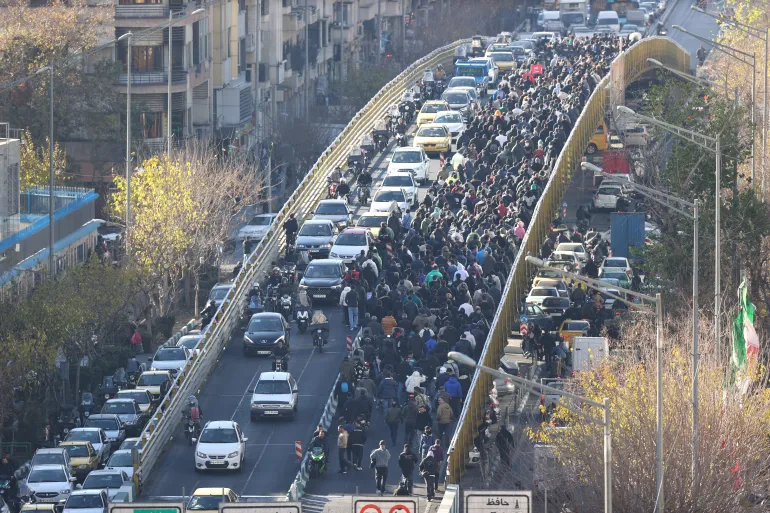
Iranian security forces fired tear gas to disperse demonstrators at Tehran’s Grand Bazaar as a sweeping crackdown followed the most serious wave of protests to hit the Islamic Republic in nearly three years. At least 27 people have been killed since the unrest began, according to rights groups, with authorities acknowledging deaths among both protesters and security personnel.
The demonstrations were triggered by anger over soaring living costs after the Iranian rial fell to a fresh record low against the US dollar. Among those killed are at least five minors under the age of 18, activists say. Iranian officials have also reported casualties within the security forces, including a policeman who was shot dead.
The protest movement began on December 28, when merchants shut down the Grand Bazaar in Tehran, a vital economic hub. It quickly spread to other regions, particularly western Iran, home to Kurdish and Lor minorities. The unrest marks the biggest challenge to the leadership since the 2022–2023 nationwide protests sparked by the death in custody of Mahsa Amini.
Witnesses reported sporadic gatherings around the bazaar during the shutdown, with police moving in to disperse protesters who scattered into nearby alleyways. Social media footage showed demonstrators chanting slogans such as “Pahlavi will return” and “Seyyed Ali will be overthrown,” references to Iran’s pre-1979 monarchy and Supreme Leader Ayatollah Ali Khamenei.
Videos circulating online showed crowds shouting “freedom” and “shameless” before security forces fired tear gas, filling the area with smoke and forcing people to flee. Authorities said “some” arrests were made but did not provide figures.
As the protests entered their tenth day, footage emerged from Abdanan in western Iran showing large crowds marching and chanting, “This is the last message, the entire regime is the target.”
While the unrest has not yet reached the scale of the 2022–2023 movement or the mass protests following the disputed 2009 elections, it comes amid a deepening economic crisis and months after a 12-day conflict with Israel. Analysts say it poses a fresh test for Iran’s leadership, headed by the 86-year-old Khamenei.
President Masoud Pezeshkian’s government has announced modest monthly payments to ease economic hardship. At the same time, the judiciary has warned there will be no leniency for what it calls “rioters.” Official media have acknowledged at least 13 deaths since the protests began.
The Norway-based group Iran Human Rights (IHR) said more than 1,000 people have been arrested nationwide. It accused security forces of killing at least six protesters in a single incident in Ilam province and alleged that authorities raided hospitals in Ilam and Tehran to detain injured demonstrators—claims echoed by Amnesty International, which said the reports showed how far authorities were willing to go to “crush dissent.”
Pezeshkian has ordered an investigation into events in Ilam province, according to his office. State media also reported that a policeman was killed in Malekshahi after being hit by a bullet allegedly fired by “rioters.”
Meanwhile, the Iranian rial slid to around 1.47 million to the dollar on the informal market, according to currency tracking websites, intensifying the economic pressures that first drove traders and citizens onto the streets.