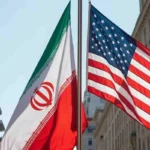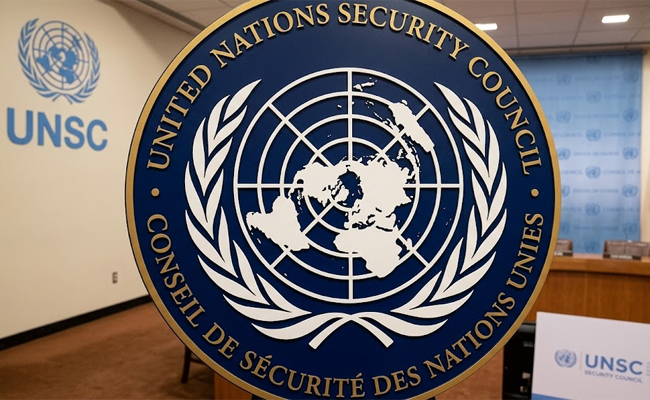
NEW DELHI: India co-sponsored a resolution in the United Nations Security Council condemning what it described as “egregious” attacks by Iran on Gulf Cooperation Council (GCC) countries and Jordan. The resolution calls for an immediate halt to all attacks by Tehran and denounces its threats to close the Strait of Hormuz.
The 15-member Security Council, currently presided over by the United States, adopted the resolution on Wednesday with 13 votes in favour and none against. Permanent members China and Russia abstained from voting.
India’s Ministry of External Affairs said New Delhi backed the GCC-led resolution because it reflected India’s stance on the issue. “We have 135 countries who have co-sponsored this resolution. It reflects several of our positions,” spokesperson Randhir Jaiswal said.
He noted that India has a large diaspora living in GCC countries, making their safety and welfare a priority. He also emphasised the Gulf region’s importance for India’s energy security.
Earlier, Prime Minister Narendra Modi had condemned attacks on GCC countries, though he did not mention Iran by name.
The resolution, led by Bahrain, was co-sponsored by more than 130 countries, including Australia, Austria, Bangladesh, Bhutan, Canada, Egypt, France, Germany, Greece, Italy, Japan, Kuwait, Malaysia, Maldives, Myanmar, New Zealand, Norway, Oman, Pakistan, Qatar, Saudi Arabia, Singapore, Spain, Ukraine, the UAE, the UK, the US, Yemen and Zambia.
Reaffirming strong support for the territorial integrity, sovereignty and political independence of Bahrain, Kuwait, Oman, Qatar, Saudi Arabia, the UAE and Jordan, the resolution condemns in the “strongest terms” the attacks attributed to Iran against these countries.
It states that such actions violate international law and pose a serious threat to international peace and security. The resolution also demands that Iran immediately stop all attacks on GCC countries and Jordan and “immediately and unconditionally” cease any provocations or threats against neighbouring states, including the use of proxy forces.