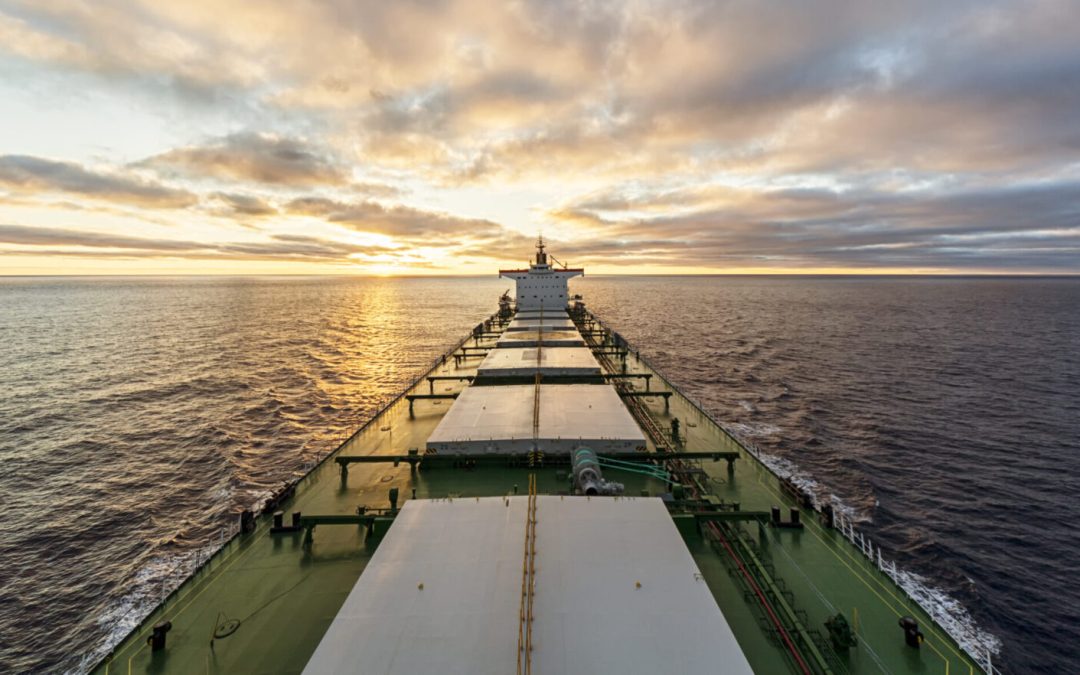
The global bulk carrier fleet is aging. With a 12% annual increase in carriers aged 21 years or older and 32% of global tonnage now over 15 years old, a significant proportion of the world’s bulker ships are reaching the latter part of their operational lifespan.
Given that the average lifespan of these vessels is just 25 years, the aging fleet combined with the introduction of regulations such as the Carbon Intensity Indicator (CII) and EU ETS, presents ongoing challenges for ship owners and operators.
Recent statistics released by Clarkson’ Shipping Intelligence Network predicted a third of bulkers face being taken out of service under the CII framework, which ranks ships from A to E. Vessels rated D have three years to submit a corrective action plan and improve their rating or risk being removed from operation.
By 2026, approximately 45% of existing tanker, bulk carrier, and container fleets are projected to receive D or E ratings under the CII rating system. This outlook, coupled with newbuild yards being fully booked for over three years and a decline in bulker construction, means coatings have become more critical than ever for enhancing vessel efficiency and extending their operational lifespan.
This growing pressure on fleet performance is driving strong demand for our high-performance international fouling control solutions, as vessel owners and operators increasingly prioritize high-performance coatings that deliver measurable benefits in efficiency and sustainability.
Intercept 8500 LPP stands as our most advanced fouling control solution, recognized for its exceptional in-service performance and increasing customer adoption as a result. Forecasts from Intertrac Vision, our big data prediction tool, show that over a 60-month docking interval for a typical Capesize bulker, Intercept 8500 LPP can reduce fuel costs by $715,000 USD, when compared to a market average antifouling, and reduce CO2 emissions by 4,200 tonnes. Similarly, our innovative Intersleek 1100SR biocide-free foul release coating continues to play a key role for customers prioritizing sustainability and performance.
Beyond hull performance, the integrity of cargo holds is essential to maintaining operational efficiency. Investing in high-quality cargo hold coatings provides a strong defense against corrosion and mechanical damage, helping to reduce maintenance downtime and extend vessel service life.
Higher-grade coatings specifically engineered for cargo holds such as Intershield 803, Interzone 954GF and Interbond 201 offer proven long-term abrasion and corrosion protection. These advanced solutions not only reduce in-service maintenance-related downtime but also play a vital role in extending a vessel’s operational life cycle by preserving structural integrity, ultimately enhancing reliability and long-term profitability of the vessel.
Calculations have shown that, in comparison to standard epoxies, Interzone 954GF can save ship owners up to €1.6m over 15 years in reduced paint, application and blasting costs when used in the cargo holds of a Capesize bulker.
At a time where bulker vessel operators face mounting pressure to decarbonize aging fleets, operational efficiency and environmental compliance are paramount. With cutting-edge machine learning models and deep technical expertise, International empowers customers to make smarter, data-driven decisions that optimize fouling control strategies across their fleets. We are proud to be a trusted partner for operators looking to meet modern challenges with innovative, sustainable solutions.
With shipyards at capacity, securing a new building bulk carrier slot can entail a long wait. This combined with the drop in new orders for bulk carriers due to reduced freight rates, high costs and market uncertainty, has led to record-low production with the potential to disrupt supply chains if many vessels are scrapped.
As the industry adapts to increasing demands for decarbonization, ship owners who invest in high-performance fouling control and cargo hold coatings will be better positioned to maximize vessel performance, reduce carbon emissions, extend service life and enhance overall operational efficiency.
Source: Marine Deep Sea