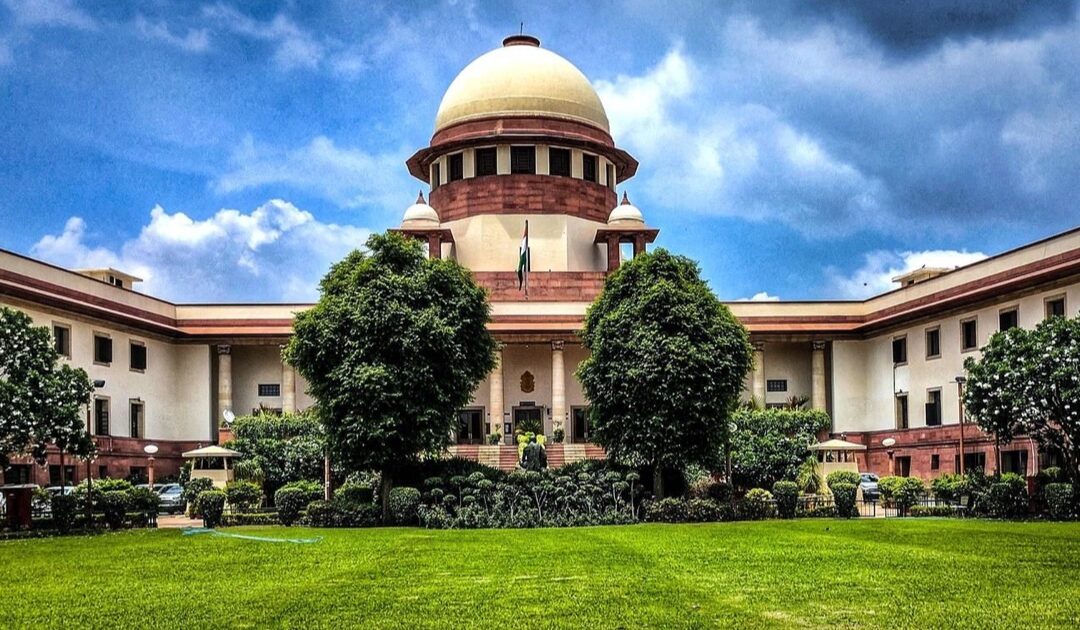
NEW DELHI: The Supreme Court on Wednesday affirmed that the Election Commission (EC) is both statutorily and constitutionally authorised to carry out the nationwide Special Intensive Revision (SIR) of electoral rolls, making it clear that the court would not halt the process. The bench, however, assured that it would step in and direct corrective measures if any irregularities were brought to its notice.
A bench of CJI Surya Kant and Justice Joymalya Bagchi dismissed arguments questioning the need for the SIR. The CJI noted that, after the revision process was streamlined on the court’s directions, “not a single objection” had been filed against the updating of electoral rolls.
Appearing for RJD MP Manoj Jha, senior advocate Kapil Sibal challenged the constitutional validity of the SIR, arguing that millions of illiterate citizens were unable to fill voter enumeration forms, which he claimed had become an “instrument of exclusion.” He questioned why voters should be required to fill such forms at all, adding, “Who is the EC to determine whether a person is an Indian citizen? Aadhaar shows residence and date of birth — that should suffice for enrolling anyone above 18, subject to a self-declaration of citizenship.”
CJI Kant countered Sibal’s concerns, noting the stark difference between urban and rural electoral practices. “You’ve contested elections in Delhi where many do not vote. But in rural areas, elections are a festival. Everyone participates, and everyone knows who belongs to the village,” he said.
Bihar example shows no adverse impact, says CJI
Sibal argued that such an exercise had never been undertaken in India and went against the inclusionary ethos of “Poorna Swaraj.” Justice Bagchi, however, noted anomalies in past electoral rolls: “In 2012 and 2014, the number of voters exceeded the total adult population. Is it not necessary to correct the rolls? If the EC doubts someone’s citizenship, is it not entitled to inquire? An aggressive revision will naturally lead to deletions.”
The CJI pointed to Bihar’s SIR as an illustrative case. “We were initially told that crores of voters would be deleted. We issued directions to streamline the process. Ultimately, deletions were limited to those who had died or migrated. No objections were filed, and we found no adverse impact on the ground,” he said.
The court’s remarks prompted Sibal to shift his focus back to constitutional concerns. He argued that the burden of proving citizenship should not fall on the voter and that cases involving doubt should be referred to a competent authority, not left to booth-level officers. “A BLO has no authority to investigate citizenship,” he said.
The hearing will continue on Thursday.