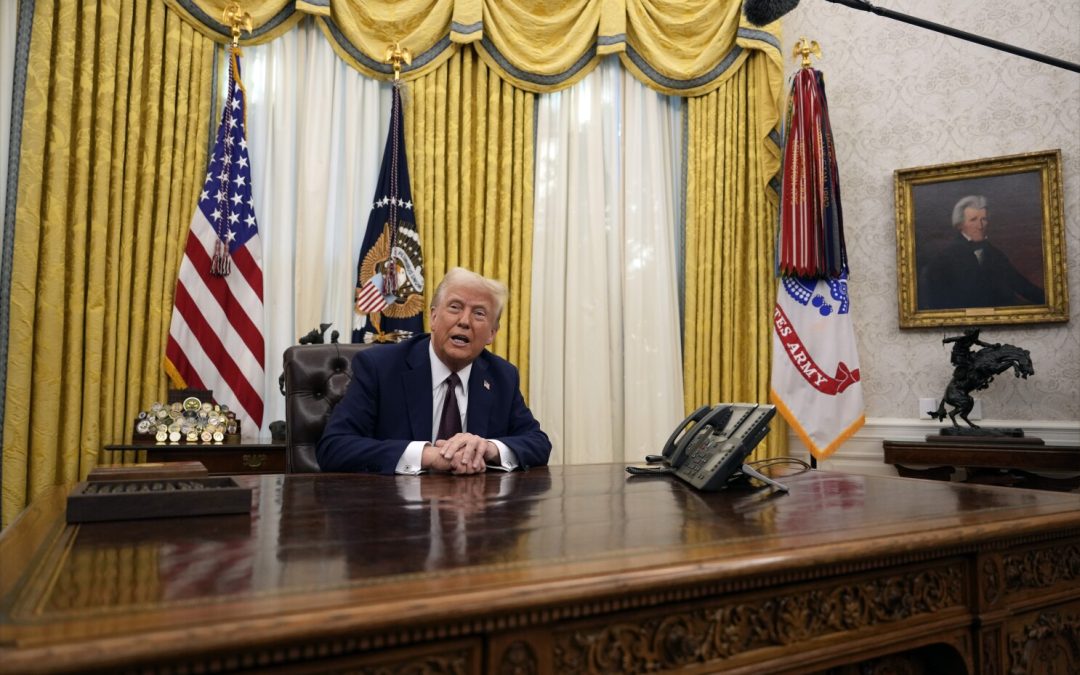
In a dramatic policy shift, President Donald Trump on Wednesday announced a 90-day suspension of sweeping new tariffs for most U.S. trading partners—except China, which he targeted with a steep 125% tariff on all imports. The unexpected move came less than 24 hours after the initial rollout of broad duties sent global markets into disarray.
While allies received a temporary reprieve, Beijing bore the full weight of the administration’s crackdown. China swiftly responded, imposing retaliatory tariffs of 84% on American goods, according to state media outlet Xinhua. The escalation marks a sharp new phase in the ongoing economic standoff between the world’s two largest economies.
Despite the global fallout, the White House intensified its message. In a pointed statement, it warned other nations: “Do not retaliate and you will be rewarded,” signaling a hardline stance against potential defiance.
China, however, rejected the ultimatum. The Ministry of Commerce condemned the U.S. tariffs as a breach of international rules and vowed to defend national interests. “There are no winners in a trade war. China does not seek one, but it will not remain passive when its legitimate rights are infringed,” a ministry official said.
Trump’s decision to delay action for most countries appears to have been driven by the sharp financial turbulence in recent days. Global stock markets lost trillions in value, and U.S. Treasury yields spiked—sparking widespread concern among investors and consumers alike.
In a characteristic metaphor, Trump brushed off the panic: “People were jumping out of line a little, getting yippy,” he said. Still, he acknowledged the economic backlash had influenced the shift. “You have to be flexible,” he added.
This is not the first time Trump has reversed course on trade measures. Since returning to office in January, he has repeatedly threatened aggressive tariffs only to backtrack or postpone them, leaving global leaders and business executives struggling to interpret U.S. trade intentions.
Despite the pause, a 10% blanket tariff remains in place for nearly all imports, and targeted duties on steel, aluminum, and automobiles continue to apply. Additionally, goods from Canada and Mexico are still subject to a 25% tariff linked to fentanyl-related provisions unless they meet specific conditions under the USMCA.
White House officials offered mixed explanations for the sudden pivot. Treasury Secretary Scott Bessent suggested the delay was a strategic move to draw nations to the negotiating table, while Trump cited recent market turmoil as a driving factor behind the decision.
Analysts are skeptical the gesture will alter China’s approach. “Beijing’s playbook is to absorb pressure and wait Trump out,” said Daniel Russel, vice president at the Asia Society Policy Institute. “They see concessions as a sign of weakness and won’t shift course under threat.”
Russel added that Washington’s erratic trade policy—marked by sharp reversals and unexpected threats—is eroding global trust. “Governments may welcome the 90-day pause, but the constant zigzagging only deepens the uncertainty that businesses and policymakers despise,” he said.
Despite the tough rhetoric, Trump suggested that a deal with Beijing is still possible. “China wants to make a deal,” he claimed. “They just don’t quite know how to get there yet.” For now, White House aides say negotiations with other nations will take priority before re-engaging with China.