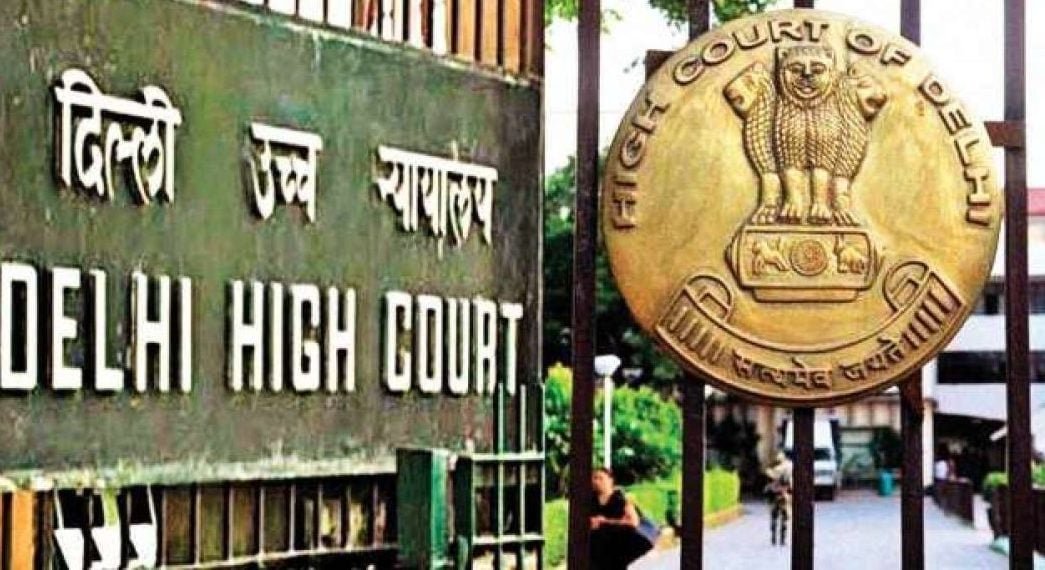
In a significant ruling reaffirming the humanitarian basis of parole jurisprudence, the Delhi High Court has held that the right to perform the last rites of a parent is an essential religious and moral obligation. Denial of parole in such circumstances, the Court said, would infringe a convict’s right to dignity under Article 21 of the Constitution.
Justice Ravinder Dudeja passed the order in Ajmer Singh alias Pinka v. State of NCT of Delhi through SHO Kanjhawala, allowing four weeks’ parole to enable the petitioner to attend his father’s “Tehravi” ceremony and perform the final rites.
Petition and background
The plea was filed under Article 226 of the Constitution read with Section 528 of the Bharatiya Nagarik Suraksha Sanhita, 2023 (BNSS), seeking issuance of a writ of mandamus for emergency parole.
The petitioner had been convicted in FIR No. 139/2018 registered at Police Station Kanjhawala under Sections 376, 354B and 506 of the IPC, and Section 66E of the IT Act. By order dated April 24, 2025, he was sentenced to:
- 14 years’ rigorous imprisonment with a fine of ₹50,000 under Section 376 IPC;
- 5 years’ rigorous imprisonment under Section 354B IPC;
- 2 years’ rigorous imprisonment under Section 506 IPC;
- 3 years’ rigorous imprisonment with a fine of ₹1 lakh under Section 66E of the IT Act.
All sentences were directed to run concurrently.
At the time of filing the petition, the convict had served about one year, nine months and 15 days of imprisonment (excluding remission). He had not previously availed parole or furlough, and his jail conduct was recorded as “satisfactory” in the nominal roll dated September 25, 2025.
The petitioner’s father had passed away on September 16, 2025 due to a heart attack — a fact verified by the investigating officer. As the eldest son, he sought two months’ emergency parole to perform the last rites and attend the Tehravi ceremony scheduled for September 26, 2025.
State’s objection
The State opposed the request for two months’ parole, citing Rule 1212 of the Delhi Prison Rules, 2018, which permits parole for a maximum of eight weeks in a conviction year, in at least two spells, and not more than four weeks in a single spell.
However, the State acknowledged that the death and the scheduled rites had been duly verified and indicated that limited parole could be considered.
Court’s observations
The Court observed that parole is not merely an administrative concession but an integral part of correctional jurisprudence, aimed at preserving family ties and enabling social reintegration.
Highlighting the humanitarian and reformative character of parole in India, Justice Dudeja stated:
“The right to perform last rites of a parent is an essential religious and moral duty. Denial of parole in such circumstances would violate the petitioner’s right to dignity under Article 21 of the Constitution.”
While acknowledging the gravity of the offences for which the petitioner was convicted, the Court cautioned against a rigid or mechanical application of prison rules that defeats the underlying purpose of parole.
The seriousness of the crime, the Court held, remains a relevant consideration but cannot override genuine and emergent humanitarian grounds. A balance must be maintained between the objectives of incarceration and the constitutional guarantee of dignity.
Parole granted with conditions
Balancing the seriousness of the conviction with the immediacy of the humanitarian circumstances, the Court granted four weeks’ parole from the date of release, subject to strict conditions, including:
- Furnishing a personal bond of ₹20,000 with one surety of the same amount;
- Residing at the disclosed address and not leaving the jurisdiction without prior intimation;
- Weekly reporting to the SHO, Police Station Kanjhawala;
- Keeping his mobile phone operational at all times;
- Not influencing witnesses or engaging in criminal activity.
The Court clarified that any violation of the conditions would result in immediate cancellation of parole.
Allowing the writ petition to the extent of four weeks’ parole, the High Court reiterated that humanitarian considerations are intrinsic to constitutional parole jurisprudence and that a convict’s right to dignity under Article 21 does not extinguish upon incarceration.
Case: W.P. (CRL) 3146/2025 — Ajmer Singh alias Pinka v. State of NCT of Delhi through SHO Kanjhawala.