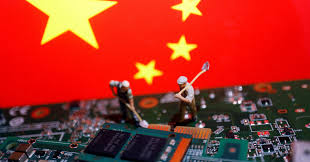
The White House released a fact sheet detailing aspects of the trade agreement reached earlier between Donald Trump and Xi Jinping.
The White House announced that China will effectively halt the implementation of additional export controls on rare earth metals and will cease investigations aimed at US companies within the semiconductor supply chain.
The White House issued a fact sheet that elaborated on the trade agreement made earlier by President Donald Trump and Chinese leader Xi Jinping, which seeks to alleviate tensions between the two largest economies in the world.
As part of the agreement, China will provide general licenses that will be valid for the export of rare earths, gallium, germanium, antimony, and graphite “for the benefit of U.S. end users and their suppliers globally,” according to the White House. This indicates the effective lifting of controls that China had imposed in April 2025 and October 2022. Previously, both the US and China had stated that Beijing would suspend the more stringent controls announced in October 2025 for a duration of one year.
The framework also indicates that China will cease its antitrust, anti-monopoly, and anti-dumping investigations into US chip manufacturers, including Nvidia and Qualcomm, as stated by a US official who requested anonymity. Additionally, Washington will suspend some of the reciprocal tariffs imposed by Trump on China for another year and is halting the plans to enforce a 100% tariff on Chinese exports to the US that had been threatened for November. The White House further announced that the US will extend the expiration of certain Section 301 tariff exclusions, which are currently set to expire on November 29, 2025, until November 10, 2026.
US Treasury Secretary Scott Bessent remarked that despite these agreements, the US and its allies must remain cautious regarding China. “This issue has persisted for several decades, and it has not been adequately addressed concerning these rare earths and rare earth magnets,” Bessent stated during an appearance on Fox News Sunday. “The Chinese have monopolized the market, and regrettably, they have sometimes demonstrated unreliability as partners.” Bessent expressed hope that “we can rely on them to be more dependable partners” following the execution of the agreement.
“China is prepared to collaborate with the United States to implement the significant mutual understandings reached by the two presidents, and to consistently reduce the list of issues while expanding the list of cooperative efforts through dialogue and consultation,” stated the Chinese Embassy in Washington.
The historic summit between Trump and Xi, marking their first in-person meeting during the US president’s second term, aimed to stabilize relations in the short-term following a rising trade conflict that had unsettled markets and raised concerns about a global economic downturn.
As per their agreement, the White House reported that China consented to suspend extensive controls on rare-earth magnets in return for a US commitment to retract an expansion of restrictions on Chinese firms. China had leveraged its dominance in rare-earth mineral processing, threatening to limit their supply to the US and allied nations.
Additionally, the US agreed to reduce a fentanyl-related tariff from 20% to 10%, while Beijing will recommence purchases of American soybeans and other agricultural goods. The US has indicated that China will acquire 12 million metric tons of soybeans in the current season, and at least 25 million metric tons annually for the next three years. On Friday, Trump expressed his desire to eliminate all fentanyl-related tariffs if China continued to enforce measures against the export of the drug and its precursor chemicals.
“Once we observe that, we will eliminate the remaining 10%,” Trump remarked to reporters aboard Air Force One.
On Saturday, the United States announced that Beijing will implement measures to permit the Chinese facilities of Dutch chipmaker Nexperia BV to recommence shipments, thereby confirming a report from Bloomberg published the previous day. This action is expected to alleviate concerns regarding chip shipments that had posed a threat to automobile production amid the escalating trade conflict between China and the United States.
However, while this agreement has reduced tensions, it may merely represent a temporary ceasefire in a prolonged trade dispute, with the measures intended to remain in effect for only one year. Furthermore, despite addressing several critical issues and both parties securing significant concessions, the agreement does not thoroughly resolve all the underlying problems central to the US-China trade conflict, nor does it tackle other geopolitical tensions such as those involving Taiwan and Russia’s ongoing war in Ukraine.
President Trump has approved a strategy that would enable an American consortium to acquire the US operations of ByteDance Ltd.’s TikTok application, although Beijing has not yet granted formal approval for this transaction. Additionally, the US president has indicated that there will be collaboration in the energy sector, noting that China has consented to purchase oil and gas from Alaska.