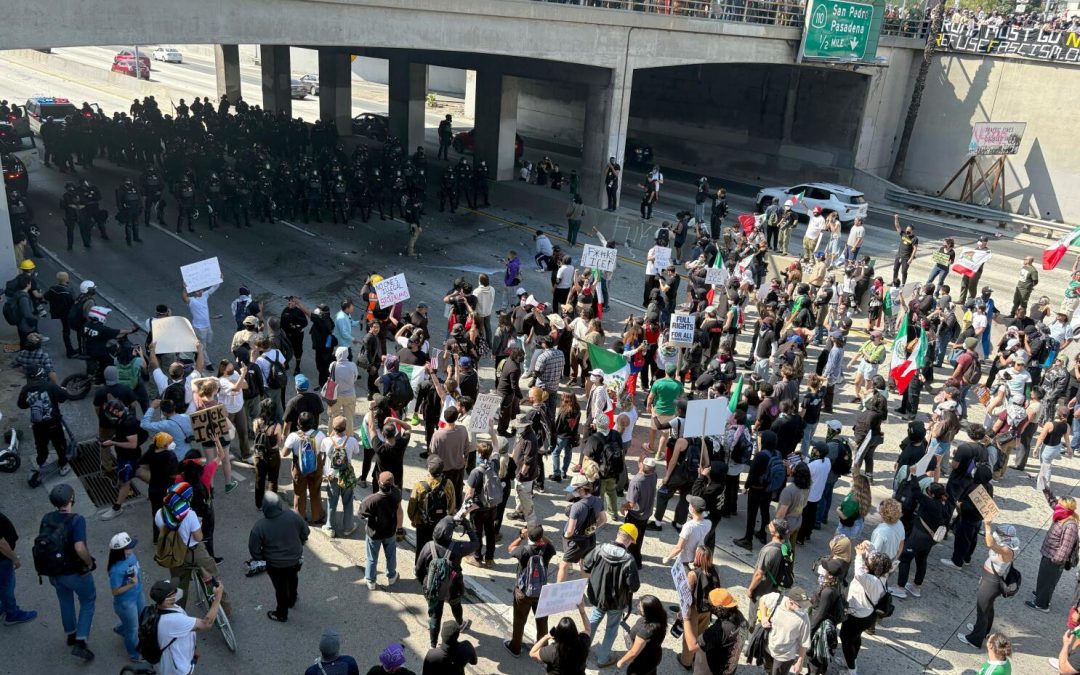
CHICAGO: Following major demonstrations in Los Angeles, Chicago erupted in protest on Tuesday as more than 1,000 people rallied downtown to oppose the Trump administration’s ongoing immigration raids. The protests, aimed at denouncing U.S. Immigration and Customs Enforcement (ICE) operations, are part of a growing wave of resistance spreading across several U.S. cities.
The demonstration began outside the immigration court on East Adams Street around 3 p.m., where protesters voiced their outrage at what they called unjust detentions and deportations. A second rally gathered momentum at Federal Plaza by 5:30 p.m., and the two groups later merged to march through the city’s Loop, bringing traffic to a standstill on parts of Lake Shore Drive.
Demonstrators chanted slogans demanding an immediate end to the raids and condemned President Trump’s immigration and deportation policies. The Chicago Police Department deployed officers on bicycles to monitor the crowd, manage road closures, and redirect traffic.
The protest was one of several held or planned nationwide, with cities including New York, San Francisco, Dallas, Portland, Boston, and Philadelphia experiencing or preparing for similar demonstrations. The coordinated actions reflect a surge of public opposition to intensified immigration enforcement and the perceived militarization of deportation efforts.
Organizers described the Chicago protest as a show of solidarity with immigrant communities and an urgent call for humane and just policies. Many participants carried signs and wore symbolic attire in support of immigrants, while others called attention to broader global struggles.
In Washington, D.C., protests also gained traction. Conservative commentator Laura Loomer posted on X (formerly Twitter) that demonstrators were chanting, “From Palestine to Mexico, the border wall has to go.” She alleged that some protesters were wearing Palestinian keffiyehs and claimed that pro-Hamas individuals were involved—an assertion not confirmed by other sources.
As demonstrations continue across the country, activists say they are committed to maintaining pressure on federal authorities and amplifying the voices of those most affected by immigration enforcement.