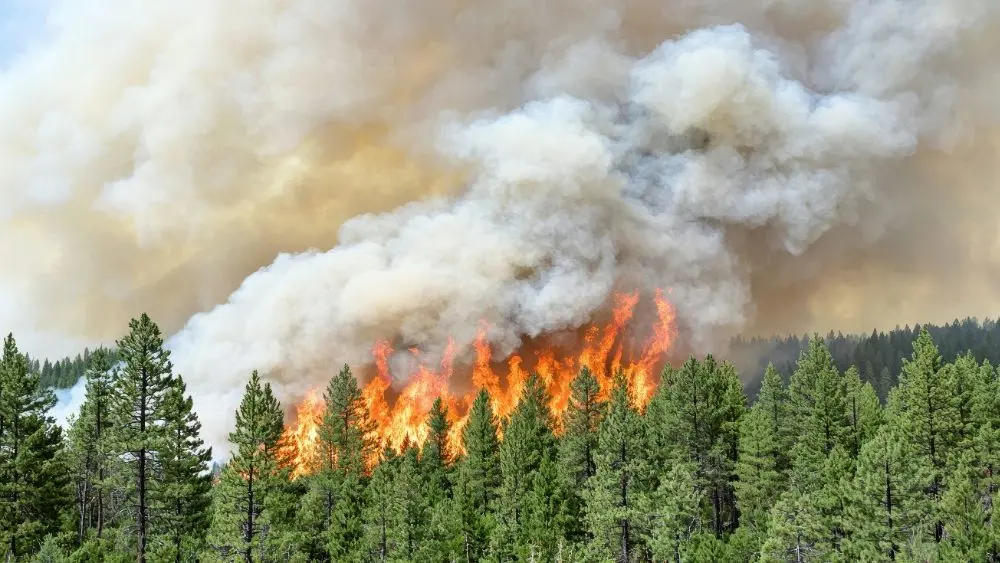
WASHINGTON, D.C.: Thick smoke from hundreds of Canadian wildfires blanketed parts of the Midwest and Northeast U.S. over the weekend, triggering widespread air quality alerts and prompting health advisories across several states.
According to NPR and government data, Canada is experiencing its second-worst wildfire season on record, with nearly 4,000 wildfires reported so far this year. As of Sunday, the Canadian Interagency Forest Fire Centre confirmed over 700 active fires, more than 500 of which remain uncontrolled, particularly in southern Manitoba near the U.S. border.
The cross-border smoke, driven by prevailing wind patterns, has resulted in hazy skies and deteriorating air quality in states including Wisconsin, Michigan, Minnesota, Illinois, and Indiana. Alerts were also issued in parts of New York, Vermont, New Hampshire, and Maine, with residents advised to limit outdoor activity.
Bob Oravec, lead forecaster at the National Weather Service, explained to NPR that current wind flows are helping transport smoke into the U.S. “The smoke rises into the upper-level winds and is carried downstream—like a leaf being blown,” he said.
Longest Alert on Record for Minnesota
Minnesota’s Pollution Control Agency extended its statewide air quality alert until noon on Monday, August 4, marking what could become the longest alert since 2008, when the agency began tracking such events. While conditions briefly improved in some parts of the state Sunday, the Air Quality Index (AQI) was expected to hit the “red” level, which is considered unhealthy for everyone.
Officials warned that even healthy individuals may experience symptoms like eye irritation, coughing, or breathing difficulties. More vulnerable populations—including those with heart or lung conditions—could face serious health risks, such as asthma attacks, heart attacks, or strokes, the agency said.
Alerts Extended Across Region
- Wisconsin’s Department of Natural Resources also extended its alert through Monday, especially for southeastern counties.
- Michigan issued alerts for all counties through Monday, citing elevated AQI levels.
- Cities like Detroit, Chicago, and Minneapolis were ranked by IQAir on Sunday as among the most polluted in the U.S.
Outlook: More Smoke Likely
Smoke-related air quality issues could persist into the week. Oravec noted, “The current pattern looks likely to continue. There might be brief improvements, but overall, the potential for additional smoke drifting southeast remains high.”
Wildfires in Canada have plagued the country for much of the year. In May, two people died in a blaze in southeastern Manitoba. Similar smoke episodes impacted the U.S. in June, underscoring the cross-border nature of the crisis.
As conditions remain volatile, authorities continue to monitor the situation, urging residents to stay indoors, use air purifiers where possible, and avoid strenuous activity outdoors.