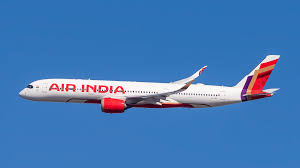
NEW DELHI: Air India is set to scale back its dependence on Turkish Technic for maintenance of its wide-body aircraft, redirecting operations to alternative global Maintenance, Repair and Overhaul (MRO) providers. The move, announced by CEO Campbell Wilson, comes amid rising geopolitical tensions involving Turkiye.
The shift follows Turkiye’s public support for Pakistan in May and its criticism of India’s anti-terror operations. In response, India’s Bureau of Civil Aviation Security (BCAS) revoked the security clearance of Turkish company Celebi Airport Services India Pvt Ltd on May 15, citing “national security” concerns.
Soon after, on May 30, the Directorate General of Civil Aviation (DGCA) granted IndiGo a final three-month extension to operate two damp-leased Boeing 777s from Turkish Airlines, setting a deadline of August 31 to terminate the arrangement.
Speaking to PTI, Wilson acknowledged Air India’s reliance on Turkish Technic for heavy maintenance of a portion of its Boeing 777 and 787 fleet. However, he emphasized the airline’s responsiveness to shifting geopolitical realities and national sentiment.
“We are obviously sensitive to national sentiment and perhaps national wishes,” Wilson said. “Regardless of the country involved, we will take cognizance of what people expect us to do. While adjustments take time, we will recalibrate our plans accordingly.”
Air India will temporarily reroute aircraft requiring MRO services to facilities in the Middle East, Southeast Asia, the U.S., and, to a limited extent, still to Turkish Technic—until domestic capacity can be ramped up. “With these recent developments, we’ll reduce the number of aircraft going to Turkiye and direct them elsewhere,” Wilson added.
He also noted that responding to challenges—ranging from geopolitical issues to supply chain constraints—is part of the airline’s transformation journey. “In a turnaround, there are countless things that demand action. The objective remains absolutely clear—the scale of opportunity is clearer than ever,” he said.
Since its privatization, Air India has seen strong growth in both passenger and cargo segments. Wilson reported that cargo revenue has more than tripled, while passenger revenue has doubled over the same period.
“With non-stop service to key global destinations, enhanced cargo focus, better systems, and a more consistent product offering, we’re now a much more credible player in the cargo space. The upside potential is substantial,” he said.
Air India currently operates a fleet of 191 aircraft, including 64 wide-body jets.