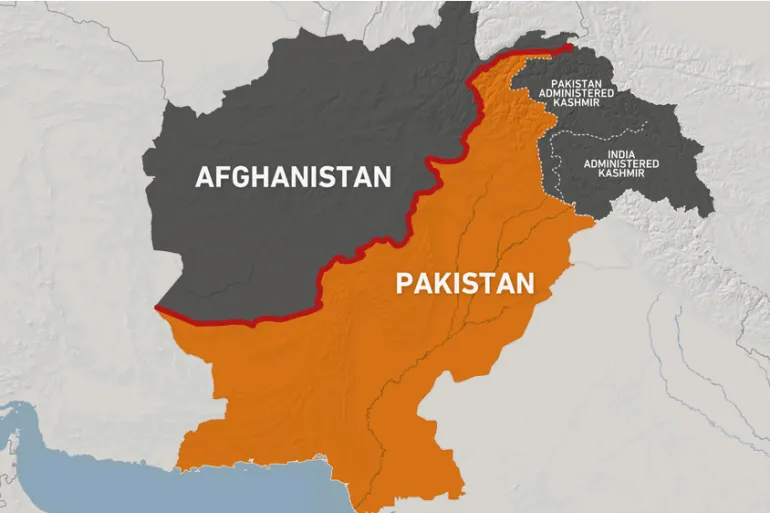
Tensions between Afghanistan and Pakistan escalated further on Thursday after the Taliban government accused Islamabad of carrying out two drone strikes in Kabul a day earlier, even as both nations announced a 48-hour ceasefire following days of deadly cross-border clashes.
According to Taliban officials, the strikes hit a civilian home and a marketplace in the Afghan capital on Wednesday, killing at least five people and injuring dozens more. Hospital sources confirmed that many victims suffered shrapnel wounds, burns, and blunt trauma, while Emergency, an Italian NGO operating a surgical centre in Kabul, said ten patients were in critical condition.
Khalid Zadran, spokesperson for the Kabul police chief, confirmed that drone strikes occurred but did not release full casualty figures. Initially, Taliban chief spokesperson Zabihullah Mujahid attributed the blasts to an oil tanker explosion, but later blamed Pakistan.
Pakistani officials, speaking anonymously to the Associated Press, maintained that the strikes targeted militant hideouts, not civilians.
Escalating Border Clashes
Violence along the 2,611-kilometre Durand Line has intensified since October 10, with both sides accusing each other of sheltering militants. The Taliban alleges that Pakistan’s military has violated Afghan airspace, while Islamabad claims that Kabul allows the Tehreek-e-Taliban Pakistan (TTP) and other armed groups to operate freely inside Afghanistan.
On Wednesday, the UN Assistance Mission in Afghanistan (UNAMA) reported 17 civilian deaths and 346 injuries in Spin Boldak, located on the Afghan side of the border. The UN urged both countries to end hostilities and protect civilians, warning that continued fighting could worsen the humanitarian crisis.
Ceasefire and Political Reactions
The temporary truce, effective from 6 pm (Islamabad time) on Wednesday, was brokered to halt the bloodshed and open a window for dialogue. However, its extension remains uncertain.
Pakistan’s Prime Minister Shehbaz Sharif said the decision to prolong the ceasefire now lies with Kabul. “The ball is in the Afghan Taliban’s court,” he told reporters on Thursday. “If within 48 hours they want to resolve the issues and address our genuine demands, then we are ready for them.” Sharif reiterated that Afghan territory must not be used to launch attacks by Pakistani Taliban militants.
Meanwhile, residents of Spin Boldak were seen returning home and reopening shops under the fragile truce, according to AFP. In Kabul, municipal workers began repairing damaged roads and buildings, while parts of the city continued to experience blackouts caused by the explosions.
Emergency’s country director, Dejan Panic, said: “We started receiving ambulances filled with wounded people… Ten are in critical condition.”
The ongoing dispute over the Durand Line, which Afghanistan has never formally recognised, continues to fuel instability between the two neighbours, each blaming the other for harbouring and enabling cross-border militant operations.