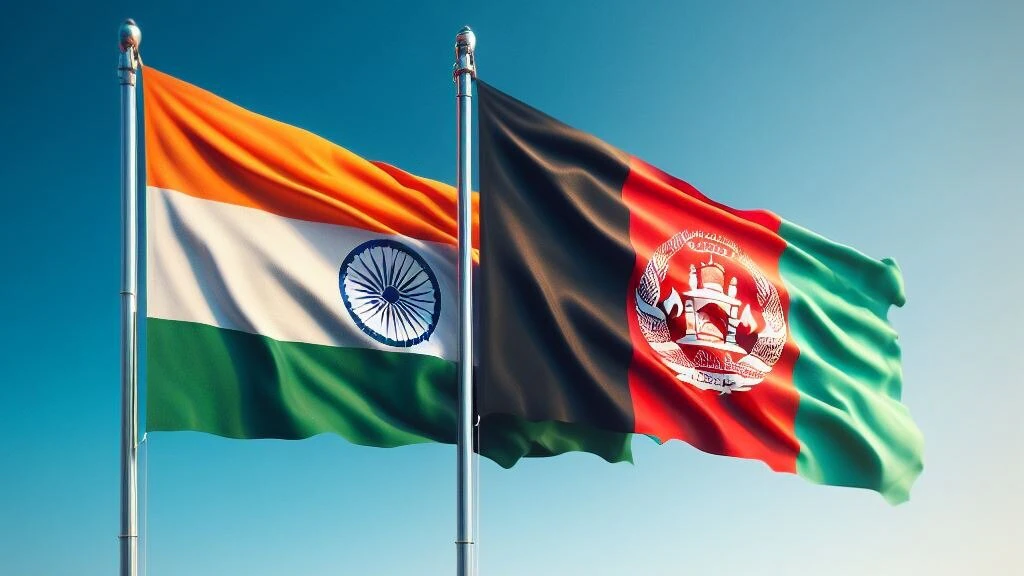
NEW DELHI: Afghanistan will grant a five-year tax exemption to new domestic industries and levy only a 1% import duty on raw materials and machinery, Afghan commerce minister Nooruddin Azizi announced on Friday, as he emphasized Kabul’s intent to strengthen economic ties with India.
Azizi highlighted cement, rice, textiles, pharmaceuticals, mining, and energy as high-priority sectors for Afghanistan, a nation striving to revive its economy after years of conflict.
“To support domestic industries, we are offering a preferential 1% tariff on raw materials and machinery, along with a five-year tax holiday for new industries established in Afghanistan,” Azizi said at a PHD Chamber of Commerce and Industry (PHDCCI) event in New Delhi. He added that Afghanistan had created a “flexible and enabling” business environment and urged Indian companies to invest heavily across sectors.
Speaking on production-linked incentives, he said, “We have economic-oriented policies… If production rises by 20%, government support will also rise, and it will continue to increase as production grows.”
Also present at the event, M. Prakash Anand, joint secretary in the ministry of external affairs, said both countries had agreed to appoint trade attachés in their embassies to boost bilateral trade and revive joint working groups on trade, commerce, and investment.
He noted that air corridors on the Kabul–Delhi and Kabul–Amritsar routes had been activated, with cargo flights set to start soon.
Azizi also highlighted Afghanistan’s logistical challenges, including border closures with Pakistan, disrupted transit routes via Chabahar Port, and frozen foreign reserves worth $9.3 billion held by the US following the Taliban takeover. “Americans have frozen $9 billion of our funds and blocked our trade routes. Pakistan blocks one side. What are we supposed to do?” he said, urging India to help ensure that the Chabahar trade route remains operational and economically viable.
He added that Afghanistan was ready to offer financial concessions and co-invest with India and Iran to expedite infrastructure improvements. “We are here for one purpose—to find the lowest-cost route,” he said. “If ships are needed, we will support it. If transport companies are needed, we will support them. If logistics require infrastructure, we will support that too. We also invite the private sector to partner with us.”
Azizi stressed that the current $1 billion in India–Afghanistan trade is “far below potential.” He pointed to Afghanistan’s raw materials, dry fruits, carpets, and minerals as strong opportunities for Indian buyers, while India continues to export rice, sugar, medicines, and garments. “Any trader who comes with a plan—we will evaluate it and provide all possible facilities,” he said.