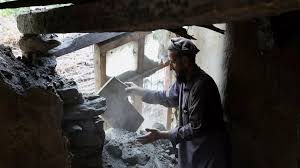
At least seven individuals lost their lives and 150 sustained injuries following a 6.3 magnitude earthquake that struck Afghanistan. The United States Geological Survey reported that the earthquake occurred at a depth of 28 km (17.4 miles) near Mazar-e Sharif, a city with an approximate population of 523,000. “As of this morning, a total of 150 injured individuals and seven deceased have been reported and transported to health facilities,” stated Samim Joyanda, spokesperson for the health department, in an interview with news agency. He noted that the casualty figures were derived from hospital reports compiled by morning. In addition, the earthquake caused damage to a portion of the revered shrine of Mazar-i-Sharif, as reported by Haji Zaid, spokesperson for Balkh province, to Reuters. The USGS issued an orange alert through its PAGER system, which is an automated tool that provides information regarding the impact of earthquakes, indicating that “significant casualties are likely and the disaster may be widespread.” Historical instances associated with this alert level have necessitated a response at the regional or national level, as indicated by the system’s alert.
In early August, thousands lost their lives and many more sustained injuries following an earthquake and a series of aftershocks that struck Afghanistan. The country is particularly susceptible to seismic activity due to its position on two significant active faults, which have the capacity to rupture and inflict considerable destruction. Major tremors occurred in western Herat, close to the Iranian border, in 2023, and in eastern Nangarhar province in 2022, resulting in the deaths of hundreds and the destruction of thousands of homes. The United Nations and various aid organizations have issued warnings about the increasing hunger among the Afghan populace, as the isolated nation grapples with a humanitarian crisis exacerbated by drought, economic limitations on the banking sector, and the return of millions of Afghan citizens from neighboring Iran and Pakistan. Earthquakes frequently occur in Afghanistan, especially along the Hindu Kush Mountain range, where the Eurasian and Indian tectonic plates converge.