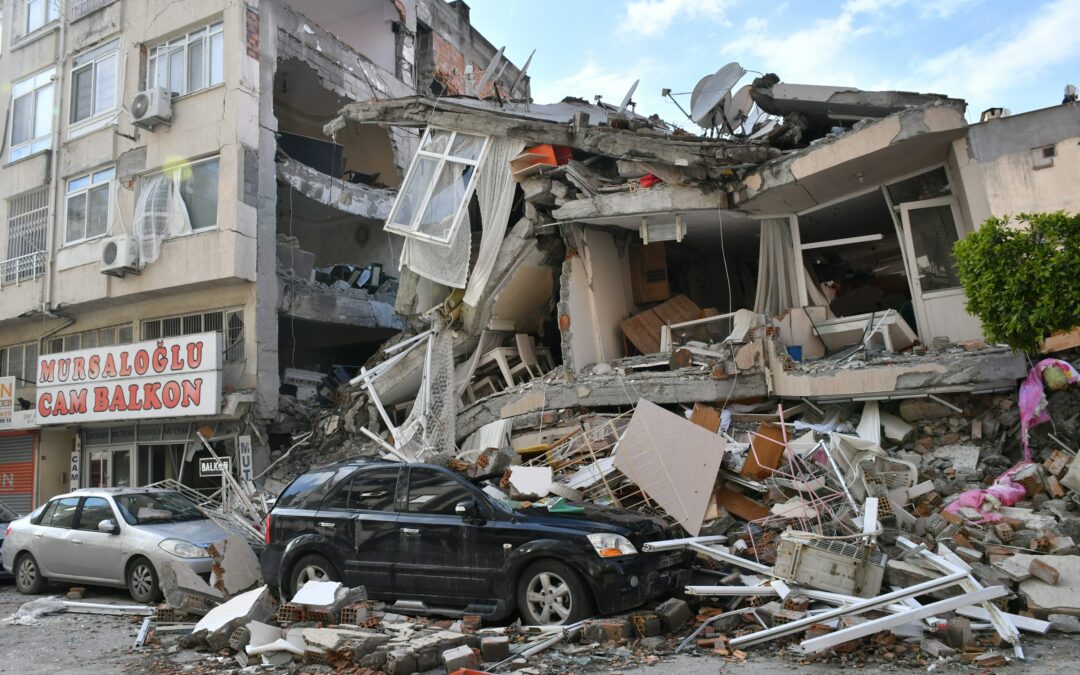
A significant earthquake with a magnitude of 7.2 struck the Mindanao region of the Philippines on Friday. According to the European-Mediterranean Seismological Centre, the seismic event occurred at a considerable depth of 62 kilometers. This notable tremor has raised alarms throughout the affected region, necessitating immediate attention and further examination of its consequences.
On the same day, a powerful earthquake measuring 7.6 in magnitude hit the Mindanao region, prompting warnings for nearby coastal areas, as reported by the European-Mediterranean Seismological Centre (EMSC). The earthquake was recorded at a depth of 58 kilometers below the surface, resulting in the unfortunate loss of two lives.
Initially, EMSC reported the earthquake’s magnitude as 7.2 but later revised it to 7.6. The US Tsunami Warning System issued an alert indicating that hazardous tsunami waves could potentially impact coastal regions within 300 kilometers of the earthquake’s epicenter.
In response to the strong earthquake that affected the southern Philippines, Indonesia also issued a tsunami warning for the northern Sulawesi and Papua regions, as stated by Indonesia’s geophysics agency. The agency’s modeling indicated a risk of tsunami waves reaching heights of up to 50 cm along Indonesia’s coastlines, as mentioned in their statement.
This event comes just 10 days after a 6.9 magnitude earthquake that resulted in 74 fatalities. The Philippines is still dealing with the repercussions of that earthquake, which struck on September 30, leading to the evacuation of thousands in Cebu province, particularly impacting Bogo city and its surrounding areas.
The geographical position of the Philippines on the Pacific “Ring of Fire,” an area characterized by seismic faults, renders it especially susceptible to earthquakes and volcanic activity. The nation experiences around 20 typhoons and storms each year, necessitating extensive disaster response efforts from both governmental bodies and volunteer organizations.
These natural calamities have positioned the Philippines as one of the most disaster-prone countries globally, requiring ongoing preparedness and responsive strategies.