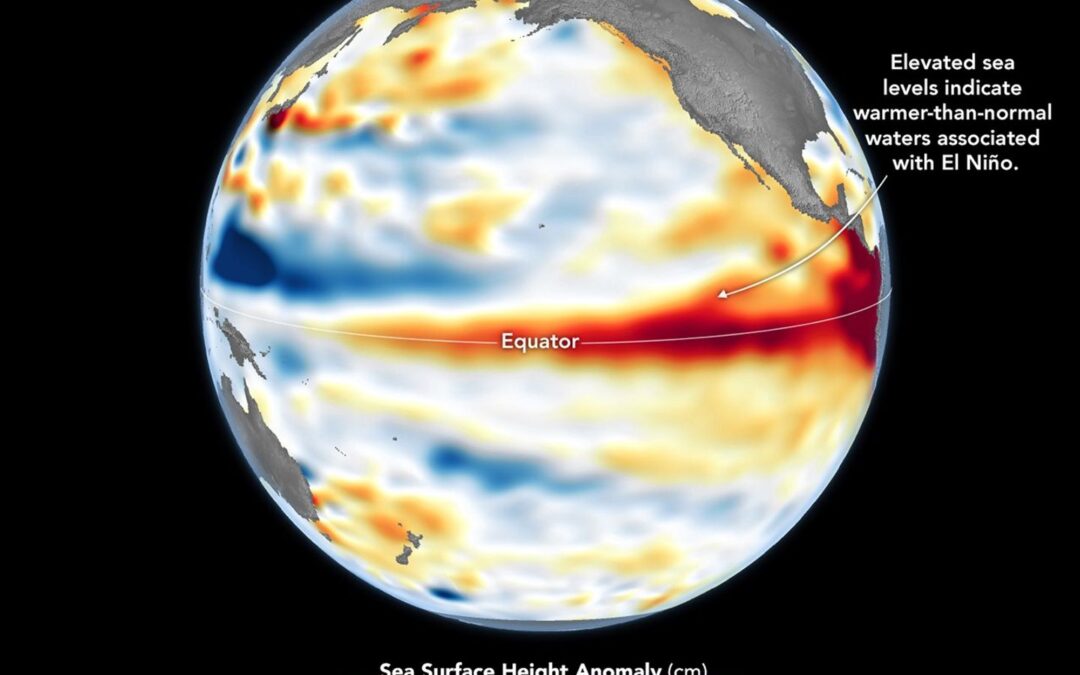
Hyderabad is staring at a potentially severe drinking water crisis, with El Niño conditions and below-normal rainfall threatening to push two of its key reservoirs, Singur and Manjeera, towards critically low levels. The situation could become particularly acute from December, with the city’s daily water deficit potentially crossing 1,000 million litres per day (MLD), compared with the existing shortfall of nearly 600 MLD.
The projected deficit could make Hyderabad one of the worst-affected metropolitan cities in the country. Singur and Manjeera together supply around 480 million gallons per day (MGD), accounting for nearly 20% of the city’s total water supply of 2,600 MLD. Hyderabad’s estimated daily water demand, however, stands at approximately 3,200 MLD, highlighting the widening gap between demand and availability.
Hyderabad faces a greater challenge than Mumbai and Bengaluru
Other major Indian cities are also preparing for the impact of El Niño, but their water situations appear relatively more manageable. Bengaluru is estimated to face a daily deficit of 500-600 MLD, while Mumbai’s shortfall is projected at around 500 MLD. Delhi, like Hyderabad, could face a deficit of nearly 1,000 MLD.
However, the national capital has received 14% excess rainfall this season, providing some relief ahead of the summer months. Delhi also has established contingency mechanisms to manage water shortages, including emergency supply networks, wastewater recycling and groundwater extraction through tube wells, particularly along the Yamuna and Ganga, according to the Delhi Jal Board.
Rainfall deficit adds to Hyderabad’s water woes
Hyderabad’s situation is particularly concerning because of the significant rainfall deficit across its CURE region, which includes Hyderabad, Rangareddy and Medchal-Malkajgiri. The region has received around 240 mm less rainfall than usual this year, representing a deficit of approximately 33%.
The shortfall has further strained an already stretched water supply system, with the widening demand-supply gap emerging as an additional challenge for authorities.
Experts have also pointed out that rainfall in the catchment areas of Hyderabad’s reservoirs has been considerably lower than in the catchments supplying Mumbai and Delhi.
An official from the National Environmental Engineering Research Institute (NEERI) said this makes Hyderabad particularly vulnerable as summer approaches and groundwater extraction becomes increasingly difficult. The situation could worsen from February onwards, when groundwater availability is expected to decline sharply.
Reservoir storage levels raise concerns
The latest storage figures indicate the extent of pressure on Hyderabad’s water resources. Singur is operating at just 7% of its storage capacity, while Manjeera is at 17%. The levels at Osmansagar and Nagarjunasagar are comparatively better, at 54% and 57%, respectively.
These low storage levels have raised concerns over the city’s ability to maintain uninterrupted drinking water supplies in the coming months.
Mumbai and Bengaluru have relatively better water buffers
Mumbai appears to be in a more comfortable position, supported by its seven major drinking water sources, including Bhatsa and Modak Sagar. Official records indicate that the reservoirs collectively hold more than 80% of their storage capacity following approximately 2,500 mm of rainfall during the monsoon, against the normal seasonal average of 2,490 mm.
Experts believe the healthy storage levels should help the Maharashtra capital manage the summer months despite the El Niño effect, with supplies expected to remain sustainable for the next seven to eight months.
Bengaluru also has a relatively stronger reservoir buffer. The Krishna Raja Sagara Dam in Mandya district and other reservoirs across the Cauvery basin collectively hold around 50% of their storage capacity, according to available estimates. Another advantage is that the city’s reservoir network and pumping infrastructure can help supply water to different parts of Bengaluru.
A water management expert from Bengaluru said Hyderabad could see nearly 3.5 lakh consumers in its IT corridor, who depend entirely on Manjeera, facing the prospect of dry taps as early as next month.
In comparison, Bengaluru may still be able to maintain some supply to severely affected neighbourhoods such as Bommanahalli and Chickpet, as multiple pumping stations draw water from the Cauvery to serve different parts of the city.
Water crisis could continue until April
Experts fear Hyderabad’s water shortage could persist until April, putting additional pressure on the city’s already strained supply infrastructure. With reservoir levels declining, groundwater availability expected to weaken and rainfall deficits continuing to affect replenishment, the coming months could prove particularly challenging for the city.
The situation highlights the need for urgent water conservation measures, better reservoir management and alternative supply arrangements to prevent a prolonged drinking water crisis.