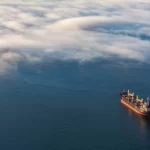
Japanese shipowner Mitsui O.S.K. Lines has put the 95,311-dwt LNG dual-fuel coal carrier MAIZURU KAZENOMAI into service for Kansai Electric Power, according to a company statement.
The 234.98-metre, Liberian-flagged vessel is Japan’s first coal carrier equipped with MOL’s Wind Challenger rigid sail. Oshima Shipbuilding completed the ship at its Koyagi yard, where a naming and delivery ceremony was held on 28 October.
MAIZURU KAZENOMAI will carry coal to Kansai Electric Power’s Maizuru thermal power plant in Kyoto prefecture. The 38-metre-wide vessel can burn conventional marine fuel oil or LNG, while the rigid sail provides supplementary wind propulsion to reduce fuel consumption.
Kansai Electric Power estimates that LNG use can cut CO2 emissions by about 25% compared with a conventional vessel, with Wind Challenger providing a further reduction of about 5% to 8% on the Japan-Australia trade.
MOL puts the combined CO2 reduction from LNG dual-fuel propulsion and Wind Challenger at up to about 30% compared with a conventional heavy-fuel-oil vessel. LNG use is also expected to reduce greenhouse-gas and nitrogen oxide emissions and sharply cut sulphur oxide emissions.
MOL and Kansai Electric Power signed a basic agreement for the dedicated coal transport service in June 2023, while MOL reached an agreement with Oshima Shipbuilding to construct the vessel. Completion had been scheduled for the second half of 2026.
Kansai Electric Power president Nozomu Mori attended the completion ceremony. MOL is led by president and chief executive Jotaro Tamura and plans to deploy 25 Wind Challenger-equipped vessels by 2030 and 80 by 2035 as part of its target for net-zero greenhouse-gas emissions by 2050.
Tokyo-headquartered MOL operated 930 vessels and had 611 consolidated subsidiaries and equity-method affiliates and 11,567 employees as of 31 March 2026.
Kansai Electric Power uses dedicated vessels, contracts of affreightment and spot contracts in its fuel transport strategy.
Oshima Shipbuilding is a Japanese shipbuilding company and jointly developed the Wind Challenger system with MOL.