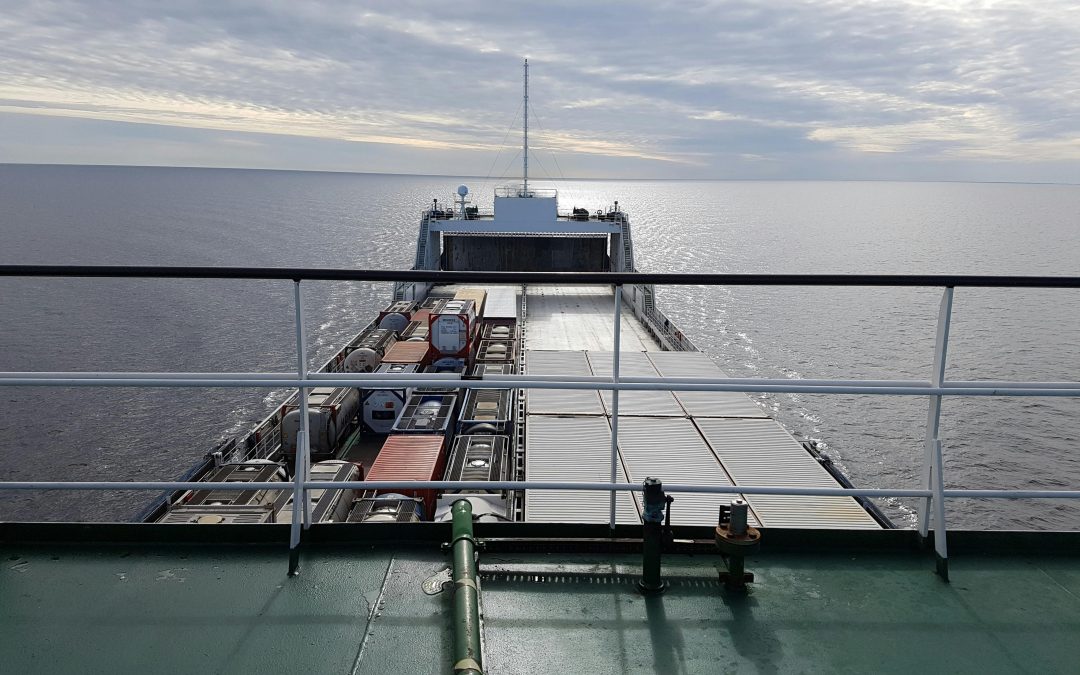
The ports of Shanghai and Melbourne have moved their China-Australia green shipping corridor into the implementation phase, targeting deployment of low-carbon-fuel container ships on the route by 2035, according to a C40 Cities statement.
The Shanghai-Melbourne Green Shipping Corridor Implementation Plan Outline was released on 21 October 2026 at the Green and Low-Carbon Forum of the North Bund International Shipping Forum in Shanghai.
The plan covers expansion of low-carbon marine fuel production, transportation, storage and bunkering, alongside green methanol and biofuels, shore power, voyage optimisation and digital data exchange between ports and ships.
The project builds on an agreement formalised on 19 October 2025 between Australia’s Port of Melbourne and the Shanghai Municipal Transportation Commission with support from C40 Cities.
Shanghai International Port Group and COSCO Shipping Lines were identified as Chinese industry partners, alongside Australian renewable-fuel developers HAMR Energy and ABEL Energy. The implementation partnership also includes Chinese energy group Shenergy and China Classification Society.
China accounts for about 50% of Port of Melbourne’s container imports and 20% of its container exports, while links between Melbourne and Shanghai date to 2006. Shanghai’s transport plans call for methanol and biofuel bunkering capacity to reach the million-tonne scale by 2030.
Port of Melbourne handled a record 3.52m TEU in the financial year ended June 2026 and targets net-zero Scope 1 and Scope 2 emissions from its own operations by 2030.
C40 Cities is a global climate network of 96 cities representing about 920m people.
Shanghai International Port Group is a Chinese port operator, COSCO Shipping Lines is a Chinese liner shipping company, HAMR Energy and ABEL Energy are Australian renewable-fuel developers, Shenergy is a Chinese energy group, China Classification Society is China’s ship classification society, and the Shanghai Municipal Transportation Commission is Shanghai’s municipal transport authority.