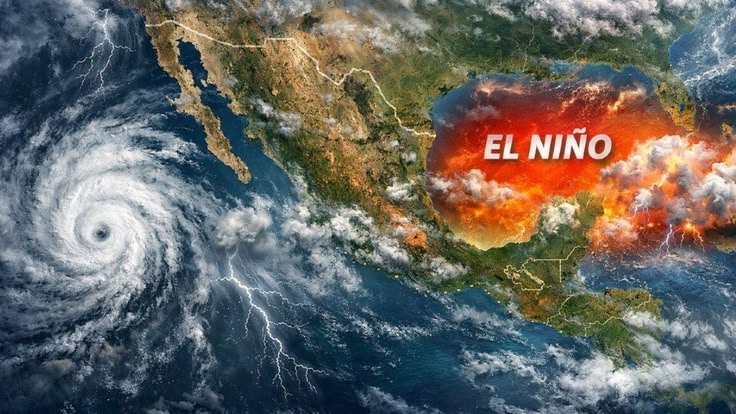
The ongoing El Niño event could reach unprecedented strength by December 2026, potentially disrupting weather patterns across the world and bringing higher temperatures and weaker rainfall to parts of South and Southeast Asia, including India, according to the World Meteorological Organization (WMO).
In its latest seasonal climate outlook, released on Wednesday, the WMO said sea surface temperatures in the tropical Pacific could rise significantly above average between November 2026 and January 2027. The event is expected to peak towards the end of the year, raising concerns about extreme heat, drought and changing rainfall patterns in several regions.
El Niño is declared when sea surface temperatures in the tropical Pacific rise at least 0.5°C above the average. Strong El Niño events can disrupt normal temperature and rainfall patterns, causing drought in some areas and heavy rainfall and flooding in others.
The WMO warned that increased heat is likely across large parts of the world. Its latest outlook also indicated that maximum and minimum temperatures could remain normal to above normal across most of South Asia, which includes India, Afghanistan, Bangladesh, Bhutan, the Maldives, Myanmar, Nepal, Pakistan and Sri Lanka.
The potential impact on rainfall is a particular concern for southern India, Sri Lanka and the Maldives, which receive significant rainfall between October and December. This period is important for agricultural activities. Parts of northeastern South Asia also receive a substantial share of their annual precipitation during these months.
India’s southwest monsoon withdrew on October 15, while northeast monsoon rainfall began in southern parts of the country on the same day. The evolving El Niño conditions could affect these seasonal rainfall patterns, although the precise impact will depend on how the event develops.
WMO Secretary-General Celeste Saulo described the forecast as exceptional, saying the potential strength of the event was beyond the monitoring charts used over the past four decades. She warned that although El Niño is expected to peak towards the end of 2026, its effects could continue long afterwards.
However, Saulo stressed that the event does not necessarily have to result in a humanitarian disaster. She highlighted the importance of scientific forecasts, early warning systems and timely action to protect vulnerable communities and their livelihoods.
The WMO outlook also highlighted contrasting weather risks in other parts of the world. East Africa is expected to experience wetter-than-normal conditions, increasing concerns about heavy rainfall and flooding. Southern Africa, meanwhile, could face drier conditions.
Parts of the Americas may also experience significant changes. Increased rainfall is forecast in the northwestern United States and parts of western South America. North America and the northern Caribbean could receive above-normal precipitation, while parts of Central America, the southern Caribbean and the Amazon region face an increased risk of drought.
The warning comes as concerns over long-term global warming continue to grow. On Wednesday, the United Nations Environment Programme released a report stating that, if current policies continue, global temperatures could rise by around 2.8°C above pre-industrial levels during this century and increase further afterwards.
The report called for urgent and substantial reductions in greenhouse gas emissions to limit the extent and duration of temperature overshoot and bring global warming back towards the 1.5°C target by the end of the century.
Together, the assessments highlight the growing risks posed by climate change and extreme weather. Experts stress that stronger preparedness, reliable early warnings and rapid reductions in greenhouse gas emissions will be essential to limit the impact on communities, agriculture and livelihoods.