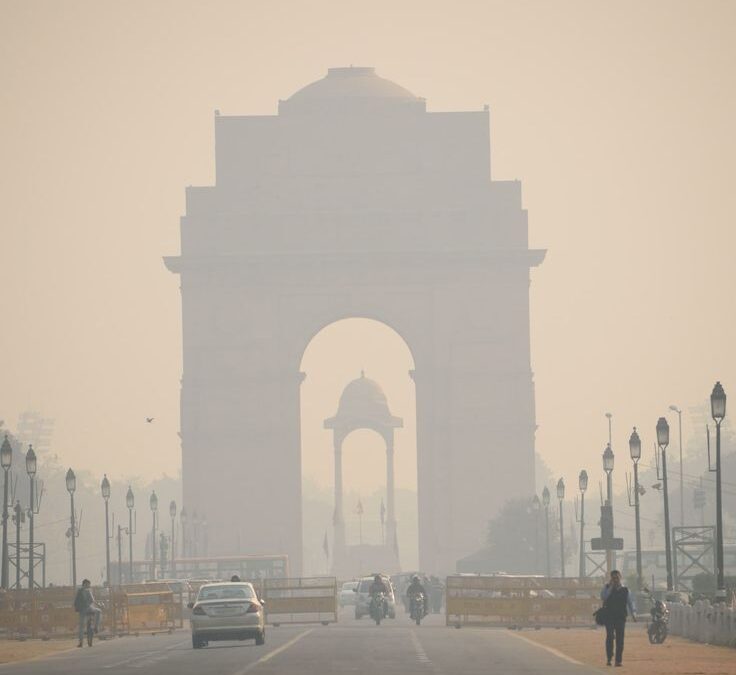
Delhi’s air quality remained in the ‘poor’ category for the second consecutive day on Thursday, with the Air Quality Index (AQI) recorded at around 253 at 9 am. Pollution levels were particularly high in Chandni Chowk, Vivek Vihar and Jahangirpuri, where AQI readings reached 307, 306 and 309, respectively, placing all three areas in the ‘very poor’ category.
According to data from 56 of Delhi’s 59 air quality monitoring stations, 19 stations recorded ‘moderate’ air quality, while the remaining stations reported ‘poor’ conditions.
Delhi recorded the season’s first ‘poor’ air quality on Wednesday, as smoke from Dussehra celebrations, combined with still and damp night-time conditions, contributed to rising pollution levels. The Commission for Air Quality Management (CAQM) subsequently invoked Stage I of the Graded Response Action Plan (GRAP) across Delhi-NCR.
The AQI rose from 179 on Tuesday to 245 at 4 pm on Wednesday, marking the highest reading of the season and the worst since July 13, when it stood at 246. The 66-point increase was the third-largest recorded on the day after Dussehra over the past decade. Wednesday’s reading was also the highest for the day after the festival since 2021, when the AQI reached 284.
Stubble Burning Expected to Increase Pollution
The contribution of stubble burning to Delhi’s pollution is expected to rise significantly over the coming days, according to the Decision Support System for Air Quality Management in Delhi.
Stubble burning’s share of the city’s pollution is forecast to increase from 3.9% on Wednesday to 7.4% on Thursday and 15.9% on Friday.
The India Meteorological Department (IMD) and the Indian Institute of Tropical Meteorology have also forecast that Delhi’s air quality is likely to remain in the ‘poor’ category over the coming days.
With pollution levels rising and farm fires expected to contribute a larger share of emissions, Delhi continues to face deteriorating air quality as the winter pollution season begins.