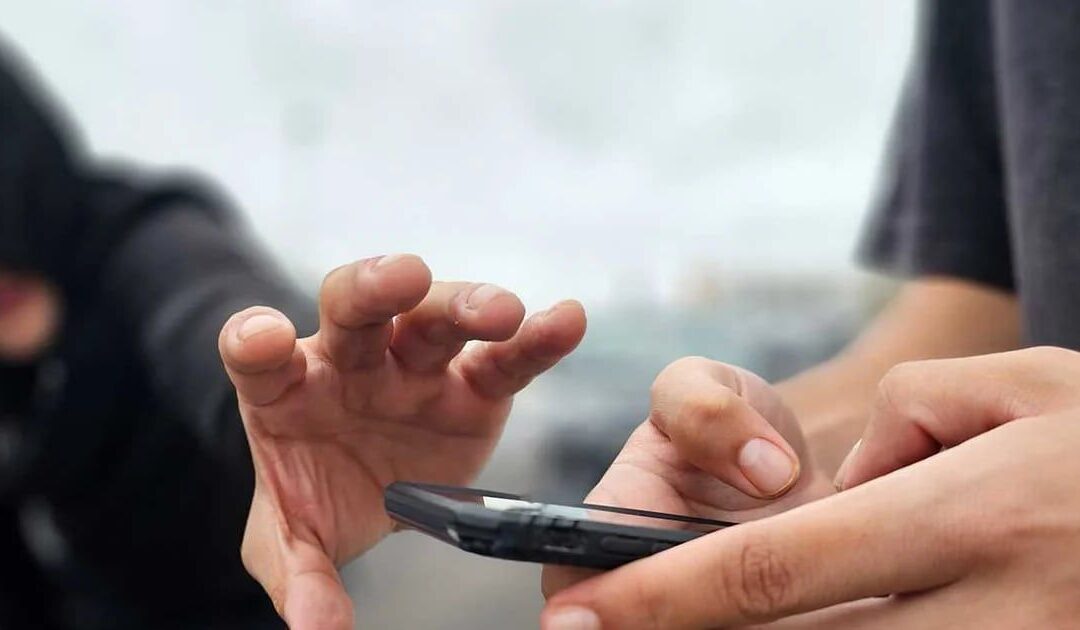
A March survey found that cellphone theft is Brazilians’ fourth-biggest safety worry, ranking above stray bullets and burglaries.
Brazilian content creator Tabata Lenk had just lost her job in Sao Paulo and was stuck in traffic when two men on a motorcycle smashed her car window and grabbed her brand-new phone off the dashboard.
Her dashcam footage of the late-August robbery quickly went viral, she said. The response shows how an everyday urban nuisance has turned into one of the defining issues of this year’s presidential election. Although phone thefts have declined since 2023, the Brazilian Public Security Forum recorded about 830,000 of them last year.
Brazil’s homicide rate has fallen 40% over the past decade, to 15.4 per 100,000 people in 2025, according to the Forum. Phone theft is a reminder of how far the country still has to go in making its more than 210 million people feel safe.
President Luiz Inacio Lula da Silva and his right-wing challenger Flavio Bolsonaro, who meet in a tight run-off next Sunday, are both competing to look tough on phone thieves. Earlier this year, Lula signed a law raising prison terms for stolen electronics to as much as 10 years and rolled out a platform for registering devices and reporting thefts. Bolsonaro has proposed a minimum eight-year sentence.
“My target is the thief and the shop that buys and sells the stolen phone, not the innocent person who bought it out of necessity,” Lula said in a televised address.
“The cellphone thief is going to jail,” Bolsonaro said in a livestream after the first round of voting.
Lenk said she felt so unsafe after the robbery that she began driving alone again only after tinting her windows.
“Nobody should be afraid to leave home, walk down the street, or use their own phone,” she said. “That’s why I think it’s essential to vote for politicians who are committed to public safety.”
Why phones matter so much to Brazilians
In one of the world’s most online countries, where social media and electronic payments are part of daily life, the cellphone is essential. Natasha Bachini Pereira, a researcher at the University of Sao Paulo’s Center for the Study of Violence, said how common phone theft is explains its political weight.
“Far more people know someone who has had a phone stolen, or have witnessed it themselves, than have encountered a car theft, a homicide or a kidnapping,” Pereira said.
Phones are costly in Brazil, and so are replacements. Deutsche Bank research found that tariffs, taxes and a weak currency make Brazil home to the world’s second-most expensive iPhone 17 Pro, at roughly $2,260 compared with $1,181 in the United States.
Even cheaper models are a major expense. According to market data firm IDC, the average phone sold for about 2,310 reais ($456.83) in 2025, close to two-thirds of the average monthly income in Brazil.
Thieves are often after online banking access as much as the handset. With digital financial services booming, driven by the central bank’s Pix payment system, fraud involving stolen devices more than quadrupled between 2024 and 2025, according to the Forum, a non-profit that promotes public safety policy.
After Lenk’s phone was stolen, the criminals used Pix to withdraw 2,000 reais from her bank account.
“Having your phone stolen by force is awful, but discovering that someone has broken into your privacy and drained your account is truly agonizing,” Lenk said.
Efforts to recover phones
Sao Paulo, Brazil’s most populous state, accounts for nearly a third of all phone thefts nationwide, the Forum says. Citing state data, it reported 268,184 phones stolen there last year.
Rodolfo Latif Sebba, a civil police chief coordinating the effort to trace stolen phones, said police across Sao Paulo are working to prevent theft “as forcefully as possible” and to improve public safety.
Still, only a small share of stolen phones make their way back to their owners. Between June 2025 and September 23 this year, Sao Paulo state police recovered 38,028 phones and returned 11,445 to victims, according to the police.
Natalia Eduarda Benvindo, a 17-year-old student, could hardly believe it when police found her stolen phone.
“I asked, ‘Are you joking?’” she said. “I really couldn’t believe it at the time. I was so happy.”