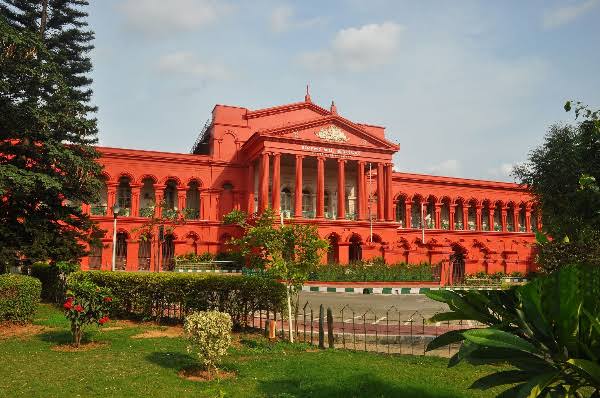
The Karnataka High Court has rejected a woman’s claim for a share in several properties held by her father, ruling that she failed to establish that the assets were ancestral or coparcenary properties in which she had acquired an interest by birth.
The case involved a woman living in the United States who had sought partition of properties belonging to her family. She argued that the assets formed part of a Hindu joint family estate and that, as a daughter and coparcener, she was entitled to an equal share.
The court, however, found that the properties in question had either been purchased by her grandfather or had subsequently come to her father through a family partition. The evidence showed that the assets had become the father’s separate properties rather than retaining the character of joint Hindu family or coparcenary property.
The ruling also clarified an important point about the 2005 amendment to the Hindu Succession Act: while daughters have the same rights as sons in coparcenary property, that right does not automatically extend to every property owned by a father.
Daughter sought partition of family properties
The woman, who had been living abroad since her marriage in 1979, approached the court after her father sold one of the properties.
She sought partition of four properties and claimed an equal share along with other members of the family. Her case also covered various movable and financial assets, including jewellery, bank deposits, investments and debentures, which she claimed were connected to the family’s joint property.
Her central argument was that the properties constituted ancestral or joint Hindu family assets and that she therefore had a right in them as a coparcener.
The dispute focused on four sets of properties, referred to in the proceedings as Schedules A, B, C and D.
The woman claimed that Schedule A was ancestral property that had come to her father’s share. She further argued that income generated from that property, including income from quarrying activity, was subsequently used to acquire Schedule B.
She also claimed that Schedules C and D had been inherited from her grandfather and therefore retained their ancestral character.
The trial court rejected her claim and dismissed the partition suit. She subsequently challenged that decision before the Karnataka High Court.
What did the High Court examine?
The central question before the High Court was not simply whether the properties had once belonged to the woman’s grandfather.
Instead, the court had to determine how the properties had originally been acquired and what legal character they had when they came into the father’s possession.
This distinction was crucial.
The court examined evidence presented during the trial, including testimony from the woman’s paternal uncle.
According to the evidence considered by the court, Schedule A had been purchased by the woman’s grandfather. During a subsequent partition, the property came to the share of the woman’s father.
The uncle described the property that came to the father’s share as his absolute property.
Similar evidence was given in relation to Schedule C. It too had been purchased by the grandfather and later came to the father’s share through partition.
The court also found that Schedule D had been the grandfather’s self-acquired property and had subsequently been allotted to the woman’s father in a family partition.
The High Court concluded that the evidence did not establish that these assets were joint Hindu family or coparcenary properties.
Instead, they had become the father’s separate properties after the partition.
Why did the 2005 Hindu Succession Act amendment matter?
A major part of the woman’s argument relied on Section 6 of the Hindu Succession Act, particularly after the amendment that came into effect on September 9, 2005.
The amendment gave daughters the same status as sons in a Mitakshara Hindu joint family by recognizing daughters as coparceners by birth.
This means that, where property is genuinely coparcenary property, a daughter can have a right in it by birth just as a son can.
However, the High Court stressed that the provision does not turn every property owned by a father into coparcenary property.
The first question therefore remains whether the property itself has the character of joint Hindu family or coparcenary property.
If it is the father’s separate or self-acquired property, descendants do not acquire an automatic birthright in it merely because they are his children.
Property inherited from a grandfather is not automatically ancestral
One of the most important aspects of the judgment concerns the common assumption that any property received from a grandfather is automatically “ancestral property”.
The court’s reasoning shows why the manner in which the property was acquired and transferred is important.
In this case, the properties had been acquired by the grandfather using his own resources. They were subsequently divided among his children, with certain properties going to the woman’s father.
Once those properties became the father’s separate assets through the family arrangement or partition, the daughter could not establish a birthright in them merely by showing that the properties had once belonged to her grandfather.
The court therefore rejected the argument that the assets continued to have a coparcenary character after coming to the father’s share.
Schedule B property
The court separately considered Schedule B, which the woman claimed had been acquired using income generated from Schedule A.
Her argument was essentially that because the original property was connected to the family, the property subsequently acquired from its income should also be treated as joint family property.
However, the High Court found that she had not established the necessary legal basis for treating the asset as coparcenary property.
The overall evidence did not establish the existence of the required unity of ownership and possession among the family members.
The court also noted that the woman had not been in possession of the properties along with her parents and sister.
On that basis, the court concluded that she had failed to discharge the initial burden of proving that the properties were coparcenary assets.
Father could deal with his separate property
The court also addressed the rights of a Hindu father over property that is genuinely his separate or self-acquired property.
A person has the legal ability to deal with his separate property, including by selling or otherwise disposing of it, subject to applicable law.
The High Court therefore found no basis for preventing the father from dealing with properties that had become his individual assets.
The judgment distinguished this situation from one involving genuine coparcenary property, where a coparcener’s rights arise by birth.
In other words, the fact that the claimant was the man’s daughter was not, by itself, sufficient to establish a right to partition.
She first had to establish that the properties were of a kind in which such a right existed.
What does the ruling mean for daughters?
The judgment does not mean that daughters have no rights over their father’s property.
Rather, it reinforces the distinction between coparcenary property and a parent’s separate property.
Under the amended Hindu Succession Act, daughters have the same rights as sons in coparcenary property in a Mitakshara joint Hindu family.
But that right is different from a claim to a parent’s self-acquired property during the parent’s lifetime.
A daughter cannot simply argue that she is entitled to a share in every asset standing in her father’s name because she is his child.
The legal character of the particular property has to be established first.
What happens after the father’s death?
The distinction becomes particularly important when considering inheritance after a parent’s death.
If a father dies intestate, meaning without leaving a valid will, his separate property can pass to his legal heirs under the applicable succession law. A daughter can then have inheritance rights alongside other eligible heirs.
That is legally different from claiming a birthright in the father’s separate property while he is alive.
The Karnataka High Court’s decision concerned the woman’s attempt to establish a present coparcenary or partition right in the properties. It did not mean that she would never have any inheritance rights in her father’s separate estate after his death.
The two situations involve different legal principles.
Why tracing the history of a property matters?
The case also highlights why the history of a property can be crucial in family property disputes.
Simply describing an asset as “ancestral” does not establish its legal character.
Courts may need to examine purchase documents, inheritance records, partition deeds, family settlements and other documents to determine how the property was acquired and subsequently transferred.
The distinction can affect whether a child has a right by birth or whether the property remains under the control of the person who owns it.
Legal experts have therefore emphasised the importance of establishing the chain of ownership before initiating a partition dispute.
The broader legal distinction
The case can be understood through a relatively simple distinction.
If a property is genuinely part of a Hindu coparcenary estate, a daughter can have rights in it on the same footing as a son under the amended Section 6.
If, however, a father owns property that is legally his separate or self-acquired asset, his children do not automatically acquire an interest in it merely because they are his descendants.
The Karnataka High Court found that the woman had not proved that the properties at the centre of her case fell into the first category.
The court consequently upheld the dismissal of her partition claim.
The ruling serves as a reminder that the words “ancestral property” and “property inherited from a parent or grandparent” are not necessarily interchangeable in Hindu property law. The circumstances in which the property was acquired, partitioned or transferred can determine whether descendants acquire rights in it by birth