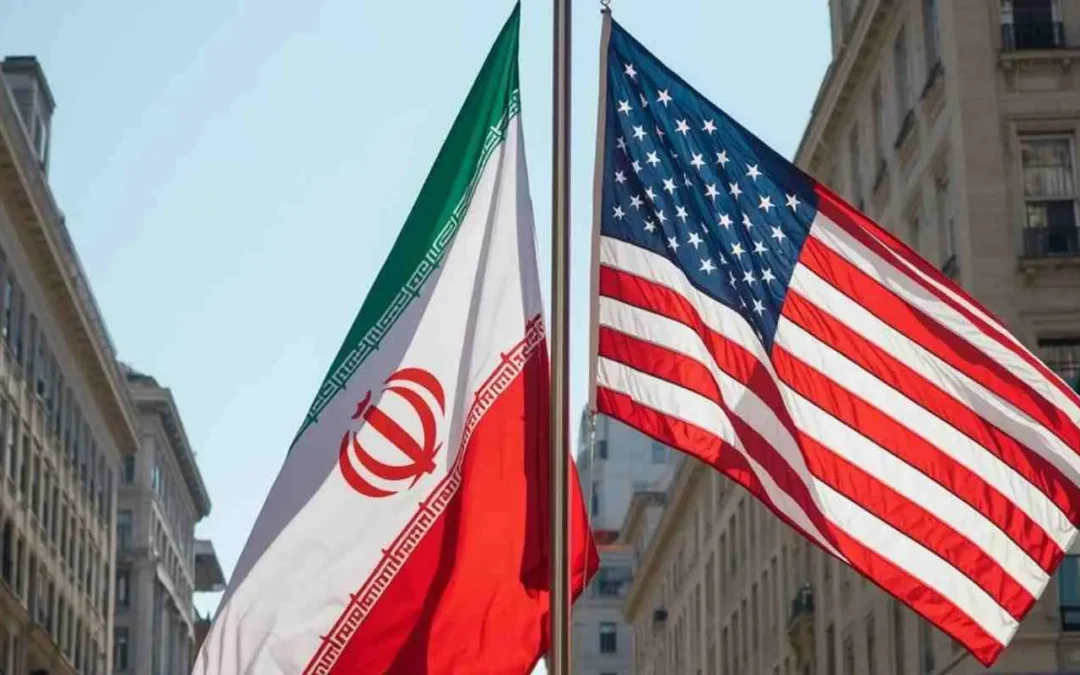
US President Donald Trump has asserted that the Strait of Hormuz is effectively under American control, while Iranian officials have claimed that US naval forces have moved more than 1,000 kilometers away from the strategic waterway.
The competing claims come amid heightened tensions over the Strait of Hormuz, one of the world’s most strategically important maritime passages and a crucial route for global energy supplies.
Trump has previously said that the United States has effective control over the strait and indicated that American naval forces have the capability to maintain a blockade. His latest remarks have drawn attention because Iranian officials are simultaneously claiming that US warships have withdrawn from the area.
Iran claims US warships have moved away
Ali Fadavi, an adviser to Iran’s Islamic Revolutionary Guard Corps (IRGC), claimed that there are currently no US naval vessels in the Persian Gulf, the Strait of Hormuz or the Gulf of Oman.
According to the Iranian claim, American forces have moved more than 1,000 kilometers away from Iran.
The claim has not been independently established in the information available from the report, leaving uncertainty over the exact location and deployment of US naval forces.
Why the Strait of Hormuz matters
The Strait of Hormuz is a narrow maritime passage connecting the Persian Gulf with the Gulf of Oman and the Arabian Sea. Its strategic importance comes from the large volume of oil and other energy products transported through the waterway.
Any prolonged disruption to shipping through the strait could therefore have consequences well beyond the Middle East, potentially affecting energy markets, shipping routes and countries dependent on Gulf supplies.
For Iran, control over or the ability to restrict passage through the waterway has long been an important element of its strategic leverage. For the United States and its regional partners, keeping maritime traffic open is a major security concern.
Iran says the strait remains closed
The competing statements come as Tehran continues to keep the Strait of Hormuz closed, according to the report.
Iran has linked reopening the waterway to conditions associated with a previous agreement. The continued closure has added another layer of uncertainty to an already tense situation in the region.
Trump’s description of the strait as effectively under US control contrasts sharply with Tehran’s position and with the Iranian claim that American naval forces have moved far from the waterway.
Competing claims leave key questions unanswered
The central question is where US naval forces are currently positioned and what role they could play if the situation around the Strait of Hormuz escalates.
Trump’s statements suggest Washington believes it retains the capability to influence or control maritime access. Iran’s claims, meanwhile, suggest that US forces have deliberately moved away from the immediate area.
Neither position, as presented in the report, independently establishes the precise location of American warships or the extent of US operational control over the waterway.
The conflicting accounts highlight the uncertainty surrounding military deployments in and around the Persian Gulf as Tehran maintains its position on the strait and Washington continues to signal that it has the ability to respond.
For now, the Strait of Hormuz remains at the centre of a wider confrontation, with its status carrying implications not only for the United States and Iran but also for global shipping and energy markets.