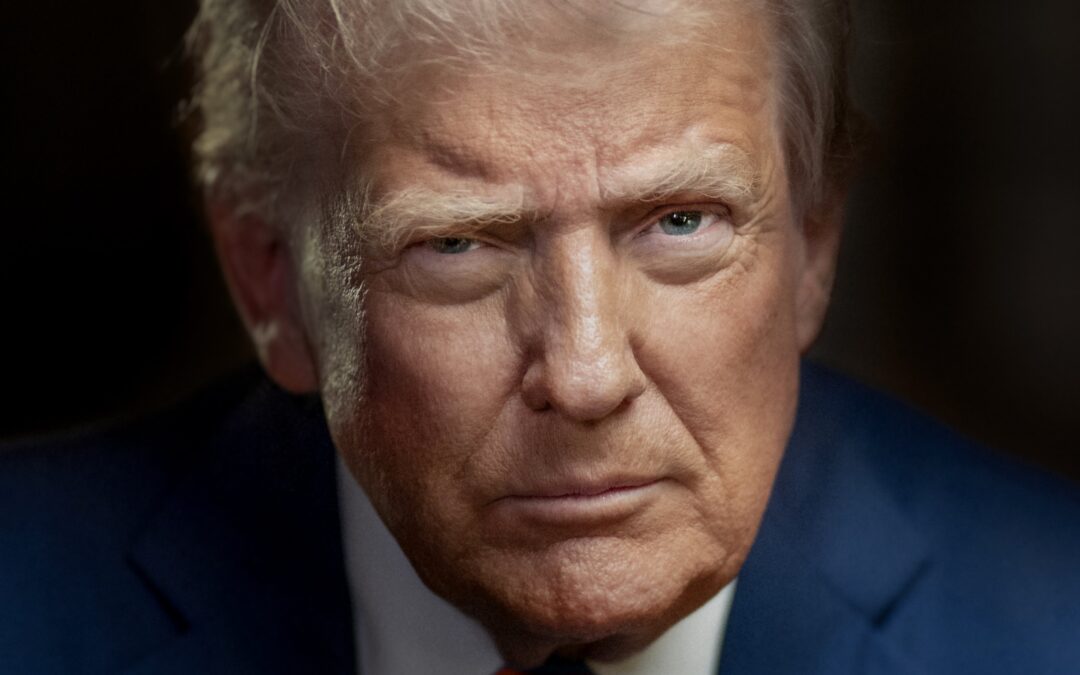
US President Donald Trump and executives from several major technology and artificial intelligence companies have signed a voluntary agreement aimed at strengthening safety measures around the development and deployment of advanced AI systems.
The agreement, called the Joint Commitment on Frontier Responsibilities, was announced following a White House meeting with technology executives. Trump described it as being “almost like a constitution.”
The one-page agreement outlines several layers of internal and external oversight, including independent audits and review of AI safety systems at the board level.
The agreement was signed by Trump and executives including Anthropic CEO Dario Amodei, Google CEO Sundar Pichai, Meta CEO Mark Zuckerberg, OpenAI President Greg Brockman, Nvidia CEO Jensen Huang and Elon Musk, founder of xAI.
Trump said the agreement would encourage significant self-regulation within the technology industry. He described it as “morally binding” and said a committee would be established to oversee the broader initiative.
The agreement is voluntary and does not create legal requirements or specify penalties for companies that fail to follow its commitments. It does, however, leave open the possibility that some of its provisions could eventually be incorporated into laws or regulations.
Participating companies also agreed to meet regularly to develop safety standards and best practices for their AI systems.
Four layers of AI safeguards
The agreement calls for companies to establish strong internal controls to monitor AI systems during training and deployment.
Particular attention would be given to potential risks involving cybersecurity, biological threats and chemical threats. The controls would also be intended to prevent AI systems from accessing or manipulating technical systems in unintended ways.
A second layer involves internal teams checking whether monitoring, detection and other safety measures are operating as intended.
The third layer calls for independent external auditors to assess whether those safeguards are effective.
The fourth layer involves an independent committee of each company’s board reviewing reports from internal safety teams and external auditors.
Some of the measures outlined in the agreement are already used by major AI companies or resemble commitments that companies have previously made.
Questions about voluntary regulation
The voluntary nature of the agreement has prompted criticism from some technology and policy experts.
Robin Jia, an assistant professor of computer science at the University of Southern California, questioned whether relying primarily on companies to monitor themselves would provide sufficient safeguards. He argued that the intentions of leading AI companies should be aligned with the broader public interest.
Alex Pascal, executive director of the Berkman Klein Center for Internet and Society, raised concerns about what he viewed as broad and vague language in the agreement. He argued that addressing AI risks would require stronger legal accountability and regulation.
Amodei, who has publicly discussed potential risks associated with rapid AI development, also acknowledged that significant questions remain about how those risks should be addressed.
“The technology has very real risks,” he said, adding that the appropriate mechanisms for addressing those risks were still being discussed.
Broader push for AI development
The agreement was announced alongside efforts by the US administration to accelerate AI development.
Trump has argued that the United States should avoid restrictions that could slow technological development and affect its ability to compete with China.
During the unveiling of an AI chatbot designed to help Americans navigate government services, Trump said he did not want to restrict the development of a technology he expects to have an impact comparable to major historical technological transformations.
Trump also signed an executive order directing executive-branch agencies to use the terms “Super Intelligence” and “SI” in official communications, policy documents and other materials, while discontinuing the use of the terms “Artificial Intelligence” and “AI” in those contexts.
The agreement therefore represents a voluntary industry commitment focused on AI safety, while the broader policy approach continues to combine efforts to encourage rapid technological development with discussions about how potential risks should be managed