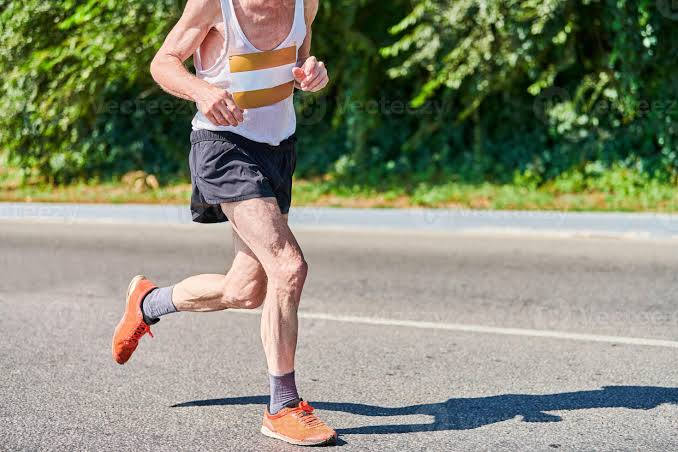
Keith Boyd, a 57-year-old British-South African runner, completed a 6,706-mile journey from Cape Town to Cairo in 301 days in 2024, setting a new record for the fastest crossing between the two cities on foot. His route took him through nine countries, and things turned dangerous in Ethiopia, where he and his videographer were stopped, beaten, and held by armed men. Despite the ordeal, Boyd went on to finish the remaining leg of his route and reach Cairo, beating the previous record by 17 days.
How a 57-year-old ran from Cape Town to Cairo
Boyd covered 10,793 kilometres through South Africa, Botswana, Zimbabwe, Zambia, Tanzania, Kenya, Ethiopia, Sudan, and Egypt. Guinness World Records confirmed his finishing time as 301 days, 20 hours, and 58 minutes, beating the prior 25-year-old record of 318 days — Boyd reached Cairo on May 22, 2024.
The journey wasn’t a simple straight run. Conflict in Sudan forced Boyd to alter his plans; he had originally intended to run from Cairo to Cape Town but reversed course and started in South Africa instead, hoping conditions in Sudan would improve by the time he got there. A small support team traveled alongside him in a van carrying camping gear and medical supplies. Guinness reported he crossed South Africa in 47 days, Botswana and Zimbabwe in just over two weeks, and Zambia, Tanzania, and Kenya in roughly a month each.
The daily grind behind the record
Boyd averaged about 50 kilometres a day for much of the trip, typically splitting the distance into five 10-kilometre stretches. In Sudan and Egypt, his routine shifted, starting around 5:30 am and running four 12.5-kilometre blocks with 20-30 minute walking breaks in between. Not every day looked the same: some covered as little as 5 kilometres, others the full 50. His longest unbroken running stretch spanned 125 days, and he took 60 non-running days overall — 54 due to security and paperwork issues in Ethiopia, five for illness, and one to repack. Ahead of the run, Boyd trained for four months, logging around 200 kilometres a week to build up his feet, legs, and back.
The Ethiopia kidnapping that upended the trip
Ethiopia proved to be the most perilous stretch. While crossing the northern Amhara region, Boyd and his videographer were intercepted by armed men, beaten, and forced into a van. The gunmen demanded a ransom from his support team and threatened to move the pair into a forest where they’d be nearly impossible to find. Boyd managed to stall and eventually negotiated their release for $1,000, after which he continued for another 100 kilometres under military escort. But the security situation deteriorated further, forcing him to leave Ethiopia and press on toward Sudan without finishing that segment, leaving roughly 500 kilometres of the country incomplete even after he reached Cairo.
A dangerous return to finish the final stretch
After reaching Cairo, Boyd sought permission and security support to go back and complete the missing Ethiopian section. He petitioned the Ethiopian government for protection but got no response for nearly three weeks, eventually coordinating the return himself with local civilians and officials. That leg proved just as harrowing — Guinness reported that Boyd and his team were ambushed and had to take cover in a ditch, were held overnight in an overcrowded cell without charge, and faced further threats and assaults from armed men. He ultimately completed the final stretch and made it out safely.
Why he took on the challenge
Beyond the record itself, Boyd ran to raise funds for Rainbow Leaders, his non-profit encouraging young Africans to participate in elections as a way to combat poverty. He’d also spent over 30 years working in telecommunications across Africa, giving the challenge a personal dimension alongside its fundraising and civic goals.
The physical toll
The journey took a serious toll on Boyd’s body. His feet and left ankle swelled, and he developed tendonitis, cycling through three types of running shoes to manage issues with ankle stability, impact, and rough terrain. He prioritized 8-9 hours of sleep nightly and used stretching and foam rolling to recover, along with protein shakes and bars, though he still lost weight and muscle mass in his thighs over the course of the run.