European and British wholesale natural gas prices extended their downward march on Monday, dropping over 2% as growing evidence of maritime tankers securing alternative bypass routes around Persian Gulf choke points helped deflate extreme energy risk premia.
The benchmark Dutch front-month TTF contract fell 2.5% to trade at 77.55 euros per megawatt-hour (MWh), building on last week’s multi-session pullback.
In Great Britain, the equivalent NBP wholesale gas contract slid 2.91% to reach 192.36 pence per therm, anchoring near multi-week low watermarks.
ECB warns wholesale gas shocks now feed into inflation faster
While prompt contracts offered tactical relief on Monday, a fresh study from the European Central Bank (ECB) highlighted how structural changes across European energy markets have amplified the speed at which wholesale price surges pass through to euro zone inflation.
In an Economic Bulletin published on Monday, the ECB revealed that wholesale natural gas price changes will now feed into consumer gas inflation within 1 to 3 months in over half of euro area countries – a significant acceleration compared to 2022.
The share of euro zone countries with slow pass-through timelines (13 to 24 months) has plummeted from roughly 40% to just 5% since 2022, driven by post-crisis market liberalisation, more flexible pricing structures, and shorter fixed-term contracts.
On a reassuring note for monetary policymakers, the ECB concluded that electricity prices are now less responsive to natural gas swings than in past cycles, as expanding renewable power generation reduces the direct role of fossil fuels in determining marginal power costs.
With wholesale gas prices up more than 140% compared to a year ago due to war in Iran and lingering supply disruptions, the findings add pressure on Frankfurt.
Headline Eurozone inflation remains above 3% – with some economists projecting a rise toward 4% by year-end – raising the stakes for ECB President Christine Lagarde as markets parse whether further interest rate hikes will be required following two rate increases in recent months.
Alternate shipping routes soothe Persian gulf supply anxieties
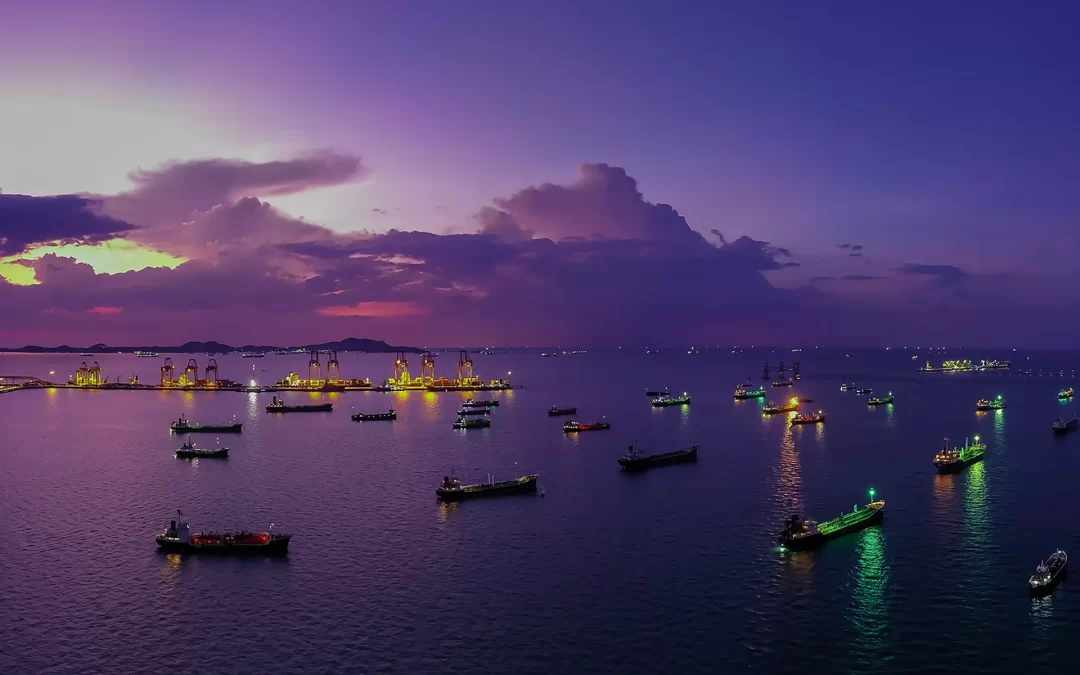
Despite ongoing military activity in the region, commodity desks reported a steadily increasing volume of liquefied natural gas (LNG) tankers and crude carriers successfully finding alternative passage out of the Gulf.
Shippers are making greater use of redirected overland pipeline capacity and rerouting maritime traffic around Persian Gulf bottlenecks, including expanded ship-to-ship transfers off the coast of Oman.
The physical workaround has helped alleviate immediate fears of a total transit blockade through the Strait of Hormuz, providing welcome downside pressure to European prompt energy contracts alongside an easing in crude oil futures.
Source: Investing.com