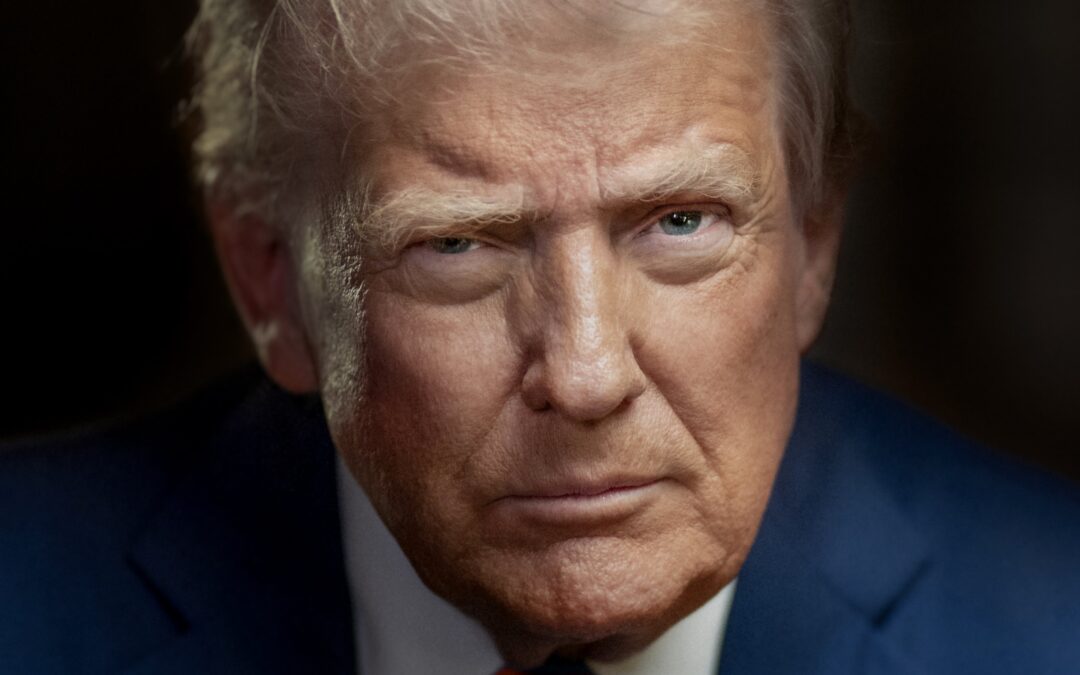
US President Donald Trump said on Friday that Washington had reached what he described as an “Infinite Life” agreement with Denmark and Greenland, granting the United States “permanent control” over the island’s security.
Trump said the agreement would also prevent US adversaries from maintaining a military presence in Greenland. Describing the arrangement as one with no expiry date and no cost to the United States, he said Washington would move ahead with plans to expand its military presence on the island.
“This is an ‘Infinite Life’ Agreement, there is no end!” Trump wrote while announcing the deal. He added that the United States was “very honored and proud” of the agreement and would immediately begin developing a significant military presence at appropriate locations across Greenland.
What Has Actually Been Agreed?
Danish Prime Minister Mette Frederiksen said the agreement does not transfer sovereignty over Greenland to the United States. Instead, she described it as a framework aimed at strengthening joint security in the Arctic and North Atlantic while respecting the Greenlandic people’s right to self-determination.
The United States, Denmark and Greenland are expected to sign the agreement next week at the United Nations General Assembly in New York, CNBC reported. However, the official text had not been made public when Trump announced the deal.
The United States already has extensive military access to Greenland. Under a 1951 treaty, Washington has broad rights relating to military bases and overflight on the island.
The announcement therefore appears to focus on expanding and formalising the existing security relationship rather than transferring sovereignty over Greenland to Washington.
Why Greenland Matters to the Golden Dome
Greenland’s strategic importance is closely linked to Trump’s proposed Golden Dome missile-defence system, which is intended to detect, track and intercept ballistic, cruise and hypersonic missiles aimed at the United States.
The island’s location in the Arctic makes it important for monitoring missile activity, particularly from Russia, while also providing opportunities to strengthen early-warning capabilities.
Greater US access to Greenland could therefore enhance the Arctic component of Golden Dome while restricting potential military or strategic access for China and Russia.
Geography is central to Greenland’s importance. The shortest trajectory for a missile launched from Russia toward many US cities passes over or near the North Pole, with Greenland positioned directly beneath much of this potential route. Placing sensors, communications equipment and interceptors closer to the Arctic could give US defence systems additional time to detect and respond to incoming missiles.
Greenland is already part of America’s early-warning network. Pituffik Space Base, formerly known as Thule Air Base, is located above the Arctic Circle, roughly midway between Washington and Moscow. Its radar systems can monitor large areas extending toward Russia and potential missile flight paths, providing US decision-makers with additional warning time.
Trump has set a target of having Golden Dome fully operational by January 2029 and has estimated its cost at around $175 billion. However, both the timetable and projected cost have been questioned. Missile-defence interceptor tests conducted over the past two decades have also achieved success only around half the time, often under conditions more controlled than those of an actual attack.
Keeping Moscow and Beijing Out
A second objective of the proposed arrangement is to restrict the ability of US strategic rivals to establish a military or economic foothold in Greenland.
Trump said no US adversary would be permitted to establish a military base, station forces or make sensitive investments on the island without explicit written approval from Washington.
In practical terms, such a provision could require Chinese state-linked companies seeking stakes in Greenlandic mines, ports or other strategically important infrastructure to obtain US approval.
The provision would directly address concerns over China’s growing economic involvement in the Arctic and its efforts to gain strategic access through commercial investments.
Moscow has already expressed concern over the proposed Golden Dome system. Russian officials have described the project as provocative and warned that the deployment of American missile-defence systems in Greenland could lead to military and technical countermeasures.
Greenland’s Mineral Wealth
Greenland’s strategic importance extends beyond defence. The island is also considered a major potential source of critical minerals.
Danish and Greenlandic geological assessments estimate that Greenland contains around 36 million tonnes of rare-earth resources, along with deposits of graphite, copper, nickel, zinc and tungsten. The island is also believed to contain deposits of 25 of the 34 raw materials classified as critical by the European Commission.
These minerals are important for a range of modern technologies, including electric motors, semiconductors and precision-guided weapons.
China currently accounts for roughly 60 per cent of global rare-earth production and controls about 85 per cent of the world’s rare-earth processing capacity. This dependence has encouraged Western governments to seek alternative sources of supply.
One of Greenland’s most closely watched projects is Tanbreez, located in the south of the island. The project is now 92.5 per cent owned by Nasdaq-listed Critical Metals and is among the more advanced rare-earth developments in Greenland. Full construction is not expected to begin before spring 2027.
Taken together, Greenland’s location, existing US military infrastructure and significant mineral resources make the island an increasingly important element of Washington’s Arctic security and strategic planning.