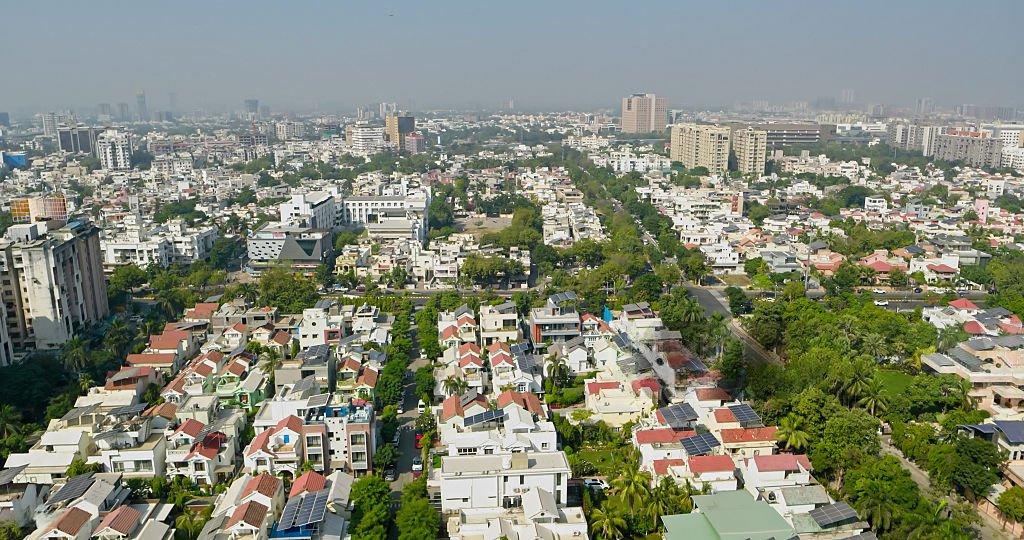
Three major Indian cities have featured among the world’s least climate-resilient urban centres in a new global ranking that assesses how effectively cities are prepared to withstand growing climate-related threats.
The ranking, which analysed 72 of the world’s largest cities, found Ahmedabad at the bottom of the list, making it the least resilient city in the study. Hyderabad ranked second from the bottom, while Kolkata stood sixth among the cities facing the highest residual climate risk.
The analysis was conducted by geospatial artificial intelligence company AlphaGeo through its Climate Risk & Resilience Index. The index assesses both a city’s exposure to climate hazards and the measures it has adopted to minimise their impact.
According to AlphaGeo, the six highest-risk cities identified in the study were all located in South Asia. These urban centres face significant physical exposure to climate hazards while having relatively limited adaptation measures compared with the scale of the risks.
The bottom 10 also included Multan, Dhaka, Lahore, Faisalabad, Karachi, Chittagong and Taipei.
The study examined six major physical climate risks: inland flooding, coastal flooding, heat stress, drought, wildfires and hurricane winds. It then evaluated how effectively cities have adapted to these threats through measures such as early-warning systems, governance and policy initiatives, as well as infrastructure including flood barriers and drainage networks.
The resulting resilience-adjusted risk score reflects how much a city’s underlying exposure to climate hazards is reduced through adaptation. A lower score indicates greater climate resilience.
Chicago Tops Global Resilience Ranking
At the opposite end of the spectrum, Chicago emerged as the most climate-resilient major city among those assessed. It was followed by Addis Ababa, Melbourne, Barcelona, Ankara, Buenos Aires, Paris, Istanbul, Bogotá and Nairobi.
Chicago’s strong position was attributed partly to its relatively low exposure to certain hazards, including hurricanes, as well as significant investment in climate-resilient infrastructure. The city’s Deep Tunnel project, a large-scale system designed to manage flooding and water pollution, was cited as one example.
The study also highlighted the strong adaptation efforts of several Chinese cities. Beijing, Tianjin, Shenzhen and Shanghai recorded some of the highest adaptation rates, indicating that they have made substantial progress in reducing their physical exposure to climate risks through infrastructure and other resilience measures.
The findings underline that climate resilience depends not only on the hazards a city faces, but also on how effectively governments and urban systems prepare for and respond to those threats.