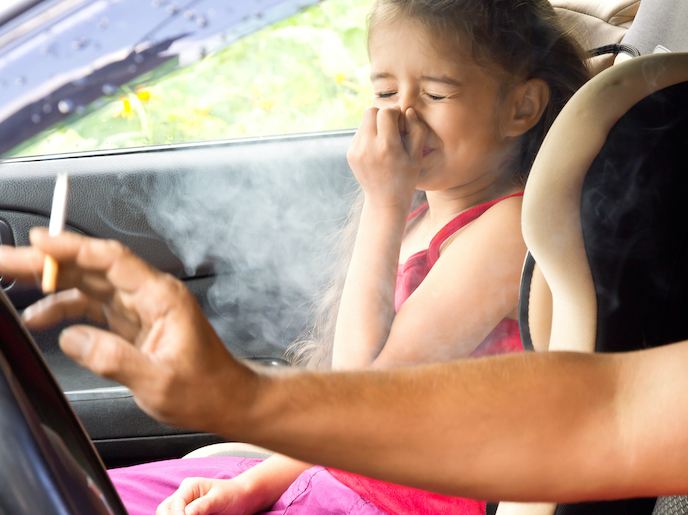
You do not have to light a cigarette to suffer its consequences. Smoke released by another person can enter the lungs of those nearby, exposing children, women and non-smokers to harmful chemicals they never chose to inhale.
A new 2023 Global Burden of Disease study published in The Lancet Public Health highlights the enormous scale of second-hand smoke exposure worldwide. An estimated 2.71 billion people were exposed to second-hand smoke in 2023, including 767 million children. The exposure was associated with 1.66 million deaths and 44.8 million disability-adjusted life-years (DALYs) globally.
India’s figures are particularly concerning. Around 444 million Indians were exposed to second-hand smoke in 2023, while 325,600 deaths were attributed to such exposure. In 1990, the corresponding figure was approximately 217,700 deaths.
Exposure Percentage Falls, But Millions More Remain at Risk
The latest findings reveal an important paradox. While the proportion of India’s population exposed to second-hand smoke has declined, the actual number of people exposed has increased.
Age-standardised exposure prevalence fell from 43.2% in 1990 to 30.6% in 2023. Yet the absolute number of people exposed rose from around 375 million to 444 million.
The reason is straightforward: even a declining percentage can represent millions more people as the overall population grows.
India’s Global Adult Tobacco Survey 2016-17 found that 35% of non-smokers were exposed to second-hand smoke at home. Among non-smoking indoor workers, 26.2% reported exposure at their workplace.
The Damage Goes Beyond the Lungs
Second-hand smoke is often dismissed as an inconvenience that causes coughing or leaves behind an unpleasant smell. The health consequences, however, can be far more serious.
The Lancet analysis found that ischaemic heart disease accounted for the largest share of second-hand-smoke-related DALYs overall. Among children, lower respiratory infections contributed the greatest burden.
The World Health Organization has also linked second-hand smoke to serious cardiovascular and respiratory conditions, including heart disease and lung cancer, and states that there is no safe level of exposure.
Dr Jagadeesh Kumar P, Consultant – Interventional Pulmonology at Manipal Hospital Yeshwanthpur, highlighted the changing pattern of lung disease.
“More patients walking into my clinic with lung cancer have never smoked a single cigarette. Many are women in their 40s or 50s. Some are young and health conscious. This shift is real and it deserves attention,” he said.
He noted that second-hand smoke is among several factors that can affect lung health, particularly when exposure begins early in life.
Could Passive Smoke Also Affect the Liver?
The health effects of second-hand smoke may not be limited to the respiratory system.
Dr Ankur Garg, Group Director – Liver Transplant & GI Surgery at Paras Health, Gurugram, said toxins inhaled from second-hand smoke can enter the bloodstream and contribute to inflammation and oxidative stress, potentially affecting the liver.
He said prolonged exposure may influence metabolism and increase the likelihood of fatty liver, particularly in people who already have obesity, diabetes or high cholesterol.
Dr Saroj Dubey, Senior Gastroenterologist at Kailash Hospital, Noida, offered an important qualification. “This does not imply that exposure itself directly leads to fatty liver,” he said, explaining that passive smoking should instead be regarded as one factor that may add stress to liver and metabolic health.
The distinction is important: health conditions generally arise from multiple interacting risk factors rather than a single cause.
Children and Women Need Greater Protection
Children are among those most vulnerable to second-hand smoke. The latest analysis estimated that 767 million children aged 0-14 were exposed globally in 2023.
Because children’s lungs and immune systems are still developing, exposure can have serious consequences. The WHO has linked childhood exposure to respiratory illness and other health problems.
Women can also experience significant exposure, particularly in households where smoking takes place indoors. The global analysis found that in some countries, women’s exposure prevalence was almost 1.8 times that of men.
This makes it inadequate to simply tell non-smokers to “avoid the smoke”. Protecting them requires smokers to take responsibility for where they smoke.
A Smoke-Free Space Is the Best Protection
The most effective protection is also the simplest: do not smoke around other people, especially inside homes, cars and enclosed workplaces.
Opening a window or relying on ventilation does not make a smoking environment safe. According to the WHO, completely smoke-free indoor environments are the only proven way to adequately protect people from second-hand smoke.
India has made progress in reducing the proportion of people exposed to tobacco smoke, but the latest figures show that the scale of exposure remains enormous.
Passive smoking is therefore not merely another person’s habit. Its consequences can extend to family members, colleagues and children — people who never picked up a cigarette themselves.