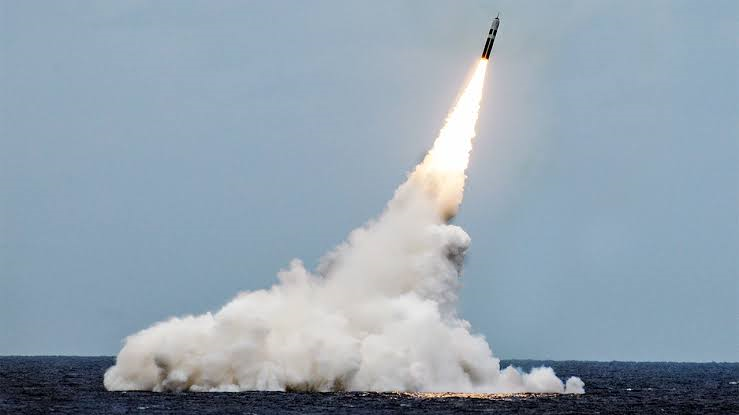
India may have produced enough weapons-grade plutonium to build between 140 and 225 nuclear warheads and could already have assembled as many as 190, according to a new assessment by a US-based nuclear policy think tank.
The report, titled India’s Nuclear Weapons – 2026, estimates that at least 30 additional warheads for new missiles under production have been added to India’s existing stockpile of around 160 warheads assigned to operational launch systems.
“India continues to modernise its nuclear arsenal,” the report said, noting that several new weapon systems have entered service in recent years, while others are under development to supplement or replace existing nuclear-capable aircraft, land-based missiles and sea-based systems.
The study estimates that India may have produced enough military plutonium for 140 to 225 warheads and could have assembled up to 190. With additional delivery systems being developed, the country’s nuclear stockpile is expected to grow further.
The assessment was published as part of the Nuclear Notebook, researched and written by Hans M. Kristensen, director of the Nuclear Information Project at the Federation of American Scientists (FAS), along with associate director Matt Korda, research and project manager Mackenzie Knight-Boyle, and senior research associate Eliana Johns.
According to the report, India currently operates nine nuclear-capable systems — two aircraft, six land-based ballistic missiles and one sea-based ballistic missile. At least two additional systems are reportedly nearing completion and could enter military service within the next few years.
Because India does not publicly disclose the size of its nuclear arsenal, the researchers based their estimates on a combination of publicly available information. These include government statements and declassified documents, media reports, think-tank assessments, industry publications and commercial satellite imagery.
India is among a small group of countries believed to produce both highly enriched uranium (HEU) and weapons-grade plutonium. The report said India’s HEU production is generally believed to be focused largely on fuel for its expanding fleet of nuclear-powered vessels and submarines.
The study identified the 100-megawatt Dhruva reactor at the Bhabha Atomic Research Centre complex near Mumbai as India’s main source of weapons-grade plutonium. Until 2010, the CIRUS reactor at the same site also contributed to plutonium production.
A major development came in April 2026, when India’s 500-MWt Prototype Fast Breeder Reactor (PFBR) at the Indira Gandhi Centre for Atomic Research near Kalpakkam achieved first criticality after years of delays.
The PFBR uses reactor-grade plutonium separated from India’s first-generation nuclear power reactors as fuel. It irradiates a surrounding “blanket” of uranium or thorium, producing plutonium-239 and uranium-233 in the process.
The report said that if the PFBR operates at around 80% efficiency, it could theoretically produce an estimated 140 kg of plutonium-239 annually — enough for as many as 35 nuclear warheads.
India also plans additional fast breeder reactors, including FBR-1 and FBR-2, which are currently in the pre-planning stage and are expected to be located near the PFBR at Kalpakkam. If these reactors operate successfully, they could substantially increase the amount of plutonium potentially available for India’s nuclear arsenal.
The report cited an estimate by the International Panel on Fissile Materials that, at the beginning of 2026, India had produced approximately 730 kg of weapons-grade plutonium, with an uncertainty range of about 170 kg.
Using an assumption of roughly 4 kg of plutonium per warhead, the researchers calculated that this quantity could theoretically be sufficient for between 140 and 225 warheads. However, the study stressed that the estimate carries significant uncertainties.
The researchers also cautioned that India is unlikely to have converted all of its available plutonium into operational warheads, with some material potentially being held in reserve. The actual size of the arsenal would also depend on the number and type of delivery systems capable of carrying nuclear weapons.
“India’s stockpile size depends on the number and types of launchers that can deliver them,” the report said, suggesting that the country would be unlikely to manufacture substantially more warheads than its delivery systems could accommodate.
The assessment comes as the Indian government continues to reiterate its commitment to maintaining a policy of credible minimum deterrence and “no first use” of nuclear weapons.
The findings nevertheless point to a steadily expanding and increasingly sophisticated Indian nuclear arsenal, with new missiles, submarines and breeder-reactor technology potentially giving the country greater capacity to produce and deploy nuclear warheads in the years ahead.