“My experience is what I agree to attend to.” — William James
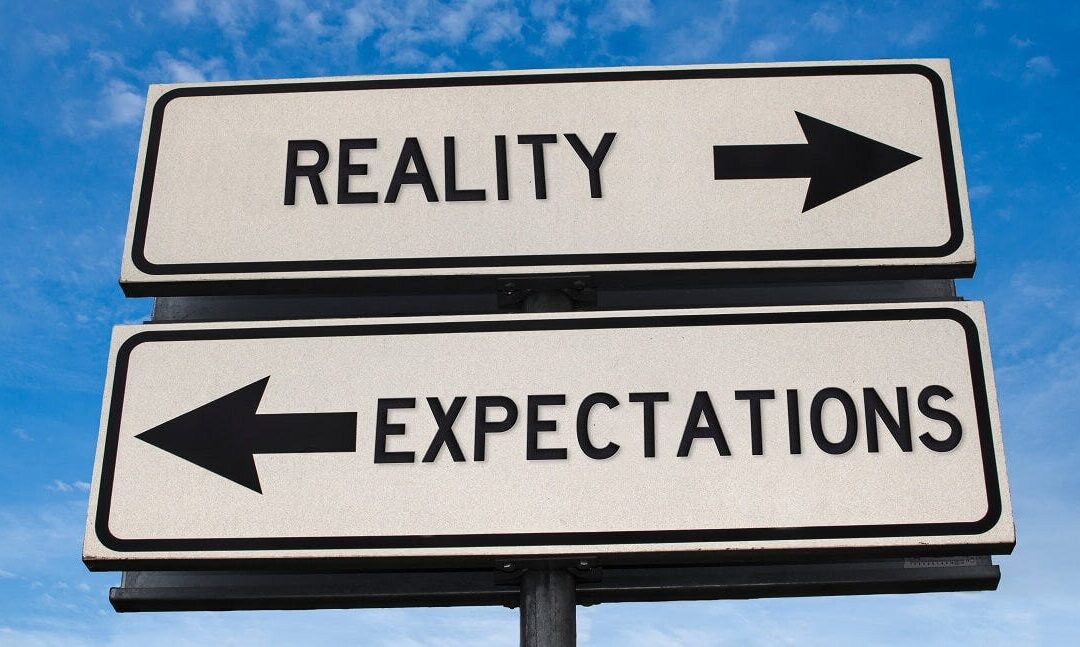
We often think of reality as something that exists independently of us. We see an event, interpret what happened, and respond accordingly. Yet our experience of the world is rarely that straightforward. Before we encounter an event, our minds are already making predictions about what is likely to happen. These expectations can influence what we notice, how we interpret it, how we feel about it, and even how we behave.
What Are Expectations?
An expectation is a belief or prediction about what will happen in the future. It can be conscious, such as expecting a meeting to go well, or unconscious, such as assuming that a stranger will behave in a particular way.
Our expectations develop from previous experiences, cultural beliefs, social influences, memories and information we receive from other people. If someone has repeatedly experienced encouragement when trying something new, they may approach unfamiliar situations with confidence. Someone who has repeatedly experienced criticism may expect failure or rejection instead.
The Brain Is Constantly Predicting
Modern psychology and neuroscience increasingly emphasise the predictive nature of the brain. Rather than passively recording everything around us, the brain continuously attempts to anticipate what it is likely to encounter.
This makes sense from a survival perspective. If we had to consciously analyse every piece of information entering our senses, responding to the world would be extremely slow. Instead, the brain uses previous knowledge to make rapid predictions. We expect the floor to support us when we walk, a familiar object to behave as it normally does and people we know to respond in relatively predictable ways.
When reality matches our expectations, we may barely notice. When something unexpected happens, however, our attention is immediately drawn to it. A sudden noise, an unusual facial expression or an unexpected response can stand out precisely because it violates what we predicted.
This means that two people can experience the same situation yet pay attention to completely different aspects of it. Their physical environment may be identical, but their expectations can influence which details become noticeable and meaningful.
Expectations Influence What We Notice
Consider walking into a room expecting people to dislike you. You may pay particular attention to a person who does not smile, interpret a brief response as irritation, or notice someone looking away.
Someone entering the same room expecting to be welcomed might notice a smile, a friendly greeting or a person making an effort to start a conversation.
The external environment has not necessarily changed. What has changed is the interpretive lens through which it is being experienced.
This does not necessarily mean that either person is imagining things. The person who notices someone looking away may genuinely have observed that behaviour. The important question is how that observation is interpreted. One person may think, “They probably do not like me,” while another may think, “Perhaps they are distracted.”
Expectations can therefore influence which details become psychologically significant. They can affect not only what we notice but also the meaning we assign to what we notice.
The Self-Fulfilling Prophecy
One of the most fascinating ways expectations affect reality is through the self-fulfilling prophecy.
A self-fulfilling prophecy occurs when a person’s expectation influences their behaviour in a way that makes the expected outcome more likely.
Imagine a student who believes they are incapable of succeeding in mathematics. Because they expect failure, they may study less, avoid asking questions and become anxious during examinations. Their performance may then suffer, apparently confirming their original belief.
The failure did not necessarily prove that they lacked mathematical ability. Their expectation influenced their behaviour, which helped produce the outcome they feared.
The same process can operate positively. Someone who expects that they can improve may practise more consistently, persist through difficulties and seek feedback. Their behaviour increases the probability of improvement.
The Placebo Effect
The influence of expectations can also be observed in medicine through the placebo effect.
When people believe that a treatment will help them, that expectation can sometimes contribute to changes in their experience of symptoms. The effect does not mean that illnesses are imaginary. Rather, it demonstrates that beliefs and expectations can influence aspects of perception, physiology and behaviour.
Expectations can affect how people interpret sensations such as pain, fatigue or discomfort. The mind and body are not completely separate systems; psychological expectations can influence bodily experience.
The placebo effect therefore provides an important example of how expectations can become part of our experience of reality. What a person expects to feel may influence how they perceive what they actually feel.
Expectations and Relationships
Expectations play an especially important role in human relationships. If we expect another person to be trustworthy, we may communicate more openly with them. They may respond positively to that openness, strengthening the relationship.
Conversely, if we expect betrayal, we may become suspicious or defensive. The other person may sense this distrust and become distant or defensive themselves. Over time, these behaviours can create a relationship that appears to confirm the original expectation.
The Danger of Negative Expectations
Expectations become problematic when they turn into rigid beliefs.
A person who repeatedly expects failure may begin to interpret ordinary setbacks as evidence that they are incapable. Someone who expects rejection may withdraw before giving others an opportunity to respond positively.
Negative expectations can therefore create a psychological feedback loop:
Expectation → Interpretation → Behaviour → Outcome → Reinforced Expectation
The more often this cycle repeats, the more convincing the original belief may become.
Breaking the cycle requires recognising that an expectation is a prediction—not a fact.
Expectations Can Also Protect Us
Without expectations, navigating the world would be extremely difficult.
Expectations allow us to anticipate problems and prepare for them. Expecting rain may lead us to carry an umbrella. Expecting an examination may lead us to study. Expecting a difficult conversation may encourage us to think carefully about what we want to say. The problem arises when expectations become so rigid that we cannot adjust them when circumstances change.
Healthy expectations therefore need to be flexible. They should guide our behaviour without preventing us from responding to new information.
Managing Expectations
One way to develop healthier expectations is to distinguish between what we know and what we predict.
Instead of thinking, “This person is going to dislike me,” we might ask, “What evidence do I actually have?”
Instead of thinking, “I will definitely fail,” we might ask, “What can I do that would increase my chances of succeeding?”
This small shift creates psychological space between prediction and reality.
The Power of Expecting Change
Perhaps the most useful expectation we can cultivate is the expectation that our understanding can change.
People are not fixed. Circumstances change. Relationships evolve. Skills develop. New information becomes available.
An expectation that allows for change is therefore more useful than one that treats the future as predetermined. We cannot completely control what happens to us, but we can become more aware of the predictions we bring into each situation. We can learn to treat our expectations as possibilities rather than certainties.
This is especially important when thinking about ourselves. We often create expectations about who we are based on past behaviour: “I am not good at this,” “I always make mistakes,” or “I cannot handle difficult situations.” But a description of our past is not necessarily a permanent description of our future.
Recognising the possibility of change allows experience to remain open.
Conclusion
Our expectations do not magically create reality, but they can profoundly influence the reality we experience and, through our behaviour, sometimes the reality that unfolds around us. Understanding expectations is not about blaming ourselves for everything that happens. It is about recognising one part of the process through which we encounter the world. We can notice our expectations, question them and remain open to evidence that reality may be different. The next time we find ourselves thinking, “This is how it will turn out,” it may be worth pausing and asking a simple question:
“Is this reality—or is it an expectation?”