Iran has issued a fresh warning to Israel and the United States, with its top security official threatening a “severe confrontation” if Washington continues its economic blockade and vowing retaliation against American economic interests across the region.
Major General Mohsen Rezaei, Secretary of Iran’s Supreme National Security Council, said Tehran would “send Benjamin Netanyahu, the Prime Minister of the Zionist regime, to hell” if tensions with Israel escalate again.
“We will send Benjamin Netanyahu, the Prime Minister of the Zionist regime, to hell,” Rezaei said in an interview with Al-Manar, according to Iran’s state news agency IRIB.
Rezaei also claimed that Israeli Prime Minister Netanyahu’s actions had brought the “end of the Zionist regime’s existence near”.
He accused Netanyahu of spreading false information about an alleged Iranian plot to assassinate US President Donald Trump’s son, saying the claims had influenced Trump’s decisions.
“Netanyahu has panicked Trump and disrupted his decision-making by spreading false news about an ‘Iranian plot to assassinate Trump’. Fearing this news, Trump moved around like a food truck worker,” Rezaei said.
Iran warns of a different kind of war
Rezaei said Iran was closely monitoring developments and warned that any renewed conflict with Israel could enter a new and more dangerous phase, particularly in relation to Lebanon.
“We are monitoring the situation with full seriousness. Israel will be forced to withdraw from the occupied territories in Lebanon. If the conflict resumes, we are preparing ourselves for a new phase; any future war will be different from the previous ones,” he said.
The Iranian security chief also issued a separate warning to Washington over its economic pressure campaign against Tehran.
Rezaei argued that the shift from military action to economic pressure demonstrated the limitations of previous US strikes and warned that Iran would retaliate by targeting American economic interests in the region.
“The US shift to economic pressure demonstrated the futility of military strikes, and we will respond to any escalation of economic tension with countermeasures that target US economic interests in the region,” he said.
He added that Iran had exported 80 million barrels of oil during the ceasefire period and warned of a stronger response if the blockade continued.
“Continuing the siege means a severe confrontation with the American enemy. We exported 80 million barrels of oil during the ceasefire period. If the blockade continues, we will target American economic interests 100 per cent, with intensity and force,” Rezaei said.
Qatar pushes for dialogue
The warnings came as Qatar stepped up diplomatic efforts to ease tensions in the region.
Qatar’s Prime Minister Mohammed bin Abdulrahman bin Jassim Al Thani met Iranian President Masoud Pezeshkian in Tehran on Thursday. The two leaders discussed regional security and efforts to create conditions for dialogue.
Pezeshkian acknowledged that recent developments had created serious tensions but said Tehran still viewed Qatar as a close regional partner.
“Some events occurred that were unacceptable, but we still believe that Iran and Qatar are two countries of friends and brothers and that the issues that have arisen can be resolved through understanding,” Pezeshkian said.
The Iranian president also said Tehran was not seeking to widen the conflict and backed negotiations as a way to resolve disputes.
Al Thani similarly called for diplomacy, saying that force and threats could not provide a lasting solution.
“The language of force and threats is not a solution, and stability, security, and economic peace must be restored to the region through diplomacy, rationality, and logic,” he said.
Strait of Hormuz remains a key concern
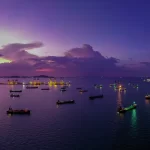
The diplomatic efforts come amid continuing tensions surrounding the Strait of Hormuz, one of the world’s most strategically important energy routes.
Qatar and Iran have discussed the possibility of establishing a temporary navigational corridor and cooperating on mine-clearance efforts in the waterway.
The developments come as Tehran’s increasingly forceful rhetoric towards Washington and Israel is being accompanied by parallel diplomatic efforts aimed at preventing another escalation and keeping vital regional waterways open.