The Primary School, a tuition-free private school co-founded by Meta CEO Mark Zuckerberg’s wife, Dr. Priscilla Chan, has closed its doors after nearly a decade of operation, despite receiving more than $125 million in funding from the Chan Zuckerberg Initiative (CZI).
Founded in 2016 in East Palo Alto, California, the school was created with an ambitious goal: to support children from low-income families by addressing not only their academic needs but also their health and overall well-being. Its “whole child” approach included services such as dental care, wellness coaching, health screenings and early-intervention programs.
However, the school struggled to consistently meet academic expectations, raising questions about whether its model could eventually be replicated on a larger scale in public and charter schools.
According to a Wall Street Journal report, the school shut down in June 2026 after the board voted to wind down operations.
Why did the board decide to close the school?
The Primary School’s board voted unanimously in April 2025 to close the school after learning that CZI would not continue funding it beyond the 2025-26 academic year, according to people familiar with the matter.
Board president Jean-Claude Brizard said several options had been presented to CZI, including gradually winding down the school. He said the board would not have voted to close without alignment with its primary funder.
CZI, however, said the final decision to close the school rested with its board and emphasized that its evaluation had focused on academic outcomes rather than the amount of money invested.
The closure also comes as CZI has shifted its philanthropic priorities in recent years, moving greater attention toward scientific research.
A mixed academic record
While the Primary School offered extensive support services, its academic performance was mixed.
A Stanford University report found that in spring 2025, 26% of Primary School students in third grade and above exceeded state literacy standards, compared with 14% of local students and 47% statewide.
The school maintained that its students had made meaningful progress, particularly after the disruptions caused by the COVID-19 pandemic. Its eighth-grade students recorded more than 50% grade-level proficiency in their final year, while school officials and staff also pointed to improvements in students’ well-being and social-emotional development.
The school’s health-focused approach also produced measurable results. About 85% of its students completed their annual well-child visits, compared with 55% of children on Medicaid in the county.
Despite these achievements, school leaders acknowledged that academic results were not where they had hoped they would be.
Families face the loss of a support system
About 540 children were enrolled across the school’s two campuses.
For many families, the school provided far more than traditional classroom education. Mele Fakapelea, whose daughter Telesia was among the school’s founding students and who later enrolled four younger children there, described the school as a “godsend” and said losing its network of services was devastating.
Other parents expressed frustration over how the closure was communicated. Angelica Cardenas, whose 3-year-old daughter and five nieces and nephews attended the school, told the Journal that she learned about the closure through news reports rather than directly from the school.
Following the closure, students are being absorbed into the Ravenswood City Elementary School District. The district is preparing for the influx of students and renovating a campus to accommodate them without relying heavily on portable classrooms.
What is CZI offering affected families?
As the school winds down, CZI has committed $50 million to help ease the transition.
The funding will cover the remaining balance of the school’s lease with the district and support local organizations that can continue providing some of the services previously offered by the Primary School.
CZI has also committed $3.6 million toward education savings accounts for affected families. The assistance includes $10,000 for each elementary school student, $2,500 for preschoolers and $1,000 for children enrolled in early-childhood education programs.
Priscilla Chan’s role in the school
Chan was a co-founder and served as chair of the Primary School’s board for roughly eight years, stepping down from the role in 2023. Throughout the school’s existence, CZI remained its principal source of funding.
According to CZI, the long-term goal was never for the school to depend indefinitely on a single wealthy donor. Instead, the vision was for the model to eventually become sustainable through public investment.
The school also sought to keep its per-student spending broadly comparable with that of public schools. Brizard said Chan actively used her network to seek additional sources of funding, but attracting outside donors was difficult because the school was already associated with one of the world’s wealthiest families.
Chan was also reportedly candid about the school’s academic challenges. She told the Journal last year that the results were not where the school’s leaders wanted them to be.
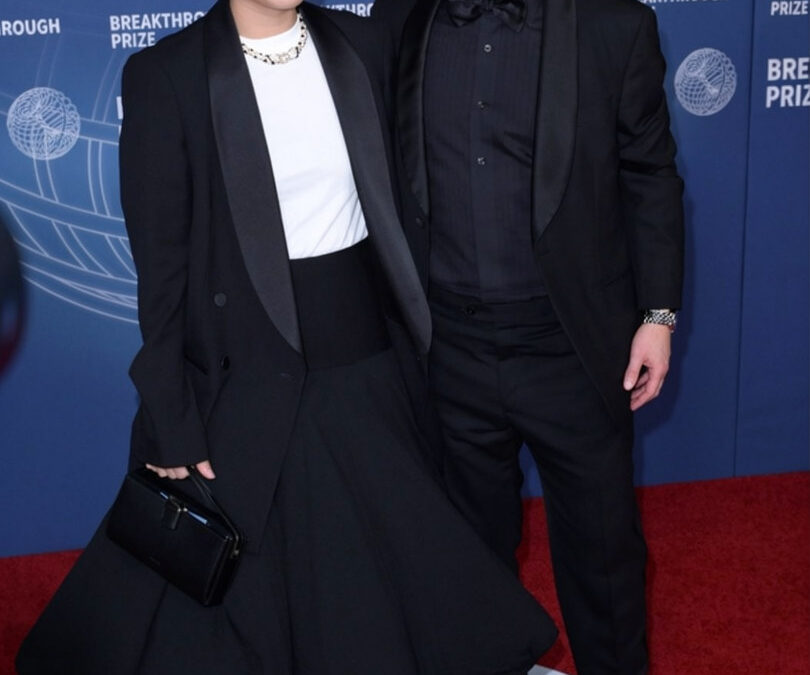
The timing of the closure has also drawn attention. Staff were informed of CZI’s broader strategic shift in early 2025, shortly after Zuckerberg and Chan attended President Donald Trump’s inauguration. Brizard said the timing was coincidental and that there was no indication the inauguration influenced the decision to close the school.
Ultimately, the Primary School’s closure highlights the challenges of trying to combine education, healthcare and social services under one model—and the difficulty of sustaining such an ambitious experiment when its academic results fail to meet expectations despite substantial financial backing.