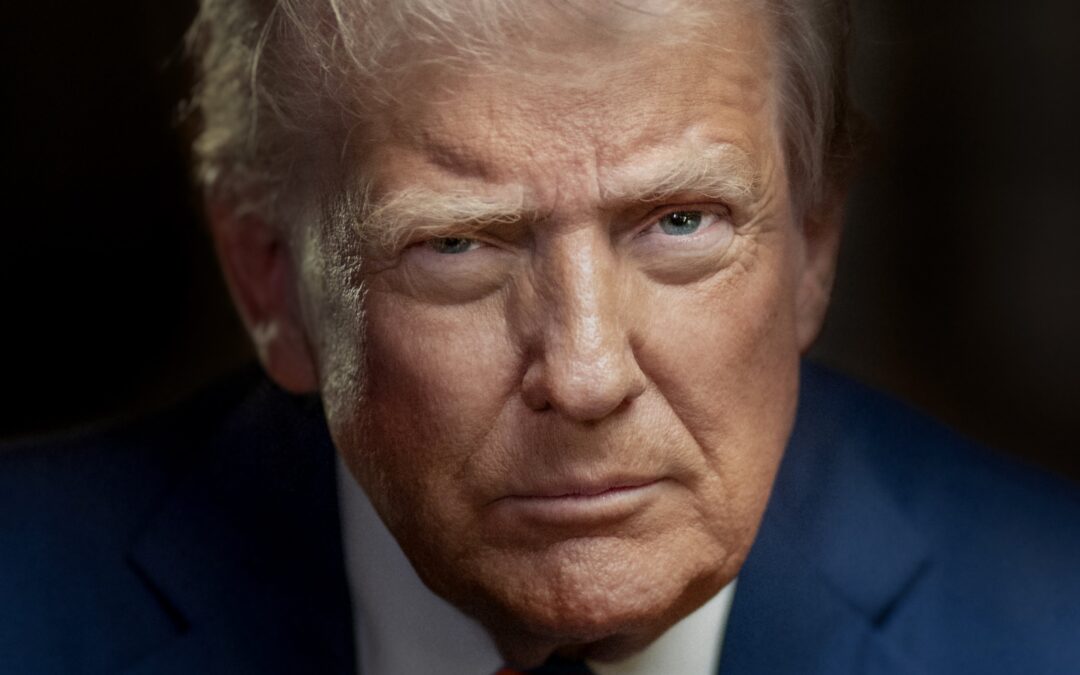
US President Donald Trump on Wednesday announced what he described as the “most crushing economic operation” ever imposed against a country, escalating Washington’s campaign to isolate Iran economically and warning nations that continue providing financial or commercial support to Tehran of “tremendous” consequences.
Trump said the measures would target countries whose financial institutions, businesses, airports or government entities provide what he called a “lifeline” to Iran. He did not specify the penalties involved or identify any countries that could be targeted.
“No one has given the Islamic Republic of Iran a greater opportunity to make a Deal than me. TRAGICALLY, for them, they have failed to take it,” Trump wrote on Truth Social. “Therefore, today, I am announcing the MOST CRUSHING ECONOMIC OPERATION EVER TAKEN AGAINST ANY COUNTRY! This will be Economic Warfare and Isolation on an unprecedented scale.”
He warned that countries supporting Iran through oil smuggling, financial transfers, exchange houses, ship registries or front companies would also face economic consequences.
“ANY country that allows its financial institutions, businesses, airports, or government entities to provide any type of lifeline to Iran will itself face TREMENDOUS Economic Consequences,” Trump said.
The announcement marks a further escalation of Washington’s economic pressure on Tehran as the US-Iran conflict approaches its sixth month, with the dispute over the Strait of Hormuz continuing to complicate efforts to reach a broader settlement.
Trump warns countries aiding Iran
Trump called for an immediate halt to activities including oil smuggling, swap lines, cash transfers, exchange houses, ship registries and the use of front companies to support Iran.
“This will be an ECONOMIC D-DAY,” Trump said, urging US allies to join Washington in isolating Iran. He claimed the measures would cripple Tehran’s ability to project power and “terror worldwide”.
Trump also claimed that Iran’s military capabilities had been severely weakened during the conflict, saying its navy had been destroyed, its air force crippled and its military factories reduced to rubble.
He again warned that Iran would not be allowed to acquire a nuclear weapon.
Before the conflict, China, India, Turkey, Germany, South Korea and Japan were among Iran’s major trading partners. Trump did not identify any of these countries as targets of the new measures.
US expands economic pressure campaign
Trump’s announcement follows comments by US Treasury Secretary Scott Bessent that Washington would intensify efforts to isolate Iran economically.
“It will be a combination of economic isolation, like the world has never seen before,” Bessent told Newsmax last week.
The US Treasury has also been pursuing a sanctions campaign known as Operation Economic Fury, aimed at cutting off Tehran’s sources of revenue through targeted measures.
Trump’s latest announcement appears to broaden that campaign by warning foreign governments and businesses, as well as Iranian entities, against providing financial, commercial or logistical support to Tehran.
The president did not provide details on how the new campaign would be implemented or whether it would include secondary sanctions against foreign companies and financial institutions.
War and Hormuz dispute deepen tensions
The conflict began on February 28, when US and Israeli forces launched strikes against Iran. Tehran responded with missile and drone attacks against US and Israeli targets across the Middle East.
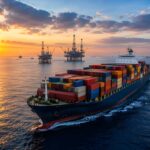
The Strait of Hormuz has remained at the centre of the confrontation. The strategic waterway is a major route for global energy shipments and has faced severe disruption during the conflict.
Trump has maintained that the strait remains open despite the wider confrontation.
“There are no talks or conversations going on, or scheduled, with the Islamic Republic of Iran,” Trump said in a Truth Social post on Tuesday.
“The Naval Blockade remains in full force and effect. The Hormuz Strait is open and operating. All water mines have been removed or detonated,” he added.
His remarks came a day after his son-in-law and special envoy Jared Kushner said talks with Iran were still under way and were “probably more robust” than they had ever been.
Iranian Parliament Speaker Mohammad Bagher Ghalibaf has said Tehran would not reopen the Strait of Hormuz until Washington meets its demands, including lifting the blockade, releasing frozen Iranian assets and easing oil sanctions.
The conflicting claims over whether negotiations are taking place have added uncertainty over prospects for ending the conflict.
Trump has previously said negotiations could resume “maybe at some point”, while insisting that Iran must not be allowed to develop a nuclear weapon.
“Iran cannot have a nuclear weapon. You know why? Because they’d use it. And we’re not going to let them use it,” he said.