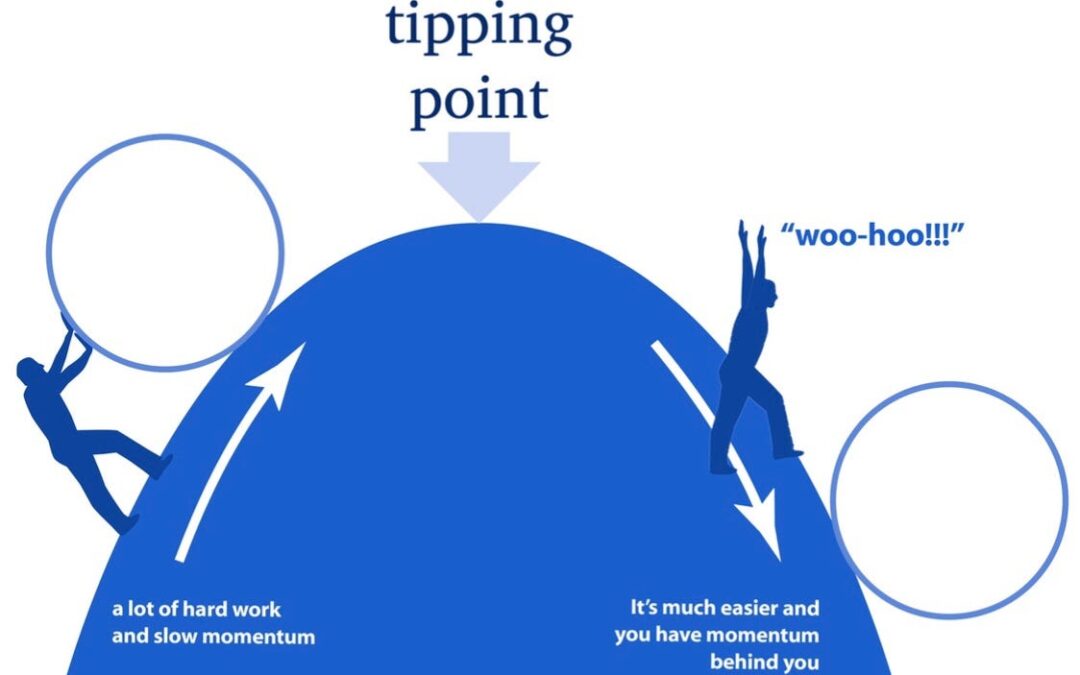
Ever noticed how one viral post suddenly takes over your entire feed, or how a tiny habit ends up completely changing someone’s life? Big transformations don’t always begin with big moves; they often start with something so small that it’s easy to overlook. That’s the idea behind the Tipping Point Theory: the moment when gradual changes build enough momentum to trigger a rapid and dramatic shift. Popularized by Malcolm Gladwell in his bestselling book The Tipping Point, the concept explains why trends explode, behaviors spread, and ideas catch on almost overnight. In a world where attention, technology, and culture evolve at lightning speed, understanding tipping points helps us recognize how small actions can create surprisingly powerful ripple effects.
The Science Behind Tipping Points
Think of filling a glass with water. Every drop seems insignificant until one final drop makes it overflow. That last drop didn’t create the problem on its own; it simply pushed the glass past its limit. Tipping points work in much the same way.
Every system, whether it’s human behavior, a business, or even the environment, has a critical threshold. This is the point where small, steady changes add up until the system can no longer stay the same. Instead of changing little by little, it suddenly shifts into a completely new state.
This often happens because of a chain reaction. One event influence another, which then affects something else, creating a ripple effect that keeps growing.
Another key idea is the positive feedback loop. Despite the name, it doesn’t always mean something good. It simply means that one change reinforces another, making the effect stronger over time. For example, when more people start using a social media app, it becomes more valuable to others, encouraging even more users to join.
That’s why major shifts often seem sudden. In reality, the change has been building quietly all along until it finally reaches its tipping point.
The Three Key Elements of the Tipping Point Theory
Not every idea goes viral, and not every small change creates a huge impact. So, what makes certain trends, products, or movements suddenly take off? The three key factors work together to create a tipping point.
- The Law of the Few
Some people have a much bigger influence than others. These are the people who naturally connect with lots of others, love sharing information, or have the power to persuade. Think of your friend who always knows the latest trends before everyone else or an influencer whose recommendation instantly makes a product sell out. When these people support an idea, it spreads much faster than it would on its own.
- The Stickiness Factor
For an idea to catch on, it has to be memorable. This is known as the Stickiness Factor. If people forget it within minutes, it won’t go anywhere. But if it’s catchy, useful, emotional, or fun, they’re more likely to remember it and share it. A great example is a simple advertising slogan or a social media challenge that keeps replaying in your head long after you’ve seen it.
- The Power of Context
Sometimes, success isn’t just about the idea, it’s about when and where it appears. The same message can get ignored one day and become a sensation the next because the circumstances are different. For instance, video-calling apps existed for years, but during the COVID-19 pandemic, they became essential almost overnight. The context had changed, and so did people’s behavior.
When these three elements: the right people, a memorable idea, and the right environment—come together, even the smallest spark can turn into something extraordinary.
How Small Changes Influence Human Behavior
Have you ever started watching “just one episode” and ended up binge-watching an entire season? Or downloaded an app because everyone around you was talking about it? Human behavior is rarely random. More often than not, it’s shaped by small influences that slowly build up until they change the way we think and act.
One of the biggest drivers of behavior is habits. Our brains love routines because they save time and energy. That’s why tiny actions like reading five pages a day or taking a short walk after dinner can eventually become automatic. Over time, these small habits compound into significant lifestyle changes without us even noticing.
Another powerful force is social influence. We naturally observe what others are doing and often follow their lead. If everyone in your office starts carrying a reusable water bottle, chances are you’ll consider doing the same. This tendency helps ideas, products, and behaviors spread from one person to another, creating momentum.
Then comes peer pressure, which isn’t always negative. While it can encourage unhealthy choices, it can also inspire positive ones. For example, if your friends begin exercising regularly or saving money, you’re more likely to adopt those habits too. The people around us often shape our decisions more than we realize.
Finally, our decision-making patterns are influenced by small cues in our environment. A limited-time discount can make us buy something we weren’t planning to purchase, while seeing hundreds of positive reviews makes a product seem more trustworthy. These subtle nudges guide our choices every day.
When habits, social influence, peer pressure, and decision-making work together, even the smallest change can spark a behavioral shift. That’s exactly how tipping points are created; one small action at a time.
Benefits of Understanding Tipping Points
- Better Strategic Planning
Understanding tipping points helps businesses, organizations, and individuals make smarter decisions. Instead of relying on guesswork, they can identify the right moment to introduce a product, launch a campaign, or implement a new idea. Small, well-timed actions often deliver far greater results than large, random efforts.

Plan concept illustration. Idea of managing time and actions.
- Faster Innovation
Many successful innovations don’t happen overnight. They gain momentum through gradual improvements until people are ready to embrace them. By recognizing tipping points, businesses can speed up the adoption of new technologies, products, or services and stay ahead of competitors in a rapidly changing market.
- Improved Problem-Solving
Complex problems often seem impossible to solve because people focus only on big solutions. Tipping Point Theory shows that small, targeted changes can trigger meaningful improvements. Addressing one key issue at the right time can create a ripple effect that solves several related problems simultaneously.
- Predicting Trends
Whether it’s fashion, technology, or consumer behavior, trends usually build quietly before becoming mainstream. Understanding tipping points helps businesses, marketers, and researchers spot early signals of change. This allows them to prepare in advance instead of reacting after everyone else has already caught on.
- Creating Lasting Change
Real and lasting change rarely comes from one dramatic event. It happens when small, consistent actions accumulate over time. Whether someone is building healthier habits, growing a business, or leading a social movement, understanding tipping points helps create momentum that leads to long-term success instead of short-lived results.
How to Create Your Own Tipping Point
- Build Momentum Gradually
Big success rarely happens in a single moment. It starts with small, consistent efforts that build over time. Whether you’re launching a business, developing a habit, or growing an audience, every action adds momentum. Stay consistent, because the breakthrough often comes after weeks or months of steady progress.
- Focus on Influential People or Groups
The right people can amplify your message much faster than reaching everyone at once. Connect with industry experts, community leaders, influencers, or loyal supporters who genuinely believe in your idea. Their recommendations build trust and encourage others to follow, helping your message spread more naturally and effectively.
- Leverage Timing and Environment
Even the best ideas can fail if they’re introduced at the wrong time. Pay attention to trends, audience needs, and current events before launching a product or campaign. When your message aligns with the right moment and environment, it has a much greater chance of gaining momentum quickly.
Conclusion
The Tipping Point Theory reminds us that extraordinary outcomes often begin with ordinary actions. Whether it’s changing a habit, growing a business, or starting a movement, success is usually the result of consistent effort combined with the right people, timing, and environment. By recognizing and nurturing these small changes, anyone can create momentum that leads to meaningful and lasting transformation.