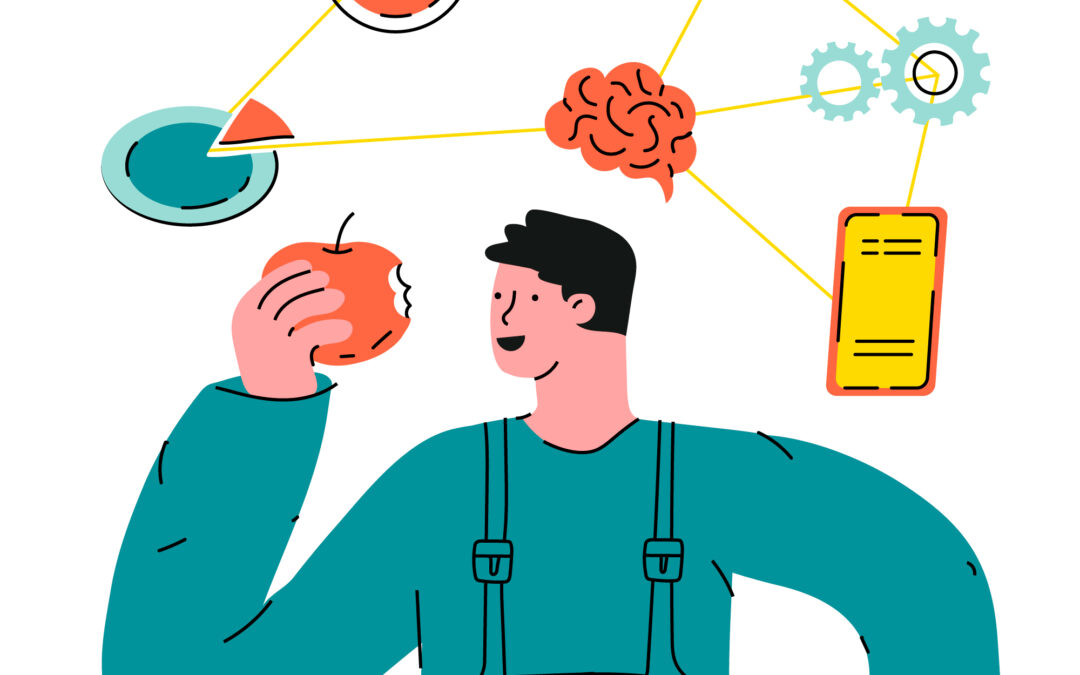
Focus is more than just paying attention. It is your brain’s ability to lock onto one task while filtering out everything that does not matter in the moment. Think of it as a mental spotlight. Wherever you point it gets your time, energy, and effort. Whether you are studying for an exam, solving a tricky problem, or reading a book, focus helps your brain stay on track instead of getting pulled in different directions.
The interesting part is that focus is not unlimited. Your brain uses mental energy to stay attentive, which means distractions, multitasking, and fatigue can drain it faster than you realize. That is why concentrating for hours without a break often feels impossible. The good news is that focus is not something you either have or do not have. It is a skill that can be trained, strengthened, and protected with the right habits, making everyday tasks easier and more productive.
The Neuroscience of Focus
Have you ever wondered why your brain can stay locked into a movie for two hours but struggles to focus on a textbook for ten minutes? The answer lies in how your brain manages attention. Instead of relying on one single area, your brain uses a network of regions that work together to decide what deserves your focus. Think of it like a team of traffic controllers directing your mental energy toward the most important task while pushing distractions to the side.
Every second, your brain is flooded with sights, sounds, thoughts, and notifications. It cannot process everything at once, so it constantly filters information and decides what should take priority. This process happens automatically and is influenced by your goals, emotions, environment, and even your level of tiredness. When these brain networks work together smoothly, staying focused feels effortless. When they do not, even simple tasks can feel surprisingly difficult.
Role of the Prefrontal Cortex
If your brain had a CEO, it would be the prefrontal cortex. Located right at the front of your brain, this region is responsible for planning, making decisions, controlling impulses, and keeping your attention fixed on what matters most. It acts like your brain’s executive control center, helping you stay organized and resist distractions. Every time you choose to finish an assignment instead of checking your phone, your prefrontal cortex is doing the heavy lifting. When it is working well, staying focused feels easier. When it becomes tired or overloaded, distractions become much harder to ignore, making even simple tasks feel more challenging.
Role of Dopamine
Dopamine is often called the brain’s motivation chemical, but its job goes far beyond making you feel good. It helps your brain recognize rewards and encourages you to keep doing activities that feel satisfying or meaningful. Healthy dopamine levels make it easier to stay motivated, complete tasks, and maintain focus over time. The challenge is that constant digital stimulation from social media, games, and endless notifications can flood your brain with quick rewards. Over time, this may make slower activities like studying or reading feel less exciting, making it harder to stay focused without frequent distractions.
How the Brain Filters Distractions
Your brain is constantly surrounded by information. Every sound, notification, conversation, movement, and thought competes for your attention every single second. If your brain tried to process everything at once, it would quickly become overwhelmed. Instead, it acts like a smart filter, deciding what deserves your attention and what can be ignored. This filtering system is guided by your goals, the importance of the information, and its emotional relevance. That is why you can easily notice your name in a crowded room or suddenly become distracted by a message you have been waiting for. The brain naturally gives priority to what it believes matters most. By filtering out irrelevant details, it prevents cognitive overload and allows you to focus on the task in front of you. The better this filtering system works, the easier it becomes to stay productive, think clearly, and avoid getting pulled away by every distraction around you.
What Affects Our Ability to Focus?
Many factors influence how well we can focus, and even small changes in our daily routine can make a big difference. Lack of sleep is one of the biggest attention killers. During sleep, the brain restores itself, strengthens memories, and prepares for the next day. Without enough rest, concentration, decision-making, and mental clarity suffer.
Stress and anxiety also make it difficult to stay focused. While a little stress can boost alertness, chronic stress increases cortisol levels, which interfere with the brain’s ability to think clearly. Anxiety often shifts attention from the task at hand to constant worries and overthinking.
Modern life brings another challenge in the form of digital distractions and multitasking. Frequent notifications and switching between tasks reduce productivity because the brain needs time to regain its focus after every interruption.
Your lifestyle matters too. Nutritious food and regular exercise provide the brain with the energy and oxygen it needs to perform efficiently. Physical activity also improves blood flow, supports memory, and enhances concentration.
Finally, your environment plays a key role. Excessive noise, clutter, and poor lighting can reduce attention, while a quiet, organized, and comfortable workspace helps the brain stay focused and work more effectively.
Myths About Focus
There are many misconceptions about focus that can actually make it harder to work effectively. One of the biggest myths is that multitasking makes you more productive. In reality, your brain does not perform multiple demanding tasks at the same time. Instead, it rapidly switches between them. This constant task switching increases mistakes, slows down work, and reduces overall efficiency. Focusing on one task at a time almost always leads to better results.
Another common myth is that some people are naturally focused all the time. The truth is that everyone gets distracted, regardless of age or profession. The difference is that people with strong focus build habits that support concentration. Regular practice, healthy routines, and a distraction-free environment help strengthen attention over time. Focus is not a fixed talent but a skill that can be developed.
Many also believe that working longer hours means better concentration. However, the brain has limits. After long periods of continuous work, mental performance begins to decline, leading to fatigue and lower-quality output. Taking short breaks helps refresh the mind and improves attention. In the end, productive work is not about spending more hours at your desk but about making the hours you work count.

Science-Backed Ways to Improve Focus
- Time-Blocking
Time-blocking is one of the simplest ways to improve focus. Instead of constantly deciding what to do next, you assign fixed time slots for specific tasks. This reduces decision fatigue and helps your brain stay committed to one activity at a time. With fewer interruptions and a clear schedule, it becomes easier to enter a state of deep work where you can produce your best results.
- Pomodoro Technique
The Pomodoro Technique is designed to help you stay productive without feeling mentally exhausted. The method is simple: work with complete focus for 25 minutes, take a 5-minute break, and after completing four sessions, take a longer break. These regular pauses prevent burnout, refresh your mind, and make it easier to maintain concentration throughout the day.
- Mindfulness and Meditation
Mindfulness trains your brain to stay in the present moment instead of constantly jumping between thoughts. Research shows that practicing meditation for just 10 to 15 minutes a day can improve attention regulation, strengthen executive control, and reduce mind wandering. Over time, it becomes easier to resist distractions and bring your focus back whenever it starts to drift.
- Exercise
Physical activity benefits your brain just as much as your body. Aerobic exercises such as walking, jogging, cycling, or swimming improve memory, attention, and problem-solving skills by increasing blood flow to the brain. Regular movement also boosts the production of Brain-Derived Neurotrophic Factor (BDNF), a protein that supports learning, brain health, and the growth of new neural connections.
Conclusion
Focus is not a skill that some people simply have and others do not. It is a trainable ability that grows through consistent effort and mindful habits. By managing distractions, prioritizing sleep, staying active, and using structured work methods, anyone can strengthen their attention. Better focus leads to improved productivity, clearer thinking, and a healthier mind.