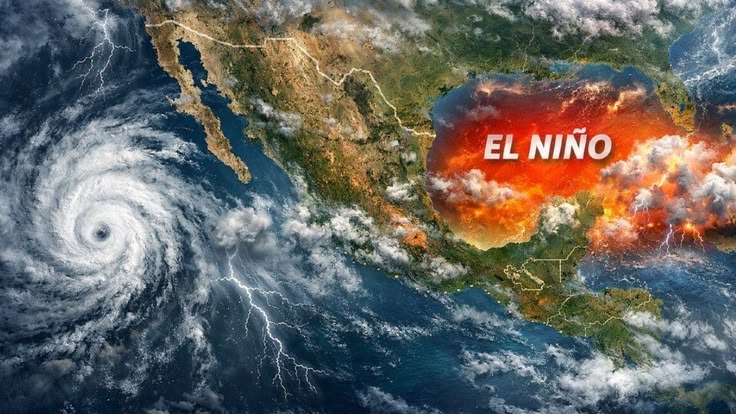
Climate experts have warned that El Niño is expected to strengthen significantly during the second half of 2026, raising the possibility of a powerful weather event that could reshape winter conditions across the United States and other parts of the world.
According to the World Meteorological Organization (WMO), warming sea-surface temperatures in the central and eastern Pacific Ocean are expected to intensify through August and October. While the term “Super El Niño” is widely used to describe exceptionally strong events, the WMO clarified that it is not an official scientific classification.
Researchers say the Pacific Ocean is already showing key signs associated with a strong El Niño, including unusually warm subsurface waters rising toward the surface. Such conditions typically influence weather patterns worldwide by altering rainfall, temperatures and storm activity.
Forecasts indicate that parts of the United States could experience contrasting winter conditions. Northern states are expected to see milder-than-average temperatures, while southern regions may receive above-normal rainfall and cooler weather.
Weather projections also suggest that California’s Sierra Nevada, New York, Vermont, and New Hampshire could witness significant snowfall during the upcoming winter season if the climate pattern strengthens as predicted. Meanwhile, Gulf Coast and southeastern states are likely to face periods of heavy rain and increased storm activity.
Meteorologists from the US National Oceanic and Atmospheric Administration (NOAA) have forecast above-average precipitation across much of the southern United States during the fall and winter months, with the highest confidence for the Gulf Coast and parts of the Southeast and Mid-Atlantic regions.
The United Nations has also raised concerns over the potential impact of the strengthening El Niño. UN Secretary-General António Guterres warned that the phenomenon could intensify existing climate challenges, including extreme heat, wildfires and severe weather events, while WMO Secretary-General Celeste Saulo stressed that early preparedness and timely action are essential to reducing the risks posed by extreme weather.
Experts continue to monitor developments closely as governments and emergency agencies prepare for the possible effects of one of the strongest El Niño events in recent years.