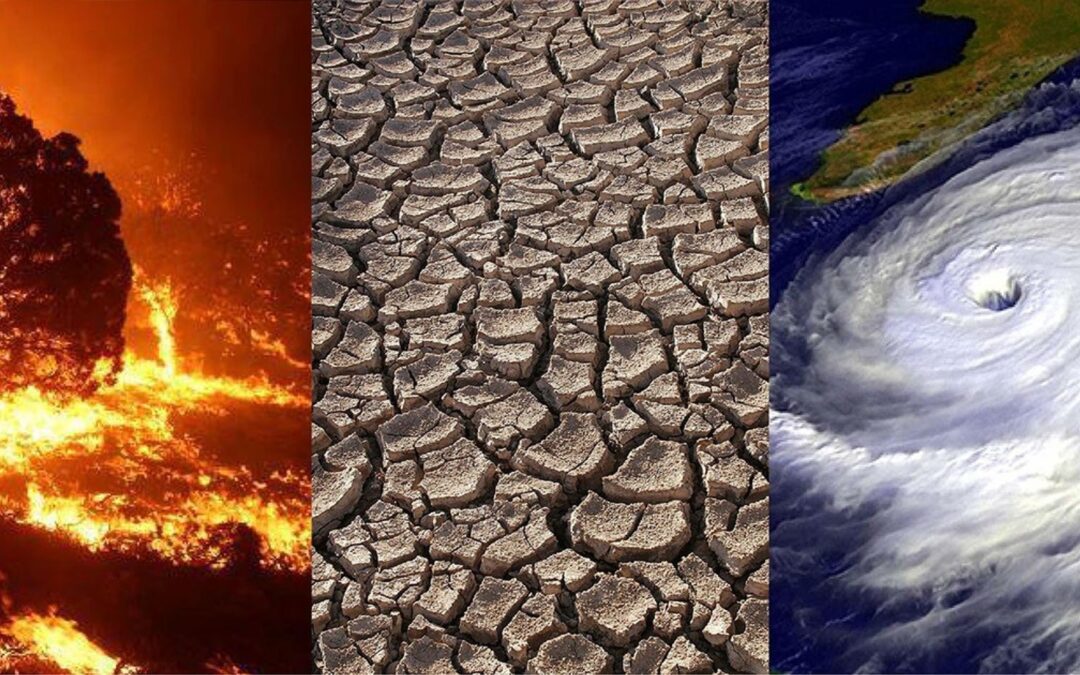
Welcome to Planet Barbecue, where the latest transatlantic row has arrived with plenty of heat.
This time, the spark came from Paris, where Deputy Mayor Audrey Pulvar blamed the United States—and its near-universal embrace of air conditioning—for helping turn France into an oven.
As Americans mocked France’s limited use of air conditioning during a week of temperatures soaring to 43°C, Pulvar fired back, arguing that the world’s largest per-capita greenhouse gas emitter had spent decades treating the atmosphere as an all-you-can-eat carbon buffet. The result, she suggested, is a warming planet that has contributed to more than 1,300 heat-related deaths in France in recent weeks.
“Dear American journalists and social media ‘influencers’: for days, some of you have been criticizing and making fun of Paris because the city does not have A/C in every room… OMG, this is so rich!… Your cities, which are 90 per cent air conditioned, are not unrelated to this… So please, enough with the lecture. Just start doing your part,” Pulvar wrote on social media.
France has long resisted widespread air conditioning. Only about a quarter of French households have cooling systems, compared with roughly 90 per cent in the United States—a statistic many Americans cite as evidence of convenience rather than excess.
American conservatives quickly pushed back.
“The reality is that no amount of French sweltering in the heat will make a real dent in the global climate. The politicians in Paris might have a cultural resistance to air conditioning, but as the mercury rises, European voters might soon decide that cooling off is better than green self-righteousness,” the Wall Street Journal argued.
Yet while much of Western Europe is wilting under extreme heat, the United States is hardly escaping the furnace. As Americans prepare to celebrate Independence Day with fireworks, large parts of the country are also bracing for another intense heatwave.
Temperatures are forecast to exceed 40°C across several regions over the holiday weekend, with heat indices climbing even higher under another expansive heat dome.
Pulvar’s critics say she overreached by linking America’s enthusiasm for air conditioning directly to France’s current misery. But even many on the American left acknowledge the broader point: greenhouse gases ignore borders. Carbon dioxide has never stopped at immigration to present a passport.
On the larger question—that decades of emissions are steadily warming the planet—the scientific consensus remains firmly on Pulvar’s side, even if her rhetoric invited political backlash.
That debate inevitably returns to President Donald Trump, who has repeatedly dismissed climate change as exaggerated or fraudulent. Over the years, he has called global warming a hoax, mocked climate concerns during winter cold snaps and joked that rising sea levels simply create “more oceanfront property.”
Critics liken that approach to watching a house burn down and declaring the brighter light an improvement.
The United States has already experienced the deadly consequences of extreme heat. Chicago’s 1995 heatwave killed more than 700 people, while the Pacific Northwest’s unprecedented 2021 heat dome claimed hundreds more lives. Last July, Reagan National Airport outside Washington recorded 104°F (40°C), matching a long-standing record that forecasters believe could once again be challenged this weekend.
Yet Washington often appears remarkably resistant to adapting—even in its wardrobe.
Only in the US capital, critics joke, could thousands of highly educated professionals collectively decide that triple-digit temperatures are best confronted in dark wool suits and neckties. Visiting cabinet officials abroad have maintained the same attire in tropical climates, perspiring with patriotic determination as though formal dress somehow intimidates the sun.
The irony at the heart of the Paris-Washington dispute is that air conditioning has increasingly become less a luxury than a necessity in many parts of the world. The real challenge is no longer whether people should cool their homes, but how that cooling is powered.
Cleaner electricity, energy-efficient buildings, better insulation and greener urban planning will do far more to slow global warming than exchanging barbs across the Atlantic.
Because on Planet Barbecue, nature always has the last word. Once the fire is burning, it matters far less who lit the match than whether anyone is willing to put it out.