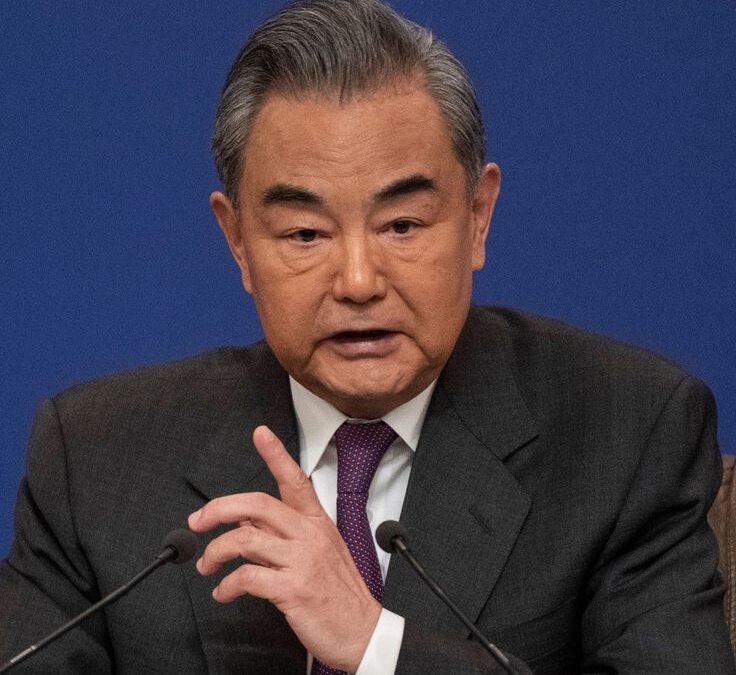
Chinese Foreign Minister Wang Yi will visit India next week to participate in a meeting of National Security Advisers (NSAs) from BRICS member countries, marking his first trip to India in nearly a year and highlighting ongoing efforts by New Delhi and Beijing to improve relations after years of border tensions.
Wang, who also serves as China’s National Security Adviser in his capacity as Director of the Office of the Central Commission for Foreign Affairs, will attend the BRICS security meeting on June 22 and 23 at the invitation of India’s National Security Adviser, Ajit Doval.
The visit comes at a significant time as India, the current chair of BRICS, prepares to host the BRICS Summit in September. Chinese President Xi Jinping and Russian President Vladimir Putin are expected to participate in the summit alongside other leaders of the grouping.
Wang had skipped a BRICS foreign ministers’ meeting hosted by India last month due to a scheduling conflict with a visit by former US President Donald Trump to Beijing. His last visit to India took place in August 2025, when he held discussions with Doval and External Affairs Minister S. Jaishankar.
According to the Chinese Foreign Ministry, discussions during the BRICS NSAs’ meeting will focus on global and regional security developments, international challenges, and collective responses to both traditional and emerging security threats. China has stressed the importance of strengthening political and security cooperation within BRICS as the bloc seeks a greater role in shaping global governance.
Officials familiar with the matter indicated that Wang is likely to hold bilateral meetings with Doval and representatives of other BRICS nations on the sidelines of the event. However, a formal meeting under the India-China Special Representatives mechanism is not expected during this visit, as the next round of those talks is scheduled to take place in China.
India-China relations have shown signs of improvement since October 2024, when both countries reached an understanding to disengage from a prolonged military standoff along the Line of Actual Control (LAC). The border dispute had strained ties for more than four years and pushed bilateral relations to their lowest point in decades.
Since then, both sides have taken several confidence-building measures. These include the resumption of direct flights, the revival of the Kailash Mansarovar pilgrimage to Tibet, and the easing of visa restrictions for Chinese citizens by India. China has also relaxed certain export restrictions on heavy machinery, rare-earth magnets, and fertilisers.
The upcoming BRICS security meeting is expected to provide another opportunity for India and China to maintain diplomatic engagement while advancing broader discussions on regional stability, global security, and cooperation among emerging economies.