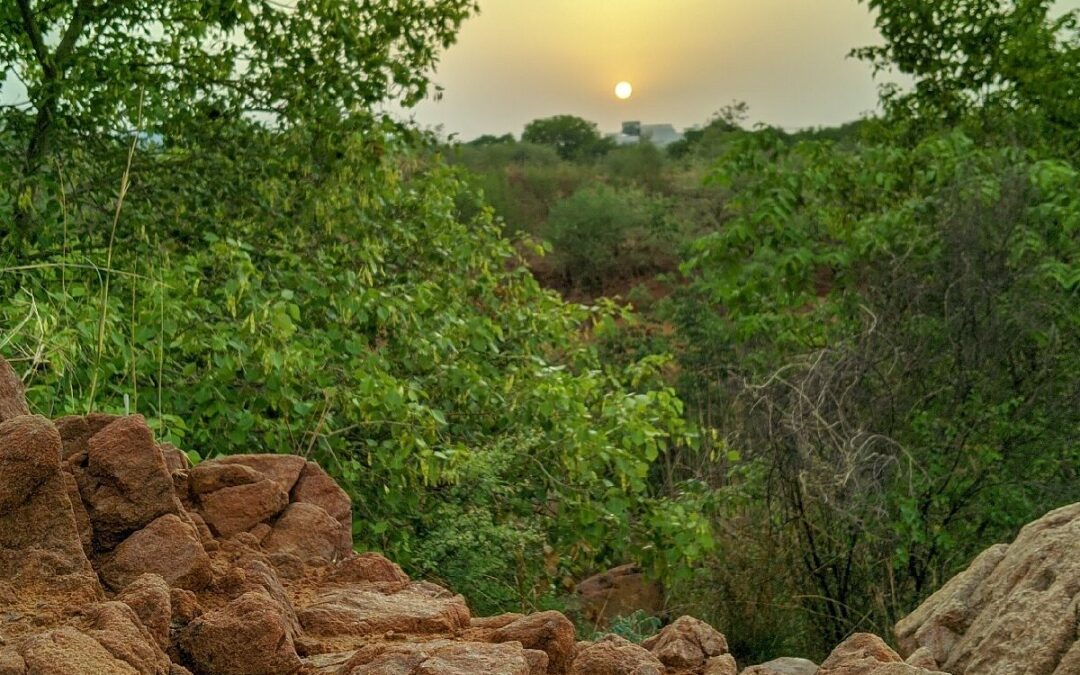
The National Capital Region (NCR) states have unanimously agreed to retain the provisions related to the Natural Conservation Zone (NCZ) and protect the Aravali ecosystem under the proposed Regional Plan 2041. The decision was taken during a meeting of the NCR Planning Board chaired by Union Housing and Urban Affairs Minister Manohar Lal Khattar. While there was consensus on preserving environmentally sensitive areas, the board decided to postpone the finalisation of the Regional Plan by a few months to allow further examination of suggestions submitted by member states.
To address pending concerns, the board has constituted a sub-committee comprising senior officials from the Centre and participating states. The panel has been tasked with reviewing the recommendations and submitting its report by August 15. Officials indicated that despite differing viewpoints on certain planning aspects, there was broad agreement that the Aravali range and other protected areas should remain safeguarded under the plan.
Addressing concerns about possible changes to conservation zones, the minister emphasised that a substantial portion of the Aravali range and forest land falls within the NCR and that all stakeholders support increasing green cover across the region. He clarified that existing forest areas are already protected under environmental laws, court orders, and regulations issued by the Ministry of Environment, Forest and Climate Change, and that no decision would violate rulings of the National Green Tribunal, the Supreme Court, or High Courts.
The meeting also discussed claims raised by some representatives from Haryana regarding the geographical extent of the Aravali range covered under existing environmental notifications. However, officials maintained that the NCZ provisions, including those concerning the Aravali hills, would continue to remain part of the Regional Plan 2041.
Representatives from Uttar Pradesh and Rajasthan also expressed support for the conservation framework, stating that there was no disagreement among member states on the issue. The board further clarified that no fresh survey of the Natural Conservation Zone would be undertaken. Instead, authorities will rely on existing records while carrying out ground verification where necessary, as satellite imagery alone may not always accurately distinguish forests from other green-covered areas.
In addition to environmental protection measures, the NCR Planning Board decided to accelerate the implementation of the “Parivartan Scheme” aimed at reducing vehicular pollution. The scheme encourages owners of older buses and trucks to replace them with cleaner BS-VI, CNG, or electric vehicles. Under the voluntary programme, eligible vehicle owners will receive incentives of approximately 30 percent of the value of the new vehicle, helping promote cleaner transportation across the NCR region.
The decisions are being viewed as a significant step toward balancing urban growth with environmental conservation while strengthening efforts to tackle air pollution and protect one of northern India’s most critical ecological landscapes.