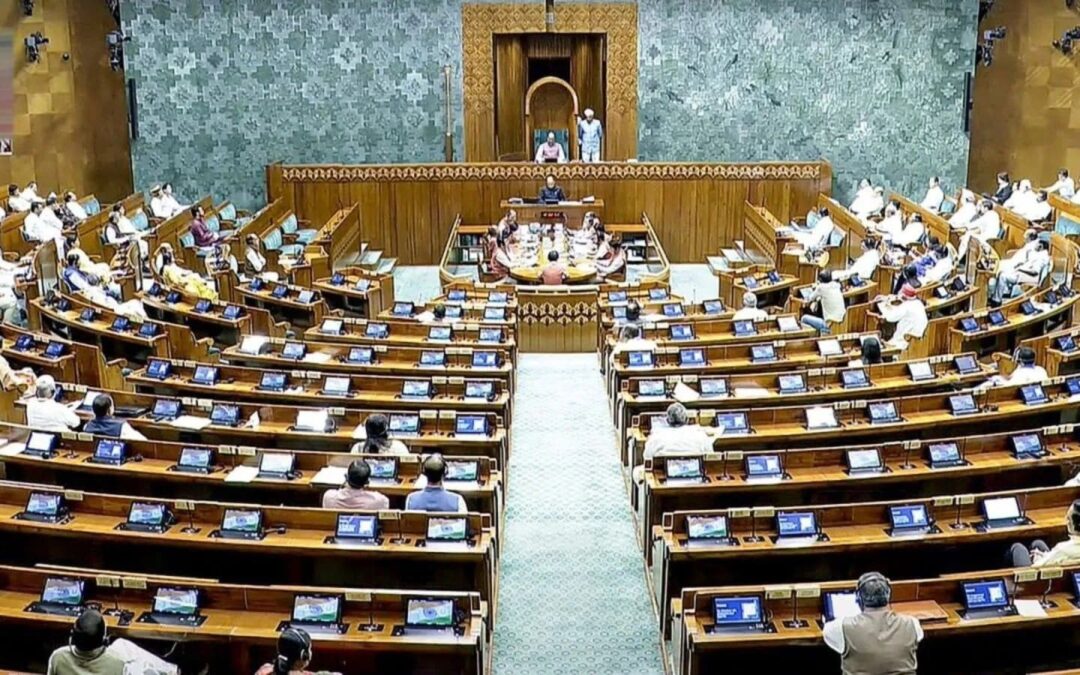
A working paper prepared by the Economic Advisory Council to the Prime Minister (EAC-PM) has proposed a major restructuring of parliamentary constituencies, recommending that the strength of the Lok Sabha be increased from 543 to 824 seats through a targeted delimitation exercise.
Authored by EAC-PM member Shamika Ravi and Indian Statistical Institute professor Mudit Kapoor, the paper suggests dividing 170 of India’s largest parliamentary constituencies to improve voter representation and electoral participation. Under the proposal, 59 constituencies would be split into two seats, while 111 constituencies would be divided into three.
The study estimates that the move could boost voter turnout in future general elections by 0.3 to 2.3 percentage points, potentially adding between 90 lakh and 2.3 crore voters to the electoral process.
According to the recommendations, southern states would see a significant increase in parliamentary representation. Telangana’s Lok Sabha seats could rise from 17 to 26, Andhra Pradesh from 25 to 38, Karnataka from 28 to 42, Tamil Nadu from 39 to 59, and Kerala from 20 to 30.
Among larger northern and western states, Maharashtra’s representation could increase from 48 to 72 seats, Rajasthan from 25 to 38, Uttar Pradesh from 80 to 120, Madhya Pradesh from 29 to 44, Gujarat from 26 to 39, and Bihar from 40 to 60.
The paper argues that the proposed formula would maintain the overall balance of representation between southern states and the more populous northern and western regions. It estimates that southern states would hold 23.7% of Lok Sabha seats after delimitation, compared to 23.6% currently, while northern and western states would see a marginal increase from 45.2% to 45.6%.
Highlighting the growing challenge of oversized constituencies, the report noted that the median Lok Sabha constituency in 2024 had around 18.2 lakh registered voters, while some constituencies exceeded 32 lakh electors. It warned that larger constituencies can create representation gaps and uneven voter participation.
The paper also identified declining turnout in highly urban constituencies, particularly among women voters. To address this, it recommended measures such as women-only polling stations in metropolitan areas, extended voting hours, and improved transport access to polling booths.
The recommendations come as the Centre prepares for a fresh delimitation exercise, expected to shape India’s electoral landscape ahead of future general elections.