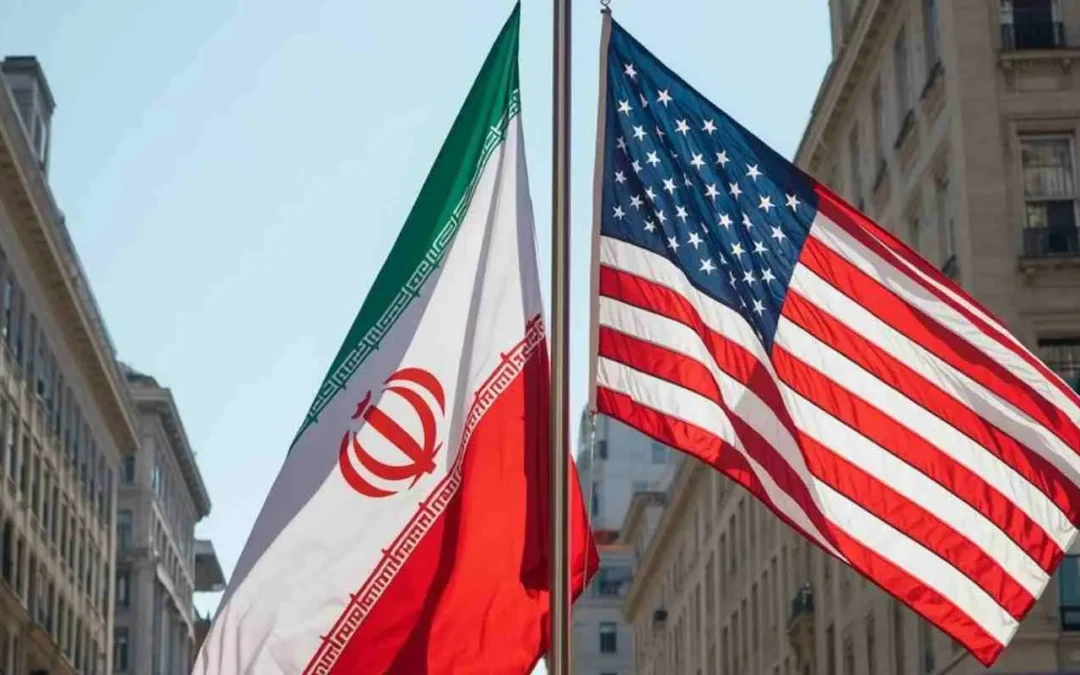
Tensions in the Middle East escalated sharply as Iran claimed to have launched retaliatory attacks on multiple US military installations in Kuwait and Bahrain, while the United States carried out fresh strikes on Iranian targets.
According to Iran’s Islamic Revolutionary Guard Corps (IRGC), Iranian forces conducted two waves of operations against 18 key US military sites in Kuwait and Bahrain. Tehran described the attacks as a response to recent US military actions in southern Iran.
The claims came shortly after US Central Command (CENTCOM) announced that American forces had carried out additional self-defense strikes against Iranian military targets, including surveillance systems, communications infrastructure, and air defense facilities. The operation, conducted under the direction of President Donald Trump, involved precision-guided munitions launched by US Marine Corps, Air Force, and Navy assets.
“The strikes are in response to Iran’s unwarranted and continued aggression,” CENTCOM said, adding that US forces remain prepared to defend American interests in the region.
Iran Claims Strikes on US Military Facilities
Iranian officials said the attacks targeted several major US military installations, including Ali Al-Salem Air Base and Ahmed Al-Jaber Air Base in Kuwait, as well as Sheikh Isa Air Base in Bahrain.
The IRGC stated that its Aerospace Force and Navy participated in the operations, which were launched in retaliation for US strikes near Bandar Abbas and other locations in southern Iran. Tehran warned that further military responses would follow if American operations continue.
Strait of Hormuz Tensions Intensify
Iran also declared the Strait of Hormuz closed to maritime traffic, including oil tankers and commercial vessels, warning that any ship attempting to transit the strategic waterway could be targeted.
Iranian media reported clashes between US naval forces and IRGC units in the area. However, CENTCOM rejected the claims, stating that no US warships had been hit and that commercial shipping continued to move through the strait.
The Strait of Hormuz remains one of the world’s most important energy corridors, carrying a significant share of global oil exports.
Missile Launches Toward Jordan
Reports indicated that Iran launched ballistic missiles toward Jordan from the cities of Zanjan, Tabriz, and Urmia. Videos circulating online appeared to show missiles crossing Jordanian airspace before being intercepted by air defense systems.
Jordanian authorities have not released detailed information regarding the reported launches.
Iran Accuses US of Targeting Civilian Infrastructure
Iran’s Foreign Ministry spokesperson, Esmaeil Baghaei, accused the United States of striking civilian water infrastructure in Sirik, a port town in Hormozgan province.
According to Iranian officials, the attack damaged two water reservoirs that supplied drinking water to more than 20,000 residents across ten villages.
Baghaei described the alleged strike as a “war crime” and called for international accountability, arguing that the attack deliberately targeted civilian infrastructure.
Tehran Vows Continued Response
Iran’s Khatam al-Anbiya Central Headquarters claimed that US military operations in southern Iran had slowed following what it described as a “strong and decisive” Iranian response. Iranian military officials reiterated that retaliatory operations would continue as long as US actions persist.
An IRGC-affiliated source told local media that Iran would not yield to military pressure and would respond forcefully to any further attacks.
IRGC Commander Issues Warning
Brigadier General Majid Mousavi, commander of the IRGC Aerospace Force, warned that any attempt to destabilize the Strait of Hormuz would trigger a wider regional response.
“If the Strait of Hormuz is made unsafe, the consequences will spread across the region,” Mousavi said, warning that Iran is prepared to escalate its response if necessary.
The latest developments mark a significant escalation in the confrontation between Washington and Tehran, raising concerns about regional stability, global energy supplies, and the potential for a broader conflict in the Middle East.