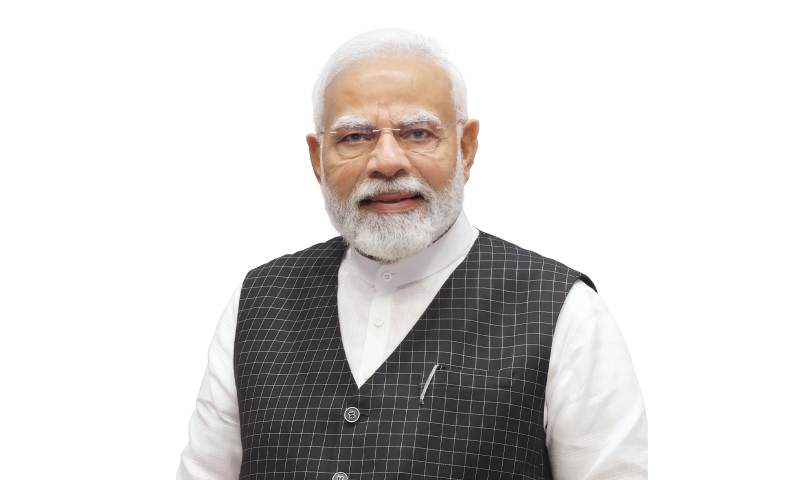
As the Narendra Modi-led government completes 12 years at the Centre, the Bharatiya Janata Party (BJP) has described the period as a transformative era marked by development, good governance, national confidence and public welfare.
Reflecting on the journey from 2014 to 2026, BJP leaders said the government’s approach has been guided by the principle of “Sankalp Se Siddhi” (from resolve to achievement), which they believe has reshaped India’s economic, social and geopolitical landscape.
According to the party, Prime Minister Narendra Modi inherited a nation grappling with policy paralysis, corruption scandals and leadership challenges. Over the past 12 years, however, India has emerged as a more confident and assertive nation with growing global influence and a stronger economic foundation.
The BJP argues that while previous governments often viewed politics through the lens of power and dynastic interests, the Modi administration has sought to place national development and public service at the centre of governance. The party characterises this shift through the ideals of “Nation Above Family” and “Service Above Power.”
A key theme highlighted by the BJP is the evolution from what it describes as “Collective Thinking” in 2014 to “Collective Resolve” and ultimately a “Collective Dream” of building a developed India, or “Viksit Bharat.”
The government’s infrastructure push has been presented as one of the defining achievements of the period. BJP leaders point to the construction of more than 12 crore household toilets under the Swachh Bharat Mission, universal village electrification, a sevenfold expansion of the expressway network, and the increase in the number of airports from 74 in 2014 to 165.
The party also views the period as one of cultural and civilisational renewal. Initiatives such as the renaming of Rajpath as Kartavya Path, Race Course Road as Lok Kalyan Marg, and the redevelopment of heritage and religious sites are cited as examples of what it calls a broader effort to shed colonial-era symbols and strengthen India’s cultural identity.
On the economic front, the BJP emphasises India’s emergence as a global startup hub. The country is now home to more than 2 lakh startups and over 125 unicorns, reflecting a growing culture of entrepreneurship and innovation. According to the party, this shift signifies a transition from a workforce focused on seeking employment to one increasingly creating employment opportunities.
Women’s empowerment has also been highlighted as a central pillar of the government’s development agenda. BJP leaders point to initiatives that have helped create more than three crore “Lakhpati Didis” through self-help groups and rural livelihood programmes. Increased participation of women in security forces and leadership roles is presented as evidence of a transition from “women’s development” to “women-led development.”
In the social welfare sector, the government claims significant progress in poverty alleviation and financial inclusion. According to figures cited by the BJP, around 25 crore people have moved above the poverty line during this period. Major welfare initiatives include the construction of four crore permanent houses, health insurance coverage for over 44 crore beneficiaries under Ayushman Bharat, and collateral-free loans worth approximately ₹40 lakh crore sanctioned through the Pradhan Mantri Mudra Yojana.
The government also credits the Jan Dhan-Aadhaar-Mobile (JAM) framework and the rapid expansion of digital payments for driving financial inclusion and transparency. Unified Payments Interface (UPI) transactions have grown exponentially, making India one of the world’s largest digital payments ecosystems.
National security and border development have been another major focus area. According to the BJP, regions once perceived as remote frontier settlements are now being developed as strategically important “first villages” through enhanced infrastructure and connectivity projects.
The party also highlights cultural and religious projects, including the construction of the Ram Temple in Ayodhya and the redevelopment of the Kashi Vishwanath Dham and Mahakal Mahalok corridors. These initiatives are described as efforts to reconnect modern India with its civilisational heritage.
Looking beyond domestic achievements, the BJP argues that India has emerged as a leading global power under Prime Minister Modi’s leadership. The party points to growing international engagement, diplomatic outreach and the numerous honours conferred upon the Prime Minister by foreign governments as indicators of India’s enhanced global stature.
As the government marks 12 years in office, the BJP maintains that the country’s transformation is rooted in a collective national aspiration for development, self-reliance and global leadership, with the vision of a developed India continuing to guide its future agenda.
This article is a rewritten report based on views expressed by BJP National President J. P. Nadda and reflects the party’s assessment of the Modi government’s 12-year tenure.