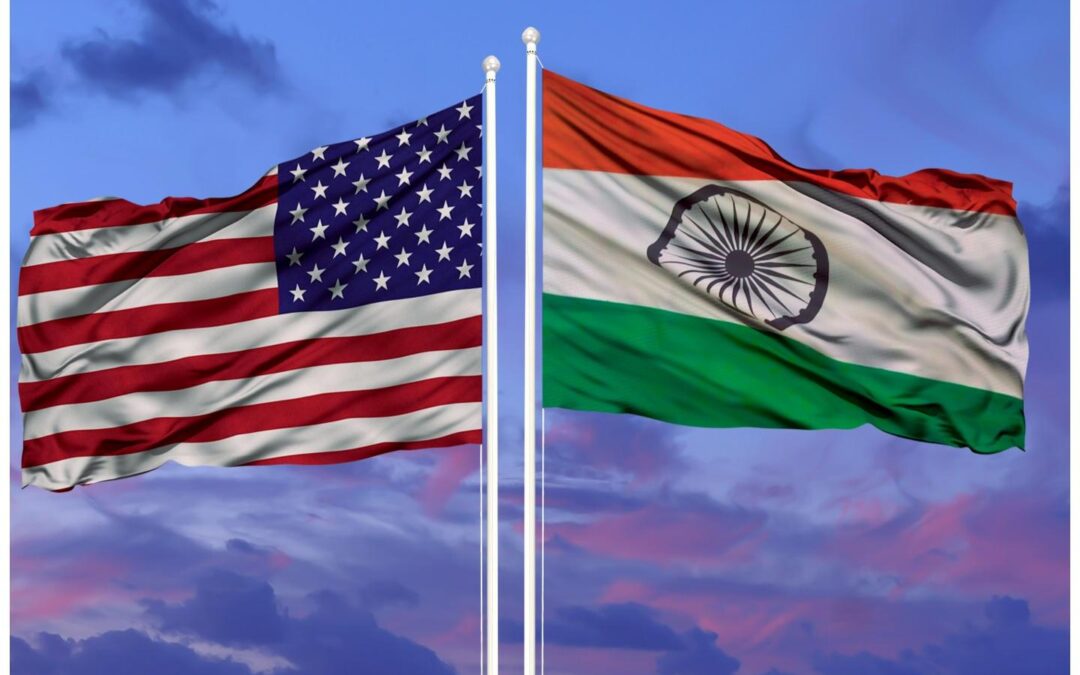
India and the United States have completed most of the legal drafting for the first phase of their proposed bilateral trade agreement (BTA), with negotiations now focused on minor details, Union Commerce and Industry Minister Piyush Goyal said on Monday.
Describing the discussions as being down to “commas and full stops,” Goyal indicated that the broad contours of the agreement are largely settled. However, the final signing will depend on greater clarity regarding Washington’s future tariff regime after the current 10% tariff structure expires next month.
Tariff Uncertainty Remains Key Hurdle
India is closely monitoring how the administration of Donald Trump intends to replace the tariff mechanism that was previously challenged in US courts.
New Delhi’s primary concern is ensuring that Indian exports continue to enjoy a competitive tariff position relative to other exporting nations. Officials are particularly focused on potential actions under Section 301 of US trade law, under which India is currently subject to two investigations.
One probe concerns alleged structural overcapacity in sectors including solar modules, processed food, steel and aluminium, while another examines countries accused of failing to adequately address forced labour concerns.
Trade Negotiators Await US Policy Direction
US Trade Representative Jamieson Greer is expected to visit India once Washington finalises its revised tariff framework.
The earlier “reciprocal tariffs” introduced by Trump under emergency powers were struck down after the US Supreme Court ruled that approach unlawful. As a result, negotiators are now working to adapt the agreement’s legal language to the evolving US trade policy landscape.
The strategy appears to be to keep the treaty text ready for signature, with tariff schedules and rates to be finalised once the new US framework is announced.
Interim Agreement Delayed by Court Ruling
India and the United States had initially agreed on an interim trade framework in February. However, progress was temporarily halted following the court decision that invalidated the tariff mechanism used by the Trump administration.
A team of American trade negotiators is currently in New Delhi for a three-day round of discussions beginning Tuesday, aimed at resolving the remaining technical issues.
‘99% Finalised’
Speaking to reporters, Goyal said the agreement was virtually complete.
He noted that US Ambassador Sergio Gor had indicated that 99% of the negotiations had been concluded, with only minor legal and procedural matters left to address.
According to Goyal, the remaining discussions largely concern how recent legal developments in the United States should be reflected in the final text of the agreement.
Strategic Importance of the Trade Pact
The proposed agreement is expected to strengthen an already significant economic relationship between the two countries.
The United States is India’s largest export market, with Indian goods exports reaching approximately $87 billion last year. It is also India’s second-largest trading partner overall, with bilateral trade valued at around $140 billion.
India currently enjoys a trade surplus of more than $33 billion with the US, making market access and tariff arrangements particularly important for New Delhi.
Path Towards a Broader Agreement
Officials from both sides view the current negotiations as the first step toward a more comprehensive trade framework.
Once the initial tranche is signed, India and the US are expected to begin discussions on a wider-ranging bilateral trade agreement covering additional sectors and economic cooperation areas, potentially reshaping one of the world’s most important trading relationships.