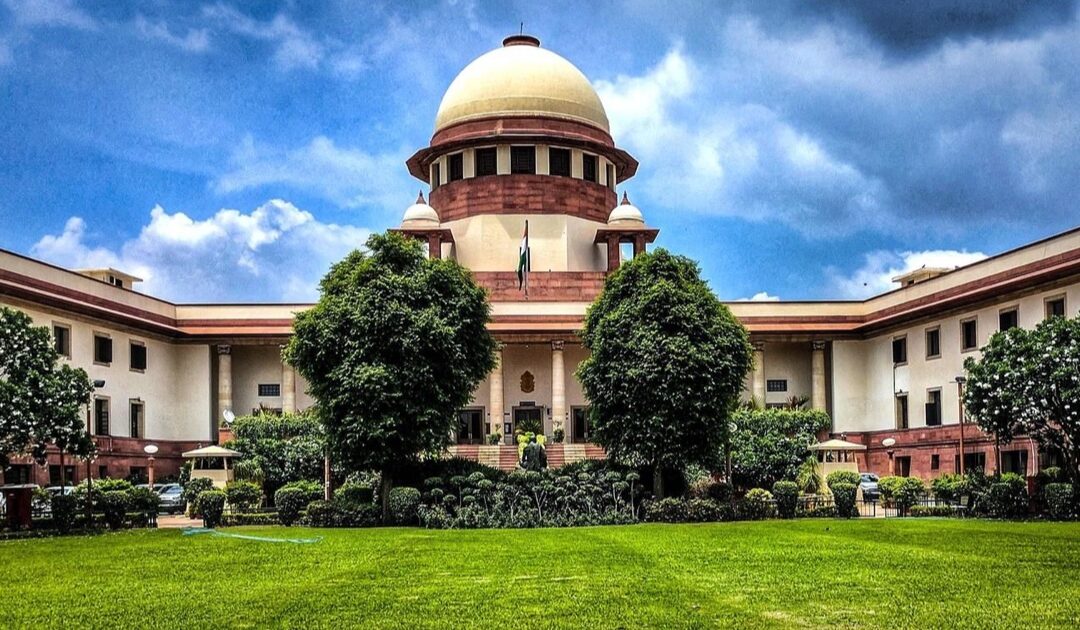
The Supreme Court’s recent decision upholding the Election Commission of India’s (ECI) Special Intensive Revision (SIR) of electoral rolls is likely to have far-reaching implications for the future of elections in India. More than a ruling on an administrative exercise, the judgment addresses fundamental questions about electoral integrity, institutional autonomy and the constitutional foundations of democracy.
Democracy Begins With the Voter List
Before elections are contested and votes are cast, democracy depends on the accuracy of electoral rolls. Recognising this principle, the Supreme Court upheld the ECI’s authority to conduct a Special Intensive Revision aimed at verifying and updating voter lists.
The Court’s ruling elevates electoral roll accuracy from a routine administrative task to a constitutional necessity. According to the judgment, free and fair elections begin not at the polling booth but with a credible and trustworthy voter registry.
The Controversy Surrounding the SIR
The legal challenge arose after the Election Commission launched the SIR process in Bihar through a June 2025 notification, with similar exercises later expanding to other states.
Petitioners, including civil society organisations and political groups, argued that the exercise resembled a citizenship verification programme. They warned that requiring citizens to provide documentation could effectively transform the Election Commission into a parallel authority for determining citizenship.
The Commission rejected those concerns, maintaining that the revision was necessary to address decades of demographic changes, migration and inaccuracies that had accumulated in voter rolls over time. It argued that more than forty years had passed since the last intensive revision and that a systematic update was essential to maintain electoral credibility.
Court Strengthens Election Commission’s Authority
The Supreme Court largely accepted the Commission’s rationale. In doing so, it reaffirmed the broad powers granted to the ECI under Article 324 of the Constitution and Section 21(3) of the Representation of the People Act, 1950.
The judgment clarifies that the Commission is not merely responsible for conducting elections but also possesses the constitutional authority to take corrective and preventive measures necessary to protect the integrity of the electoral process.
By recognising voter-list verification as part of the Commission’s constitutional mandate, the Court significantly strengthens the institution’s role in safeguarding democracy.
Drawing the Line Between Verification and Citizenship
The most sensitive aspect of the case concerned citizenship.
Critics argued that the SIR effectively required voters to prove their citizenship, creating concerns similar to those raised during debates over the National Register of Citizens (NRC). They contended that electoral officers should not be empowered to make citizenship determinations.
The Court responded by drawing a clear distinction between electoral eligibility and citizenship adjudication.
While acknowledging that non-citizens cannot legally remain on electoral rolls, the Bench held that any findings made by the Election Commission during the verification process are limited strictly to electoral purposes. Removal from the voter list cannot be treated as a final declaration that an individual is not an Indian citizen.
Where genuine citizenship disputes arise, those questions must be decided under the framework of the Citizenship Act by the appropriate authorities.
Presumption of Citizenship Remains Intact
Petitioners also argued that demanding documents from existing voters undermined the presumption that individuals already registered on electoral rolls are citizens.
The Court disagreed, holding that the presumption continues to exist but is not absolute. Verification, it said, is permissible when carried out fairly and with proper safeguards.
This approach reflects the Court’s broader attempt to strike a balance between electoral integrity and individual rights.
Procedural Safeguards and Proportionality
A major concern raised during the litigation was the impact of documentation requirements on vulnerable populations, including migrant workers, rural residents and economically disadvantaged citizens who may lack formal records.
The Court nevertheless concluded that the SIR process met the constitutional test of proportionality. It found that the objective of maintaining accurate electoral rolls was legitimate and that the procedures adopted were not excessive or arbitrary.
The availability of safeguards such as notices, hearings before deletion of names and the acceptance of Aadhaar as supporting documentation helped persuade the Court that the exercise was constitutionally valid.
A Verdict With Long-Term Consequences
The judgment sends two important constitutional messages.
First, electoral integrity is essential to democratic legitimacy. Accurate voter rolls are not merely administrative records but the foundation upon which free and fair elections rest.
Second, even constitutionally empowered institutions must operate within clearly defined limits. While the Election Commission has broad authority to verify electoral eligibility, it cannot assume powers that belong to citizenship authorities.
The Real Test Lies Ahead
Although the Supreme Court has settled the legal question, the success of the SIR will ultimately depend on its implementation.
Questions remain about whether officials will exercise their powers fairly, whether safeguards will effectively protect vulnerable citizens and whether the process will strengthen public trust in elections.
What is clear, however, is that the Court has reaffirmed a vital democratic principle: elections do not begin on polling day. They begin with the voter list. By recognising electoral rolls as a cornerstone of democratic legitimacy, the Supreme Court has helped shape the future framework of electoral governance in India.